Showing posts with label Igbo Diaspora. Show all posts

Wednesday, August 24, 2011

Texas Court Settles Rift In World Igbo Congress


By Petrus Obi, Sun News Online

A court in Texas, United States has settled the three-year-old rift in the World Igbo Congress and thus paved the way for 2011 Congress coming up in Toronto, Canada, from September 2 to 5.

In a unanimous decision on July 19, from the Texas Fourteenth Court of Appeals, a three Justices Panel, consisting of Chief Justice Hedges, Justice Seymore and Justice Boyce, dismised Joseph N. Etoh’s appeal of Judge Steven Kirkland’s order of January 14, 2010, commanding Etoh, among other things, “to desist and refrain from acting as (an) officer of the World Igbo Congress Inc. (WIC)” and further ordered Eto and his cohorts “to pay all costs incurred in this appeal.”

In a statement, Chairman of the group, Ichie Onwuchekwe, recalled the event that led to the crisis: “Some time ago I made a statement that the events that occurred in Tampa, Florida, in 2008 will make our beloved World Igbo Congress (WIC) stronger. In fact, WIC has not only endured but has grown much stronger. The question has never been whether a man could stumble and fall down. The question has always been what happens after the man falls down and realises that he fell down; how quickly does he get up?

“ The World Igbo Congress is a unique organisation. It has waxed strong through thick and thin. Even during the “dark” hours, the organisation never missed a board meeting or an annual convention.”
He likened the challenges WIC faced to what happened to the Apex Igbo Organisation in Nigeria, Ohaneze Ndi Igbo, which was similarly challenged a few years ago. At that time, the president general of Ohaneze used to describe the Ohaneze problem as “distractions.”

“Finally, Ohaneze sought resolution in a court of law and the court restored order in the organisation. We are looking at the ‘light at the end of the tunnel’ in the legal tussle within WIC. The Fourteenth Texas Court of Appeals has re-directed us and we need to step back, reflect and refocus on the ‘ball’. For those who have called me and my WIC executive to ‘congratulate’ us on this matter, my response is that personally I see no ‘victory’ in this matter. Neither Joe Eto nor J.O.S. Okeke are enemies of Ndi Igbo. It is now time to rejoin hands and focus on our real challenges within the Nigerian context.

“I call on every Onye Igbo in the diaspora to show up in Toronto, Canada, during the upcoming WIC Convention from September 2 to 5, to re-align the Igbo focus, move the Igbo agenda forward and strengthen the process of healing within the WIC family.”

Wednesday, August 25, 2010

Book Review: Wordsmith at the Igbo anvil


By PERCY ZVOMUYA, Mail & Guardian

A debut novelist forges dialogue that compares with the best

Percy Zvomuya reviews I Do Not Come to You by Chance by Adaobi Tricia Nwaubani (Phoenix)


Anyone with an email address has, at one point or the other, received a mail that promises instant riches -- you know the communication that exclaims: "Congratulations!! We are happy to announce that you have won an email lottery jackpot prize in our international lottery promotion."

Or the email marked "CONFIDENTIAL", which begins, in conspiratorial tones: "I know that this email will be a big surprise to you, but I want you to calm down and read very carefully. I have a business which will be beneficial to both of us … the amount of money involved is US$5.7-million …"

Known as 419, the penal code under which this form of fraud is classified in Nigeria, the scams are given hilarious fictional treatment in Adaobi Tricia Nwaubani's novel, I Do Not Come to You by Chance, shortlisted for this year's Commonwealth Writers' Prize. It features Kingsley (affectionately known as Kings), a chemical engineering graduate who, unable to get a job, ends up using his "grammar" -- as Nigerians call good English -- to scam foreigners out of millions of dollars.

I Do Not Come to You by Chance is a humorous work; often I found myself chuckling, sometimes even breaking out into loud laughter. In part Nwaubani has achieved this with her ability to capture the cadences of the speech of her characters. Melding streetwise lingo with original and improvised Igbo idioms, she manages to come up with strange and free-flowing dialogue. The result is startling sentences such as "My taste buds had been hearing the smell of my mother's cooking and my stomach had started talking".

Then there are improvised sentences, lines that appear to have passed through the smithy where they coin Igbo proverbs, for example: "Why are you swallowing Panadol for another person's headache?"

At its best it feels like text co-scripted by the streetwise Kenyan, Charles Mangua, the regal Chinua Achebe and the late Nigerian writers, Ken Saro Wiwa and Amos Tutuola.

I Do Not Come to You By Chance is set in a contemporary Nigeria that compares well with many other African republics -- for instance, the evening news is a "harmless serving of [the] state governor's daily activities", the government still pays out the pensions of people "who left this world more than 20 years ago" and admission to a government hospital is a sure way of dying.

Kingsley's poor, honest and hardworking father (with a degree from a university in the United Kingdom) falls ill, all government hospitals refuse to admit him until he pays a deposit, he eventually does and gets a bed, but his family has to provide everything else he needs for his well-being. The longer his father stays in hospital, the more the family is bled of the meagre pension money on which they depend and the more Kings is driven into the hands of Boniface (aka Cash Daddy), a rich uncle and a 419 scammer, who once stayed with Kings's family.

The first day Kings goes to see his relative is particularly dramatic, a sad indictment of consumerist Nigeria. A few minutes after Kings' arrival, Boniface takes one glance at his feet and remarks: "What's that you are wearing on your legs?" He then shouts at Kings: "Get out of my office." He tells his right-hand man, referred to as the protocol officer, to "take this man away. Make sure he's wearing new shoes before bringing him back. Go!"

Kings comes back a little later wearing new shoes, paving the way for his introduction into the rich world where "businessmen" have nicknames like Kanu Sterling, World Bank and Money Magnet. Remarking on the value of the pound, Cash Daddy says to Kanu Sterling: "Pound Sterling! The only currency with a surname!" The verbally inventive Cash Daddy reminded me of Nwaka, a character in Achebe's Arrow of God, who was such a great orator that he was known to his friends as the "Owner of Words".

I Do Not Come to You By Chance is a fascinating debut, wild and unrestrained, but it also shows the kind of errors that are typical of people with a lot to say and a thousand and one interesting ways to say these things. Like most works of fiction coming out of Africa, there's that perennial problem, sloppy editing. I love shaggy lines but some sentences feel laboured and overwritten and make me wonder how they escaped the machete of the editor.

Take these, for instance. "The air smelt of a mixture of fresh fish and locust beans. Large and small flies buzzed and perched about with alarming sovereignty and audacity. A sweaty, matronly waitress who looked like she knew all the flies by name galumphed to our table. Eating anything in that place would have been like signing a treaty for the invasion of my digestive system." I could go on.

And then there's the prologue, which, given the contemporary setting of this novel and the fact that only a generation has passed between Kings and his father, feels a bit anachronistic. Is it genuinely possible that, no matter how rural, Kings's mother could be so blinded by the aura of his father as to think of him as "an emissary from the spirit world on special assignments to the land of mere mortals"?

Then there's the hackneyed conclusion that one can predict 50 or so pages before the novel comes to a close. What could have been a compact, disciplined work, written in a funny and refreshing voice, in the end feels a tad drawn out, like a joke with a delayed punchline.

This criticism should in no way dilute the fact that Nwaubani is a genuine talent and one whose next novel I am looking forward to reading.

It would be remiss of me, after reading more than 340 pages of scam after scam, to point out that this review is no 419 scam.

Adaobi Tricia Nwaubani will join local fiction writers Angela Makholwa and Zukiswa Wanner, Namibian librarian Ellen Ndeshi Namhila, Kenyan literary scholar Grace Musila, American author Jayne Cortez, Nigerian author Lola Shoneyin, poet Lebo Mashile, local literary matriarch Miriam Tladi and others in a literary symposium at the Windybrow theatre in Johannesburg on August 25 and 26 2010

Sunday, August 22, 2010

What Chris Henry taught us: how an autopsy of the former Cincinnati Bengals' receiver's brain has helped doctors further research...

By Stefanie Loh, The Patriot News/Penn Live

Doctors Bennet Omalu and Julian Bailes are now looking into ways to help further concussion research

Ifeakandu.

That’s Dr. Bennet Omalu’s middle name.

In the Igbo language of his native, Nigeria, it means “life is the greatest gift of all.”

So it’s somewhat ironic that a man who’s named for the miracle of life has dedicated his life to studying the secrets told in death.

The journey began in 2002.

Then a 34-year-old medical examiner in Pittsburgh, Omalu performed a routine autopsy on former Steelers’ offensive lineman Mike Webster.

Pittsburgh’s legendary All-Pro center had died suddenly from a heart attack at the age of 50. In the final years of his life, he’d been prone to bouts of memory loss and had gotten increasingly desperate, depressed and violent.

As a forensic neuropathologist by training, Omalu was used to looking at the brains of the dead, and a hunch told him that Webster’s was trying to tell him something. Extensive testing revealed that at the time of Webster's death, he was suffering from a kind of dementia that was likely the result of multiple concussions and blows to the head sustained throughout his football career. His brain had degenerated to the point that it resembled an Alzheimer’s-like dementia.

Omalu diagnosed the very first case of gridiron dementia in a deceased retired football player. He named the disease Chronic Traumatic Encephalopathy, or CTE.

RESEARCH BELIEVABLE

Now 41 and working as a medical examiner in California, Omalu has established himself at the forefront of concussion research. There is irrefutable evidence to prove that concussions sustained in sports can lead to permanent brain damage and degenerative brain disease – particularly in contact sports such as football.

People believe him now – especially after a landmark discovery he announced with his partner, West Virginia University Hospital’s head of neurosurgery Dr. Julian Bailes, earlier this summer.

On June 28, at a press conference in Morgantown, W.Va., Bailes and Omalu revealed that they’d found evidence of CTE in Chris Henry.

Henry was a 26-year-old wide receiver with the Cincinnati Bengals who died in December 2009 from injuries sustained after falling out the back of a moving pickup truck. When the receiver’s family first asked Omalu and Bailes to examine his brain, the doctors didn’t expect to find any evidence of CTE.

Henry was young and at the time of his death he was still an active NFL player. More importantly, he had no known history of concussion throughout his pro and college career, and was not known as a big-time hitter.

Both doctors were surprised when test samples of Henry’s brain came back dotted with brown splotches known as tau protein, a toxin that is typically a sign of Alzheimer’s disease and dementia.

The discovery of CTE in Henry’s brain pushed the limits of everything the doctors thought they knew about the cause of the disease and reaffirmed that CTE wasn’t just caused by concussions.

Repetitive blows to the head that a football player is likely to sustain on a regular basis throughout his career can potentially result in the same disease.

The announcement kicked the football world into a frightened tizzy, and dozens of well-regarded national columnists fed the frenzy by churning out reams of copy overnight hypothesizing on what this meant for football’s existence.

THE STUDY WON'T END

Submitted photoDoctors Bennet Omalu and Julian Bailes are now looking into ways to help further concussion research.
In the six weeks that have passed since Omalu and Bailes announced their findings, the buzz has faded some.

As the NFL goes through its preseason schedule, and college and high school teams around the country fall back into the comfortable routine of two-a-days under the scorching end-of-summer heat, the media’s initial panic has dulled and morphed into a hum of excitement as America gears up for its favorite form of fall entertainment – football.

But Omalu and Bailes are far from done.

Now that they’ve established the legitimacy of their findings within the medical community, it’s time, the doctors say, to look beyond.

“We are moving the science forward. I’m currently working on a paper on the Omalu-Bailes classification of CTE,” Omalu says over the phone from his home in Lodi, Calif. where at 6 a.m. on a Monday morning, it’s not yet light out.

The paper will outline the different signs of CTE for the benefit of doctors all over the country.

“We’re trying to educate people to recognize CTE and detail the different manifestations of it so that more doctors will be able to identify it,” Omalu says. “When you educate other doctors on how to identify this disease you’re more likely to identify other cases and, in time, identify ways to kill the disease.”

With all the recent advancements in concussion management techniques, doctors such as Omalu and Bailes have shifted their focus from reaction to prevention, and – hopefully -- cure.

Last month, Bailes wrote two papers about a nutritional supplement that could revolutionize the treatment of concussions.

Published in the July 16 edition of the Journal of Neurosurgery, his findings were based on experiments conducted on laboratory rats and showed that an omega-3 fatty acid called DHA (most commonly found in infant formula) can help repair torn brain fibers if consumed after a concussion and help to reduce the adverse effects of concussions if taken regularly.

DHA is “technically a nutritional supplement that brains are made of,” Bailes said. “I think it’s a significant finding that should make a significant impact on anyone from athletes to military concussion victims.”

At the moment, there is no known cure for a concussion. According to Bailes, patients are given sleeping pills, pain medication and anti-depressants to help deal with the effects, but there is no medicine to prevent it.

REVEALING TESTS

What also has arisen from their research are the issues of genetic markers and genetic testing. Bailes and Omalu have found that 70 percent of the late athletes whose brains they have studied all shared one common gene – Apolipoprotein E-3, also known as ApoE-3

Genetic testing is still a Pandora’s box rife with ethical dilemmas. Yet, the prevalence of ApoE-3 in such a high percentage of the doctors’ CTE-positive subjects simply begs for more research.

It’s a prime example of how the Chris Henry case has raised as many questions as it’s answered.

“Chris Henry falls within the 70 percent-positive for that gene. So how strongly do our early findings provide a clue as to the risk factors of CTE? We have the world’s largest number of experts, but a relatively small [sample] number,” Bailes said. “Is this number enough?”

Dr. Wayne Sebastianelli, the director of athletic medicine at Penn State University, thinks it’s theoretically possible to start screening players for the presence of ApoE-3, but that it will be expensive.

“It’s going to cost some money,” says Sebastianelli, who serves as the team doctor for the Nittany Lions’ football team. “But if you’re paying people $30 million over four years, you might want to get the [genetic] marker test. It might become a factor in the decision.

“If you have someone who has had three concussions, and they have the marker, you may not offer them more than a one-year deal. There’s always going to be somebody more genetically predisposed to concussion.”

To the average football fan, genetic testing for concussion susceptibility might sound a little extreme, but it’s a big part of the brainstorming now going around in medical circles as doctors try to come up with creative ways to keep athletes safe.

The consensus is that football, especially at the professional and collegiate level is getting faster, and the hits are getting harder.

According to Bailes, studies have shown that game speed has increased about 8 percent over the last 40 years, and the modern football player is about 20 percent larger.

“We’ve done a lot of research on the numbers. The game is so fast now that the resulting acceleration and deceleration, and the momentum changes are leading to much high energies,” Bailes said.

SOME RULES JUST WON'T PASS
The doctors aren’t the only ones worried about the ferocity of the modern game.

“The truth of the matter is… somebody is going to die here in the NFL,” Cincinnati Bengals quarterback Carson Palmer said in an interview with Sports Illustrated last September.

Bailes and Omalu are big advocates of what they call “taking the head out of the game.”

For instance, Bailes suggests taking linemen out of the three-point stance and having them start in an upright position.

“Linemen get more blows in there because they are doing every play head-to-head,” Bailes said.

Perhaps it’s even time to introduce some new rules.

Sebastianelli proffers a suggestion that he knows will meet with vociferous protests at all levels of the game: introducing a weight limit for each of the different positions.

“Why can’t you put a weight restriction on positions? We do it in wrestling,” Sebastianelli said. “It’ll cut down on doping – if you’ve got to make weight, you can’t play with anabolics.

“But that’s going to be so hotly contested, I’ll never see that happen.”

Another measure could be to limit the area that plays can unfold within.

“You look at some of these formations they are running nowadays, and between the defensive back and the wideout, there may be a 30-yard head start,” Sebastianelli said.

That basically means one guy has more time and space to get a big running start before hurling himself into his opponent at high force.

“You may need to change some of the formations [and mandate] that plays can’t spread out over more than eight to 10 yards instead of 25 yards,” Sebastianelli said.

Players and coaches alike balk at what many consider drastic measures that will forever alter the game.

Many also point to the constantly-evolving helmet technologies as one way to guard against concussions.

But Bailes says people tend to overestimate the helmet’s protective qualities.

“I don’t want to discount the importance of helmets. I think it’s important for athletes and their parents to know that you [should] get the best helmet you can, and the best equipment. But I do think the helmet is obviously limited,” Bailes says. “I think it’s been overlooked and overly optimistic that the helmet is the answer.”

Even though spearing is against the rules and most coaches teach players to not lead with their heads, there are still players who run helmet-first into a tackle. In those instances, the bulky, heavy modern helmets can give the athlete a false sense of security, Omalu says, drawing a contrast between football and rugby players to explain why a helmet can be used as a weapon.

While concussions are also rampant in rugby, “the good thing about [rugby players] is that they don’t wear helmets,” Omalu said. “So if you’re always hitting with your head, it’s going to hurt you.”

FAIR WARNING

+
After the years of opposition he faced when he first tried to publicize CTE, Omalu has firsthand experience with animosity from high-placed people in positions of power.

But he would like the world to know that contrary to what some of his detractors originally believed, he is not out to derail the multi-billion dollar industry that is football and its place in American society.

All he wants is for people to realize that there are serious, potentially life-damaging risks associated with playing the game.

“Like cigarette smoking is dangerous to your health, and it is fully explained to every individual, qualify it that by playing football, you stand the risk of suffering permanent brain damage,” Omalu said. “Don’t hold back that information from the public. Full disclosure.”

This, after all, is the legacy of Mike Webster, Chris Henry and all the other athletes whose brains have helped to advance the study of CTE.

Their deaths have brought answers to light. But even those answers open more questions every day.

Sunday, August 1, 2010

My intention is to contribute to the writing of the romance genre in Nigeria – Myne Whitman

A VANGUARD GROUP OF NEWSPAPERS INTERVIEW


By McPhillips Nwachukwu, Vanguard

Myne Whitman is a Nigerian born and United States based writer, poet and blogger. Recently, she came out with her first novel, A Heart To Mend, a fictional narrative, which seeks to revive the fading romance form in nation’s narrative oeuvre. In this e-mail interview, the novelist, Nkem Okotcha, who prefers to write with the Pen name, Myne Whitman, a transliteration of her real names, brilliantly and critically responds to some engaging issues raised from the deep journey around her narrative universe. She spoke to McPhilips Nwachukwu.

Nkem, tell me about yourself, about your world of childhood and growing up and how the experiences helped to shape your adult visions?

I am a Nigerian blogger, writer and poet. I am also the author of A Heart to Mend, my first novel. I live in Seattle with my husband and write full time. I write mostly romance and love poems though recently I have been trying my pen at literary short stories. I am currently working on my next novel, also a romance. ..

I was born at the University of Nigeria Teaching Hospital Enugu, Nigeria and I grew up in that city till my middle secondary school. I attended Ekulu Primary School, Queens School Enugu, Special Science School Agulu and Nnamdi Azikiwe University Awka.

I remember as a child studying a lot, reading everything I could lay my hands on, and then trying to play the rest of the time. My mother was a school teacher and my father worked for the electoral commission, so the love of reading and education came from them and from the environment of Enugu, which is a part an academic and civil service city.

This early background made me very cosmopolitan because I went to school with people from all across the country and outside. Reading a lot makes me sometimes come across as quiet but I do like a good loud debate too, having watched my father and his friends talk politics and football. In three words, I will describe myself as friendly, caring and fun-loving. I realized early on through books that it was possible to be whoever and do whatever you wanted to do. I learnt to stretch my wings even further when I first left the country. I have been a teacher, NGO consultant, banker, skate-hire attendant, and researcher and have worked for the government both in Nigeria and Scotland.

Your real name is Nkem, which in Igbo means Mine. Etymologically , nkem in Igbo pre-supposes both affection, if you like, deep love and possession. And also the title of your work is A Heart to Mend. What have names got to do with your story and whose heart is being mended?

LOL…let me say here that none of my characters is based on me or anyone I know in particular but on a cumulative of my experience. My name has nothing to do with the story, and as you can see I did not even publish under my real name. That said, I love my name and what it means. There is a longer form of course, but I have been called the short form for as long as I can remember by everyone around me including my parents. It was funny when, as I grew older, I realized that it was also a term of romantic endearment between couples.

In A Heart to Mend, the hearts being mended are those of my characters, Edward and Gladys. They’re just people of my imaginings, though since I try to make my stories as real as possible, they also share our fears and hopes, our victories and our pain. Some people say they seem free from some of the usual constraints we real persons face, but if you look closely, you may even recognize one or more of them. For these readers who also identify with the book and the themes/characters in it, I hope their hearts will be mended too.

At another level, locations have a way of affecting one’s state of mind and heart. How has both your home and diaspora experiences helped in shaping the tenor of this narrative?

The narrative of A Heart to mend is very instinctive, you know, from my heart and from my head too. I believe my writing has been shaped more from growing up in Nigeria than the few years I have lived outside the country. You should bear in mind that I am practically a novice at writing. I entered this writing business, really, from outside. My entire background has been in sciences; I studied biological science for my first degree, then public health research for my masters. I’ve never had any formal training in writing. So what I write is from my own personal makeup, and less from what I have picked up in writing books and online courses, which go more toward the craft.

Who I am, my identity, has been more influenced by my Nigerian experience. There was so much to draw from especially in terms of storytelling. There were so many books around me, from the children’s stories in Sugar Girl, Eze goes to school, born with a Silver Spoon, etc to Pacesetters and through to the African Writers Series.

There were also the soaps we watched like Checkmate and ripples and of course Nollywood. The western worldview crept in not through my time outside Nigeria but via the works of Enid Blyton, the Lady Bird fairytales, Mills & Boon, James Hadley Chase and the movies I saw, from both Hollywood and Bollywood. I always had that storytelling instinct, and through all these channels, I always looked for the story. So now, when I write, what I do is to find the kernel of a story and then tell it.

Why did you write A Heart To Mend ?

First and foremost I wanted to write a story of love and finding oneself. I also felt that there were not enough romance novels set in contemporary Nigeria, and that I could do something to change that. Therefore, a lot of these themes in A Heart to Mend are motivated by events or stories I’ve heard or read about in real life Nigeria of the last few years. The characters and issues dealt with in the book are therefore meant to be relevant for contemporary life and relationships.

Again, I have always been intrigued by the principle of unconditional love. When I started reading the Mills and Boon Romance novels as a young adult, their stories had a big influence on me and my writing. My imagined and written stories changed from adventures to romance. So now that I decided on full time writing, I was moved to go back to that genre.

In a world that is plagued by unquantified hate tendencies, with wars and rumours of war becoming familiar ring tones. Tell me, from where does one begin to mend afflicted hearts?

I agree with you about the sort of world we live in nowadays. This stress of this tumultuous life has indeed led to many people experiencing heartbreak in one form or the other. In my opinion, one can begin to mend these broken hearts through talking or writing about love.

Romance novels are all about love, in its various manifestations: between parents and their children, between siblings and most importantly, between a man and a woman. As so many songs say, love is truly beautiful and it does make the world go around. When one strips basic human behavior to its barest form, you find that we’re all looking for love in one way or another.

You might be surprised that what you wrote as a simple romantic form is giving rise to some socio political reading. But seriously, can there be a real love story in what seems to be a hopeless and hate inhabited world?

Yes there can. In a romance novel, the two major characters cannot develop satisfying, romantic relationships between each other unless they have some understanding of love. The love story starts from when they lack love but desire it for themselves to when they have full knowledge of it and their lives have been changed. It is the same in real life.

Also, if we say there can be no love stories, do we mean that all the people that get married everyday do not love each other? I don’t think this is so. Therefore, love and romance give hope and makes life worth living. Love is the only way to overcome hate and hopelessness.

By the way, I understood that your story is set in Nigeria. And from the reviews I have read about the novel, it does appear that the entire tapestry and universe of the story is Nigeria and about Nigerians. What are your intentions in doing this?

The primary intention was to contribute to the writing of the romance genre in Nigerian literature. I grew up reading books like Evbu, My Love of the Pacesetters fame, written by Helen Ovbiagele but they disappeared along the line. There has been a sort of renaissance in the writing and book publishing industry in Nigeria and I wanted to add my voice in a unique way.

May be home sickness? you want to use the narrative thread to heal home nostalgia?

Well, I won’t deny that I get homesick for Nigeria and my family and friends back here but my writing is not about that. I have been writing long before I relocated which was just a few years ago and I know that I can always visit when I want. The nostalgia that has a hand in my writing has to be that of reading books set in Nigeria and written by Nigerians. I read a lot of those and I want the younger generation to have that experience too which I believe is a good one, even as we talk about rebranding Nigeria and recreating a positive national identity.

One would have really expected to read your Diaspora experience about love. Don’t you think it is high time African writers began to write trans Atlantic narratives?

Of course there are African writers who write about their diaspora narrative. For example, a lot of the short stories in Chimamanda Adichie’s collection, This thing Around Your Neck, are from her immigrant experience in America or a fictionalized version of it. Several other writers, including Seffi Atta, Teju Cole and Jude Dibia have also explored the theme in their novels.

The truth is that each writer has to seek for a voice that matches their world view and mine, as I have come to see, comes out best writing about Nigeria and Nigerians. That said however, the narrative in A Heart to Mend, has the major characters travelling between Nigeria, London and New York.

That was exactly what classic hate writers of Europe like Joseph Conrad, Joyce Cary, Ridder Haggard and their brothers did in such novels like Heart of Darkness, Mister Johnson, King Solomon’s Mine, She among others. Is there anything wrong about writing back to them, through such experiences as yours?

Such Experiences as mine? LOL…I don’t understand what you mean by that o. My experiences in the United Kingdom and the States have been quite good. Apart from that, my novels are not autobiographies, so it’s not about me. Also, I do not write to add to the hate and discrimination in the world but to add love and romance. For now, I will leave political writing and rebuttals of racism to others who choose to do so.

Also I choose to go forward instead of backwards. You see, those writers you mentioned wrote for the days they lived in and I believe the world as a whole has moved on from those days. I read Rider Haggard’s king Solomon’s Mines and She as a teenager and they were basically adventure stories. Of course the rise of the civil rights movement in America in the sixties and seventies meant that those writers received a lot of flak for their portrayal of Africans in their books. Chinua Achebe wrote “An Image of Africa: Racism in Conrad’s “Heart of Darkness” in 1975 as a response to Joseph Conrad. All this was before I was born.

How’s the novel doing in terms of reception?

A Heart to Mend has been very well received indeed as the mails continue to pour in from different parts of the world. One of the advantages of Authorhouse as a self-publishing company is that they have a very wide reach. So A Heart to mend is available from Canada, to the United States, England, India, and from South Africa and Indonesia to Australia. The publishers called me recently to encourage me to hurry up with my second book because they want us to ride the wave this one is creating. I told them that this is just the beginning, lol…

To what extent has the new communication media of facebook, twitter and blogging helped in promoting the novel?

Having a blog, (which recently won several awards including Blog of the Year at the Nigerian Blog Awards) really helped me in my writing especially with the feedback and critique I got from my readers. The fact is that the world has come to terms with the internet age and other less conventional means of getting a book to an audience are beginning to take root. Talk about eBooks, kindles and Nooks and other such technology.

Also my blog was part of the reason I decided to publish. I had such a loyal following that I wanted to give them a chance to read the complete story. Most of them had been following it on my blog and were very supportive. It was through the support of fellow bloggers that I did my first blog tour and all the publicity that came with that. After that I joined Facebook and Twitter and the following has been growing since.

What is your program for the novel for the home market?

A Heart to Mend had a public presentation in Lagos in April and was very well received. There has been several articles and features in the daily Newspapers in the country since then and the Nigerian Publishers are doing their best with the distribution. So far they are very happy with the reception the book has been getting. They have fans calling them up or metting them half way in order to get the book. A lot of them had found out about the book online from my blog, Youtube, Facebook or Twitter.

The book is currently available in several cities including Lagos, Ibadan, Ife, Abuja, Maiduguri, Onitsha, Port Harcourt and some Nigerian online resellers like Walahi.com, Kalahari.com.ng, Naijareads.com, among others. I get emails from some people who have read it praising it and asking for more.

Thursday, July 29, 2010

Slow Road To Heaven


Uchenna delivers Springs' first Ethiopian eatery and divine flavors, at its own pace

By Mathew Scniper, Colorado Springs Independent

No more Denver drives, or, for the uninitiated, no more wondering about those meals minus utensils. Uchenna has arrived in Old Colorado City, and the Nigerian Igbo translation, "God's will," speaks to more than just owner Maya Hetman's answered prayer for a place to establish her own restaurant.

After one bite of her doro wat — small chicken legs smothered in a heavy, mole-like butter and red wine sauce spiked with a berbere spice mix, more undisclosed spices, ginger, garlic and onions — you sense that only a higher power could be responsible for such a soul-warming, brilliant combination of flavors that so gorgeously capture heat, earthiness, richness and, well, love.

"I cook with my heart," says Maya, who insists on going by her first name as she visits with us near the end of her usual double shift. "I don't do this for money, but because I love cooking and feeding people and having my family around me."

Coming from anyone else, this statement might sound like empty PR or cliché. To understand the difference when she says it, you have to come in from Colorado Avenue, walking between bookcases lined with decorative tiles (sold to raise money for fistula sufferers in her home country), to have a seat at one of Uchenna's simple, bare tables.

Scratch and sniff

Native to Ethiopia's Eastern Harer region, one of eight children and a speaker of nine languages, Maya is unlike anyone else you'll ever meet. She radiates a disarming and endearing sweetness, even hugging you upon departure. Eating at Uchenna offers a unique restaurant experience in part because of her charm and sincerity.

But it's unique also in flavor, even if you're familiar with other Ethiopian spots. Here's why, and something you need to understand before enduring the industry-defying, potentially infuriating and lengthy wait times inherent to the outfit: This is slow food, and the most tangible definition of the gastronomic movement's core principles I've seen locally, to date.

"You're literally walking into my home when you walk in that door," says Maya, who doesn't actually live in the building, but does take all the time she needs to produce and serve her mostly organic, from-scratch and gluten-free food. We waited more than an hour for anything besides orange water iced tea and rosewater lemonade samples to hit the table one night. (Both, by the way, are floral and delicious and well worth the $1.50 for a full size.) She and her daughter, a high school senior, do all of the cooking, pastry baking and serving of eight tables, with a little side-work help from her husband and college-aged son.

She says that by tradition in her province, women are taught how to cook and execute all of the family recipes. Those recipes stay guarded, meaning I can't tell you much more than the menu does; Maya politely deflects ingredient queries. She does, however, share a story about a local Ethiopian man who recently dined at Uchenna and said her doro wat is the best he's ever had.

Start to finish

Looking past the chicken, Uchenna offers beef, lamb and seafood Ethiopian plates as well as an equally long vegetarian list. There's also a Mediterranean menu of soups, salads, sandwiches and pasta and pizza (a few in each category), from which we only sampled an excellent bowl of French onion soup and a unique gyro (each $7) that sports delicious, thin-sliced beef strips in a fluffy pita with pickled vegetables.

The best way to sample the Ethiopian fare widely is to add a meat dish ($8.25 to $12.50) to a vegetarian combo ($12.75); all orders are served family-style on a large metal platter lined with injera, a spongy, pancake-like, fermented teff-flour bread that's also served on the side for pinching and scooping food.

The combo features variously spiced and sauced and uniformly interesting miser alecha and miser wat (both lentil dishes), shro wat (ground chickpeas) and atakilt 1 (string beans) and 2 (cabbage and potatoes). The yebeg alecha (lamb) and shrimp/scallop plates should be tried after the doro wat, the latter featuring a dark, lovely awaze paste made with berbere and other spices.

Samboussas (a generous four for $3) make a nice starter, with chopped cheese, veggie, beef or chicken inside pastry triangles. Save room for one of the best baklavas around, as well as delicate and delicious sargili (rolled baklava) and katayef (almond, pistachio and honey in a shredded wheat wrap) for dessert (each $1.99).

I could have written paragraphs trying to describe each flavor and the intricacies of these colorful dishes, but I'd rather you discover them on your own, now that you know a little about Maya. I will say that Uchenna's opening is the most exciting and vitalizing for our food scene since the Curry Leaf brought us a taste of Sri Lanka. Be patient, and a spectacular woman and cuisine will open like flowers before you.

LOCATION:

Uchenna
Old Colorado City 2501 W. Colorado Ave., #108
634-5070
uchennalive.com

Saturday, June 19, 2010

The Insane

By E.C. Ejiogu, Sahara Reporters

The first time I visited London, some of the several aspects of the city that caught my attention were the statutes of mostly those historical personalities who were involved in empire-building adventures abroad placed in the public squares. I even noticed that virtually all of them showed gaunt-looking individuals. This is particularly true about those of them from humble origins. I found that observation quite thought-provoking. This was to the degree that sent me on a foray to the library when I returned. It wasn’t long after that when I came across a book entitled Durable Inequalities (1998) by the historical sociologist Charles Tilly, who died a few years ago, which opened my eyes to the extensive scarcity of nourishments in that clime in the era toward 1800. I learnt from this book that even the English aristocracy and their French counterparts were not immune to the afflictions from the scarcity of nourishments that prevailed in English society and France during the era. One of the conclusions that I drew from all that is that hunger was one of the primary inducements of the quest by the British and French during the era in question for colonies in Africa, Asia, and elsewhere.

Wherever I go, I hardly take observations that I make each day of the goings-on around me for granted at all. Things just don’t happen. They have causal links. Since the early 1990s when the political circumstances tenable in the geographical space that became a country called Nigeria by the doing of British men who were induced by hunger to embark on empire-building adventures in the Niger basin, compelled me to leave its shores, I have been privileged to travel some beyond the US where I first landed. Each place and everywhere that I have been, I encounter individuals from all the nationalities in Nigeria except the Hausa-Fulani: On Oxford Street in London, there’s hardly a time when I uttered a word of Igbo or Yoruba loudly that I didn’t see many faces turn in my direction. In down-town Jo’burg, South Africa, it’s the same. On the two different times that I wandered the malls in Canberra and Brisbane, Australia lonely, the rare black faces that I ran into turned into Igbomen, one of whom even happened to have studied at the University of Nigeria, Nsukka just like me. Why doesn’t whatever it is that drive people from other nationalities out of Nigeria in stupendous numbers do the same to the Hausa-Fulani—the nationality that claims the largest share of Nigeria’s estimated population of 150 million people plus?

Sequel to General Ibrahim Badamasi Babangida’s criminal annulment of MKO Abiola’s June 12 victory at the polls in 1993, the mobilization that it triggered world-wide amongst people from the space called Nigeria was devoid of them, I mean the Hausa-Fulani. The few of them who were in the US on all-expense paid scholarship were quickly corralled into what they called the Zumunta Group by the Nigerian Embassy as irritants to that mobilization here.

One is not bothered by why the Hausa-Fulani are not in the crisis-induced exodus from the geo-political space that the British made them share with the rest of the nationalities that call the Niger basin home. The reason for that is not even hidden from an observant child who is privy to what Nigeria is. The concern is rather about why educated people from nationalities in the lower Niger—the Igbo, Yoruba, the Bini Commonwealth, the Niger Delta peoples, et al have refused to re-calibrate their attitude towards the Nigeria project and even their understanding of what can be done to face it down and impose the right solution on it. I wasn’t there at the just-concluded second session of the shadow Parliament convened in New York last week by individuals from the space that exists as Nigeria, but a prominent participant confirmed to me yesterday that he couldn’t think of any Hausa-Fulani participant. Where is the logic in your continuing identification with Nigeria? Is there anything wrong with staking out your definitive claims in this Nigeria beyond the mantra of political correctness, which blindly accepts Nigeria as a given? What is wrong with changing tact to make the quest for justice for all as the corner stone of a Nigeria? Why would the inhabitants of the Niger Delta whose homeland is completely devastated by reckless hydrocarbon extraction be content with pay-offs by people who reside far away from that devastation? Would the world come to an end today if Nigeria is sorted out to reflect the nationalities that constitute it?

Someone defined insanity to me the other day as doing the same thing over and over again and expecting a different outcome each time. In the epigram to his memoirs that he aptly titled, My Family and Other Animals, the late naturalist, Gerald Durrell opined that: “There is joy in madness which only but madmen know.” Clinging to Nigeria this way might be joyful, but it seems like madness to me all the same.

E.C. Ejiogu, PhD, is a political sociologist.

Sunday, May 30, 2010

I relocated from Lagos because my children were losing touch with tradition –Bright Chimezie


By Nonye Ben-Nwankwo/Punch

Highlife musician Bright Chimezie, a.k.a. Okoro Junior, who used to be quite visible on the Nigerian entertainment scene, speaks with NONYE BEN-NWANKWO about his career and private life. Where have you been all this while? I have been out of Lagos for about seven years. I have been in Abia State; Umuahia to be precise. I lived in Lagos in the 1980s. I even got married here.

Why did you decide to go back home?

It got to a point where my children didn’t know where they came from. My music distracted me. I was more interested in it than anything else. But I later realised that my children couldn’t even speak their language fluently. It used to prick my conscience that my kids couldn’t speak their language.

So you decided to take them home?

Oh, yes. By 2003, when they were old enough to attend secondary school, I decided to take them home. If I hadn’t done so, they would have thought that Lagos was their home. They would have found it difficult to get used to our own culture. I had to relocate to eastern Nigeria in 2003 with my wife, my kids and my band. Since that time, I have been shuttling between Umuahia and other parts of the world.

And have you achieved your aim with your kids?

Yes. I thank God that the kids now understand their language. They know where they come from and they know their environment. They can also come back to Lagos if they wish.

Don’t you think that people should still have known about your activities even in Umuahia?

I still play music. I was just being mindful of the press at the time. I have a 16-piece band. It is live music that has sustained me up until this point. I am not involved in any other kind of business. If I were, the gossip mill would have mentioned it.

We learnt that you have recorded a new album.

Oh, yes. It is titled ‘Because of English’.

Does the title revolve around any true life experience of yours?

Oh yes. Most times, I use personal experience to get my message across to the people. ‘Because of English’ is another story. My teacher in primary school punished me because of English language. The teacher got up one morning and said nobody should speak vernacular on that day. He said he was going to whip us if he caught us speaking vernacular. You know I was born and brought up in the village. It is not easy to divorce vernacular from me. So my classmate, Chinyere, took my pencil. She was always taking my pencil without returning it when I needed it. I told her, ‘Chinyere, nyem pensul mu,’ which means Chinyere, give me my pencil. My teacher heard me and screamed. He shouted, ‘Who said that? Who spoke vernacular in this class?’ The whole class pointed at me. He asked why I disobeyed him. I said, ‘Nna anyi ukwu’ (my boss), I didn’t even realise that by calling him nna anyi ukwu, I was still committing the same offence. Before I could finish explaining to him, he asked me to kneel down and he punished me. Why should my teacher punish me because I didn’t speak English? We should not allow our language to die. Those days, when we were growing up, the Igbo had their own alphabet. The Yorubas have their own as well. But these days, we have defaulted. Kids now find it very difficult to speak their language.

Is that why some of your songs are rendered in Igbo?

Yes. Apart from some songs I recorded in English and Pidgin, the bulk of my songs were recorded in Igbo. I speak the proverb. I thank God for my language. But the younger generation have not inculcated this aspect of our culture. I am afraid that in the next 25 years, many young people will suffer from what I call cultural amputation. I had to come out with this album to get the attention of the people.

One of your songs tells how a white man once said you were commiting suicide because he saw you eating pounded yam. Is that a true story?

People keep asking me if that story is true. That was creativity. I wanted to pass a message across to the people. The best way to do that was to get a story line. To answer your question, part of that song was a true life experience. We have Ogbono soup, Egusi soup and other kinds of soup, and we should wash our hands and eat them with pride. If the Chinese eat with chop-sticks and take pride in that, why shouldn’t we do ours?

We should be proud of who we are and what we stand for.

You are always dressed in traditional clothes. Does it mean you can’t wear English attires?

I am afraid, for the past 30 years, I have worn traditional attires. I am used to them. If I wear a suit now, I may look awkward. This is my style, and it has been so for many years.

What really got you into playing highlife music?

I am a cultural person. Like I said, I grew up in the village. With that kind of background, what do you expect? I was not born in a town. I only started going to town after my secondary school days. My father was a church minister before he passed on. He had a wonderful voice. My mother is still alive and she is a powerful dancer. I have a natural flare for music. I make small moves and people will start clapping for me. That was how it got to this level. I used to sneak out of school and perform at television programmes. I was appearing on NTA, Aba in those days. It was a big deal. People would shout and scream that they saw me on TV. From there, I picked it up and started sharpening my skills until I formed my own brand of music known as Zigima Sound. I have held on to it till date.

If you weren’t born in the rural area, would you have had a different mindset?

I don’t know. God has a way of balancing equations. Any environment you live in influences you. If I was born in Lagos, I don’t think I would have been transmitting on the same wave length.

Some people see your nickname, Okoro, as derogatory. How come you take so much pride in bearing it?

It was quite derogatory. Without sounding immodest, I kind of gave ‘Okoro’ some prestige. When I came into Lagos in the 1970s, people were always calling me Okoro boy. Well, I said there was no problem with that. Okoro is not my name. But because of my afrocentric ideas, because of my trying to protect where I come from, I was dubbed Okoro. I even affixed the name to my real name. I take so much pride in answering it. I don’t see it as being derogatory.

As a young man back then, most people would have expected you to flow with the tide instead of behaving like a traditional man. Weren’t you criticised?

All of us cannot be there. I derive a lot of joy from what I have become. I find it difficult not to be myself. I was born in the village. I cannot push aside that aspect of my life so that women would love me.

So there is nothing Western that you miss?

Like what? Is there anything African that oyinbo man misses? I don’t miss anything! Let me tell you, the fact that I am traditional does not mean that I am archaic. I am a young African man in a modern sense. I still mingle with people. It is just that the uniqueness is there. Once you look at me, it will strike you that I am a serious African man.

Your wife didn’t mind marrying an ‘okoro’ man?

No. She didn’t mind. There are some women who love men that are very deep and men that vibrate. My wife falls into that category. I proposed and she accepted. That was in 1990.

Before you met your wife, would you have been tempted to marry a white woman during one of your trips abroad?

I wouldn’t have done that. It would have been cross breeding. I am not trying to go against people that married white women. Love is a universal thing. But with my kind of philosophy, it would have been difficult for me to marry a foreigner. The white woman can not make Ugba and stockfish for me. Would she have been able to rap with me in Igbo language? One thing that gives me joy is sitting down with my wife and speaking Igbo language without putting a word of English.

Regarding your kids, don’t you think their friends could see them as ‘bush’ people?

No way. Their formative years were superb. They went to the best schools in Lagos before we moved to the East. Even now, their English is impeccable. They speak very well. It was just that I had to balance that. I got married here and I had to take them home when I noticed that something was lacking. I couldn’t allow my wife to go home and do it alone. If I had done so, I’m sure you would have written that Okoro Junior has dumped his wife in the village and is rocking life and frolicking with young girls in Lagos.

How were they able to adapt to the environment at home?

Remember their father is an okoro man. Their papa was there and their mama was there. They were even happy. Kids love nature. They love the natural things in the environment at home. I thank God they were not too old when we moved. They were able to acclimatise very well. I have done my bit. My conscience is now clear.

What if your son wants to become a hip hop artiste?

While I was growing up, we had reggae. James Brown and Tony Wilson’s kind of music was the in thing. Those days, to appear fashionable to pretty young women, we pretended as if we were oyinbo. But after some time, I had to navigate. Coming back to your question, Highlife music, Zigima music, Apala and Fuji belong to us. I will tell him to take these music to another level. The kind of highlife that people before me played was not the same I play. The kids should take what we are doing now to another level. If you check out what these kids sing now, the lyrical content is completely zero. Their attention is on Hummer jeeps. They work with computers and programme their beats and they take it to a DJ to play for them on the radio. We didn’t grow like that.

Is there any chance of leaving your village for the city again?

I wouldn’t say. It depends on the gravitational pull. Right now, I am comfortable. I am focusing on my career. I still maintain my 16-piece band. What would I have used to feed my family? But everywhere is urbanised. There is telephone and there is the Internet. Things are still working well in the village. I have accomplished what I wanted.

Do you still get the attention that you used to enjoy from the public in the past?

It is even higher. Without sounding immodest, I am very unique. I drove into Lagos less than 48 hours ago, I tried walking down the streets, and the people almost mobbed me. The admiration is still there.

Even as traditional as you may be, you still add swag and style, especially in the way you walk and your dance steps...

I am traditional but that does not mean I should behave like an old man. For God’s sake, I am a young man. I am bubbling with life and enthusiasm. I have body movements. I didn’t need to go to any school of dance.

You said you got your royalties from COSON?

I got money! I will not tell you how much they paid me. I was zigimatised! It was in December, 2009. Tony said I should send my bank account number and he wired money into my account, saying it was my royalty. I was dazed. I just decided to identify with them. It has not been happening. I have a lot of CDs in the market. I recorded for Rogers All Stars and I am still recording for him. He still pays me my royalties. I need to identify with bodies that transmit on such wave length so that we go to the next level together.

Wednesday, May 19, 2010

I have an insatiable appetite for books - Joe Irukwu


By Yemisi Adeniran/Compass Newspaper

For Professor Joe Irukwu, age is neither a barrier. Rather, it is a gracious blessing. Apart from the wear and tear of his physical being, he remains admirable in his indebtedness to intellectual

meaningful and beneficial. While he admits the speedy tickling of the clock of life, especially where he is concerned, he gets more relentless at leaving a worthwhile legacy for generations to come. In this interview with YEMISI ADENIRAN, the learned elder statesman and leader of the Ohaneze Ndigbo, goes down memory lane on his childhood days, his aspirations in life and what he would want to be remembered for.
Excerpts:

What is your childhood background like and how did it influence your adulthood and success in life?

I was born into a modest African family with a solid Christian background. My earliest recollection is that as children, we grew up in a typical African village environment in which all families were, in effect, their brothers’ keepers. As children, we were taught the traditional African values of respect for our elders and institutions as well as the importance of hardwork, discipline, education, character and integrity. In those days, families seemed to be in competition in their effort to ensure that their own children were the best disciplined and the most well-behaved in the community since each family was judged on its character and the character and behaviour of its products or offspring. As with all other children of my generation, my family and childhood background naturally affected my adult life in practically all respects.

What childhood pranks would you say you played?

I did not have a long childhood. I was the first child of my parents and they were most anxious to see me grow and become a responsible “adult” so as to influence my young siblings in a most positive manner. As a result, they did not allow me too much time to remain a child and I responded accordingly. The only little childhood pranks that I remember vividly were that I occasionally feigned or pretended to be ill so as to gain some attention, especially from my mother.

What are your memorable moments as a child?

My greatest childhood adventure took place when I was an infant around the age of seven or eight during the 1940s. My parents were passionate about Western education and we lived in a small town, Zonkwa, in the present Kaduna State. There were no schools in Zonkwa and the nearest school was in Kafanchan, about nine miles South of Zonkwa. In their determination to ensure that we do not miss out on our education, our parents sent me and my brother, Sochi Ogan Irukwu, to live with a distant relation who was working as a railway clerk in Kafanchan so as to attend the Anglican Holy Trinity School in Kafanchan. This was our first time of living away from our parents. Following what we saw, in our young minds, as acts of injustice and ill-treatment from our host and guardian, especially his resident girlfriend whom we thought disliked us intensely, we decided to return to our parents in Zonkwa. Encouraged by my brother who was bolder and more adventurous than I, we walked the nine miles journey on the rail track from Kafanchan to Zonkwa back to our parents who had to make other arrangements for our schooling.

Can you lead us into some of the experiences?

I will tell you a particular one. It was that which we suffered from our aunt. When it was time for us to go to school and we were still in bed, you know being children and in a chilly environment, we were bound to cling more to our beds than normal. Instead of waking us up, she would pour cold water on us even when it was the harmattan season.

Why did you choose to become a lawyer? And if you had not become a lawyer, what else would you have been?

My choice of profession was influenced by my early childhood background as well as my basic family philosophy. Our family motto is: Faith in God and Service to Humanity. I settled for the legal profession, Insurance and Risk Management, because of my firm belief that these professions would give me the opportunity to serve humanity in circumstances that provide me a sense of personal satisfaction and fulfillment. As a family, we have an acute sense of justice in the sense that we detest any form of injustice. The independence of judgement offered by these professions have helped me in the pursuit of my professional and business activities in an atmosphere of relative freedom and sound professional judgement. Furthermore, I am convinced that my passion for justice and fair play as well as my family’s commitment to faith in God and service to humanity can best be served by a foundation that rests on a sound legal mind. Incidentally, out of my five adult children, four are lawyers and pastors.

In answer to the second leg of your question as to what else I would have done if I had not settled for law as one of my primary professions, my response is that I probably would have been a policeman, a teacher, a clergyman or an economist. As a matter of fact, before I went to Britain to study Law in the 1950s, I had been admitted to Fourah Bay College in Freetown to read for an honours degree in Economics. I had to abandon the idea when it dawned on me that this was not my real calling.

You once said you loved to be a policeman as a child. What made you change your mind?

When I was a little boy in the 1940s, I was fascinated by policemen, especially the great power, authority and influence that I thought they wielded, in my infant eyes. At that time, policemen were highly disciplined and I thought their uniforms were very attractive so I wanted to be one of them when I grow up. Subsequent events in my early life made me abandon my desire to become a policeman. At the age of 12, my desire to be a policeman had been replaced by my passion and desire to become a lawyer when I grow up.

How fulfilled are you as a lawyer?

I have been a lawyer for almost 50 years, having been called to the English Bar in 1962. I feel a total sense of fulfillment and satisfaction with my choice of professions. If I have another chance in my next life, I will repeat the process. What was your most embarrassing moment. I’m asking this question against the backdrop of the information that one of your lawyer sons wanted to become a barber after school. In the course of our lives, we all go through different kinds of unusual, strange and unexpected, awkward and embarrassing situations. One such awkward situation within my immediate family took place in Lagos when my first son, after a first class education in Nigeria and the United Kingdom, resulting in his having qualified as a lawyer, suddenly announced to me, after his law school year in Nigeria, that he wanted to set up in business as a barber or hairdresser in Ikoyi. To my surprise, his mother and my wife who naturally loved and adored her children, especially her first son, supported this strange proposal. Luckily, God intervened and terminated this strange and awkward desire. Today, this son of mine, after a successful period of legal practice and corporate work in Lagos, finally settled for an excellent missionary work in London where he is being fully used by God to touch many young lives in a most positive manner and to the glory of God.

What has old age taken away from you?

Apart from the normal wear and tear in the form of changes in my physical appearance, age has not taken anything away from me. I am still mentally and intellectually active. I still write my books and I give my lectures periodically in Nigeria and overseas. Next week, I am one of the guest speakers at an important national conference in Kaduna being held under the auspices of the Arewa Consultative Forum (ACF) as part of its 10th anniversary celebrations.

When did you marry and what attracted you to your wife? And how big is your family?

I got married in 1964 as a very young Lagos lawyer. I settled for the young lady I married because she was my kind of woman - from a respectable family with the right kind of values. I met my mother-in-law before I met my wife. She was a great and gracious lady in every respect and I told her that I would marry one of her daughters. She had four daughters and I settled for one of them and we have been blessed with five outstanding children, two boys and three girls.

What would you say is responsible for failed marriages?

Marriages fail for different reasons, ranging from intolerance, immaturity, incompatibility to economic and financial reasons. Also, the absence of mutual love and respect can be responsible. Marriage can be wonderful if you are lucky to get married to your real friend and soul mate who will accept you despite your weaknesses and inadequacies, since no one is perfect. It can also be hellish for the two people if the reverse is the case.

You are intellectually inclined. What’s the inspiration?

People regard me as intellectually inclined because of my visible commitment to the endless pursuit of knowledge and learning. The pursuit of knowledge is a natural way of life for me and I will only stop learning when I die.

Your love for writing books is great. How fulfilled are you and what are your views on the decline in our reading culture?

I have an insatiable appetite for books. I read a lot of books and I have done so since my early teenage years. I also write a lot of books on diverse subjects. My first book on Insurance Law and Practice in Nigeria was published in 1967 by Franklin Book Programmes. Since then, I have written a total of 19 published books on diverse subjects and disciplines. One of the greatest impediments to our national development is the virtual absence of a reading culture in Nigeria and the continuing decline in our reading habit, especially amongst our youth. This is a serious national problem that should be tackled collectively now before we become a nation of virtual illiterates in the 21st century.

What is your view on the current state of education in the country?

In the past, the general standard of education in Nigeria was quite high and favourably comparable to the standard in Europe and America. Unfortunately, like most things, our standard of education has suffered a serious decline in recent years. This is one of the major challenges that must be collectively addressed as part of our national reformation exercise.

What factors are inhibiting the ambition of the youths of today?

One of the prevailing national tragedies today is the continuing decline in the behaviour of our youths on key national issues. Although there are a few shining stars amongst our youths who have managed to overcome the weaknesses of the present Nigerian society and have excelled in their chosen fields, there are many who are content to remain loafers and troublemakers, without any desire to become gainfully employed. Unfortunately, the prevailing high level of corruption, societal degradation and massive youth unemployment are not helping matters and the leadership elite seem unable or unwilling to offer inspirational leadership to these young ones. This is another critical problem that deserves our collective attention before it gets out of hand.

SANship has been described as a cash and carry thing. What’s your view on this?

The elevation of highly accomplished senior barristers to the status of Senior Advocates of Nigeria (SAN) is a decent and respectable practice which is in line with the practice in other civilised nations. It rests on the same principles that apply in the United Kingdom in the context of Queen’s Counsel. As a matter of fact, it was introduced in Nigeria when we abandoned the Queen’s Counsel concept with the country’s assumption of a Republican status as the Federal Republic of Nigeria. The first Senior Advocate of Nigeria then was Chief Rotimi Williams, who was already a Queen’s Counsel under the British Colonial arrangement. Over the years, Nigerians have accepted the Senior Advocates’ concept as a respectable and worthy honour enjoyed by deserving senior members of the legal profession. To the best of my knowledge, the vast number of the 300 or so senior barristers that fall into this category are worthy of the honour and prestige attached to the status. Since no human institution is perfect, it is possible that a few undeserving individuals may have been admitted to the group as suggested by your question and as expressed in some of the negative media comments on the subject in recent times. The solution to the problem is not to discredit this honourable institution in totality, but rather to encourage the relevant authorities, especially the Legal Practitioners Privileges Committee, to note the criticisms and to take positive steps to ensure that only the best who are qualified in every respect are admitted into this prestigious body of Senior Advocates. I understand that this was done in England several years ago when the issue of Queen’s Counsel was the subject of similar criticisms.

What is your view on Insurance and the new move to re-orientate the people and to revamp the industry?

In the context of risks and risk management, Insurance is the most ingenious creation of the human mind. No modern economy based on the monetary capitalist system can survive or prosper without the existence of a viable and disciplined insurance industry. This is why most modern governments attach such great importance to the regulation and control of the performance of their insurance industry. Considering that modern commercial insurance has been practised in Nigeria for almost 100 years, my view is that our insurance industry has not done as well as it should have. The level of insurance awareness and insurance penetration in Nigeria is still one of the lowest in the world. In most developed and some developing nations, the banks and other financial institutions are owned by the insurance companies because of the large insurance funds they generate. In Nigeria, the reverse is the case. Unfortunately, most Nigerians, including most of our policy makers and the political leadership, do not fully realise the full potential of insurance and how to utilise the insurance concept as a vehicle for social and economic transformation.

It is refreshing to note that the present administration has taken an active interest in reforming and restructuring our insurance industry and the regulatory system to strengthen the industry and promote insurance awareness and penetration in Nigeria. We were relieved to note that the minister who was motivating and propelling this exercise was not dropped or reassigned during the recent ministerial reshuffle. I am in full support of the insurance restructuring exercise. As a matter of fact, I was the chairman of the Inter-Ministerial Committee set up by government last year to work on this subject and we sincerely hope that this exercise will ultimately lead to a more efficient and productive insurance industry. To this end, we sincerely hope that the National Assembly will respond promptly and appropriately in enacting the necessary legislations.

You are close to your root – Igbo. What’s the affinity?

I am a Nigerian of Igbo extraction from Bende Local Government area of the present Abia State. My family and my ancestors are highly respected in our community. Not so much for their wealth but for their integrity, courage and reliability and we are very close to our roots and our traditional values. The people of my area and their neighbours regard themselves as the traditional custodians of the ancient Igbo Spirit and values of hard work, enterprise, creativity, industry and integrity. From time immemorial, my family has steadfastly related to these values. As custodians of the Igbo Spirit and values, our people are adherents of the ancient principles of Igbo social justice and enterprise. During my active leadership years as President of Ohanaeze, we resurrected and promoted these principles of social justice, which has its roots in the concept of Egbe bere Ugo bere, which simply translates to ‘justice for all.’ And the response from all parts of Nigeria to these principles was quite positive.

Ohanaeze Ndigbo was rocked by crisis when you held sway as the president. What went wrong?

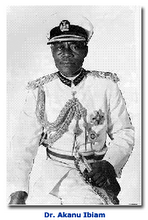
My book titled: Nation Building and Ethnic Organisations – The Case of Ohanaeze in Nigeria, has addressed this issue. Ohanaeze is to Ndigbo what Afenifere is to the Yoruba. Ohanaeze was born early in the 1970s after the Nigerian civil war and its first leader and President General was the great and legendary missionary doctor, Dr. Akanu Ibiam, of blessed memory. This outstanding elder statesman was my own role model. Professor Ben Nwabueze was its Secretary-General for almost 20 years. I was unanimously elected President-General of Ohanaeze in November 2003 and we assumed office in January 2004. I became the head of Ohanaeze at a most challenging period in our national history and at a turbulent period in the organisation’s history. At that time, there were divisions in Ohanaeze primarily as a result of a major disagreement between the two eminent leaders of the organisation, its President General, retired Justice Eze Ozobu, and the Secretary-General, Professor Ben Nwabueze. This disagreement resulted in the filing of a civil action in a Lagos High Court by Professor Nwabueze in which he made several claims and allegations against Justice Ozobu. The crisis mentioned in your question was probably a spillover from this and other earlier crises situations that we inherited. In any event, my election was designed to promote unity and reconciliation within the organisation and beyond. I accepted this leadership challenge primarily for two reasons: The first was to unify the people and to promote harmony and mutual respect within and amongst the Igbo leadership elite. The second was to use the opportunity to build solid bridges of goodwill between Ndigbo and the leadership of other ethnic groups in our overall national interest. On balance, I believe these objectives were largely achieved, despite the divisive effects of partisan politics, visionless and self-centered leadership of ethnic organisations in our political environment today as illustrated in my book mentioned earlier in this interview.

What is your view about corruption in Nigeria?

Corruption is a universal problem, which exists in varying degrees in all human societies. It has become a major problem in Nigeria today because it has reached an alarming and destructive proportion, to the extent that it is now threatening our survival as a nation. It has damaged all aspects of our national life because it exists at all levels of our society in a most destructive manner. Our greatest problem is that some of the leadership elite, instead of helping to curb the negative effects of corruption, are seen by most Nigerians as the primary engines of corruption and promoters of massive corruption directed against our overall national interest. This is an alarming situation that calls for urgent and collective action designed to eliminate or reduce the destructive effects of corruption in the country. In the past 30 years, every administration has paid lip service to the so-called war against corruption. But there are no signs of victory. On the contrary, corruption has continued to increase, to the extent that Nigeria is now being described by the international community as one of the most corrupt nations of the world, despite our many anti-corruption seminars, workshops and conferences.

The only little hope and comfort is that some seemingly serious state agencies such as the Economic and Financial Crimes Commission (EFCC) and the Independent Corrupt Practices and other related offences Commission (ICPC) have been created to “fight” corruption. But the so-called “Nigerian factor,” an expression coined by our present cynical society, is impeding the efforts of these anti-corruption agencies. It is also heartwarming that some independent national organisations are making more positive anti-corruption declarations. We hope that all these efforts will lead to the practical reduction or eradication of this tragic canker worm.

Nigeria has been described as a terrorist state. Do you share this view?

We may have our political, economic and security problems, but Nigeria is certainly not a terrorist state. Despite the unfortunate and isolated event on Christmas Day (December 25, 2009) involving a young Nigerian from a respectable family, who was not based in Nigeria, which made some people to associate Nigeria with terrorism, no one who really knows Nigeria would rightly describe it as a terrorist state.

Which book are you writing at present?

I am writing two books right now. One on Corporate Governance and the other on Leadership. The book on Corporate Governance is virtually completed and should be available to the reading public before the end of the first half of this year. The book on Leadership will follow much later.

What’s your advice for the nation?

Nigeria is a potentially great nation and under the right leadership, it has the capacity to become a world power. It is one of the most highly endowed nations in the world. Despite our chequered political history, I am convinced that it is in the overall interest of all Nigerians that we should preserve this country as one great and viable African nation. As a multi-ethnic, multi-cultural and multi-religious developing nation, with more than 200 ethnic nationalities, our strength lies in our cultural diversity and the collective strength of the different ethnic nationalities that make up this potentially great African nation. We are now at a critical stage in our national history. My advice for the nation is that we should endeavour to save this potentially great nation from disintegration by working for a true federal constitution that is fair to all Nigerians and one that would create reliable and efficient national institutions that will produce selfless leaders of integrity who will sacrifice their personal interests for the collective good of all Nigerians. At present, the greatest challenges facing the country’s political leadership are the issues of constitution review and electoral reform. How we resolve these critical national issues will determine the future direction of this nation. My hope, advice, prayer and expectation is that God should give our political leadership, especially the National Assembly, the wisdom, not only to adopt the key recommendations of the Justice Muhammadu Uwais’ Electoral Reforms Committee as advocated by millions of well-meaning Nigerians, but also the vital constitutional amendments that would reflect the genuine aspirations of all Nigerians.

What is your comment on 50 years of Nigeria as a nation and 10 years of democracy?

You have just raised two formidable issues and it is difficult for me to do real justice to these subjects in the limited time we have for this interview. Luckily, I have written three books on these subjects in recent years. The books are: Nigeria at The Crossroads, The Challenge to Nigeria; and Nigeria: The Last Chance. I hope you will find the time to read these books. We were students in England 50 years ago when Nigeria became an independent nation on October 1, 1960. As patriotic students, we celebrated our independence with a great sense of achievement and satisfaction. We welcomed with pride, the birth of our own nation, free from what we saw as the indignity of colonialism. We had very high hopes at Independence. These high hopes were inspired by our vision of a great African nation that would be a source of pride to all Nigerians and the African continent. These high hopes, expectations and aspirations were proudly sustained during the first few years of independence.

During those early years, the pattern of governance under the Federal Parliamentary System was simple, dignified and inexpensive. The political leadership protected and respected the interests and wellbeing of the people. The term 419 was only known by lawyers and policemen as a section of the Criminal Code. Violent crimes, ethnic and religious conflicts, abuse of office and social injustice were virtually unknown. As a result, we enjoyed a good measure of political and social stability, as well as national unity and cohesion. Although we were not a rich country and had not yet embraced the “oil boom,” the country enjoyed a measure of social and economic development. Poverty was not a problem then as most ordinary Nigerians were well fed and met their basic needs. Because the quality of leadership was generally high and selfless, the people responded appropriately. The Nigerian society at federal and regional levels, were, on the balance, more humane and better disciplined than what we have today. Quality education with character building was very much a part of our national culture, especially for those aspiring to leadership positions at regional and federal levels and Nigerians were respected internationally.

This is not the position today. Since then the country has witnessed several political upheavals, a vast decline in our traditional values, 30 years of military rule and a destructive civil war. As a matter of fact, the genesis of our political problems was that the democratic process was stifled in its infancy when our post-independence political stability had not been firmly established. As a result, we experienced many traumatic and destabilising political upheavals, climaxing in a tragic civil war. This civil war marked the beginning of our decline as a nation and the virtual collapse of our value system. It was the beginning of the invasion of the country’s leadership by individuals who were not equipped for democratic leadership functions. Fifty years after independence, it would be reasonable to state that we may have witnessed some limited development in some respects, but the truth is that we have not yet achieved the level of social, economic and political development that we deserve, going by our vast human and natural endowments. Furthermore, the truth is that we are still a long way away from the achievement of the great African nation of our dream at independence.

In answer to the second leg of your question as to how we have fared during our 10 years of democracy starting from May 1999, my direct response is that the greatest achievement in this regard is the fact that we have managed to sustain the democratic process and its institutions without the intervention of the military, as was the case in the past. This in itself is a major achievement. But we still have a lot to do before we can claim to have become an efficient and reliable modern democracy. We must strengthen our democracy, especially our electoral process and our judiciary, as well as the democratic institutions to ensure that those who preside, govern and direct our affairs and political institutions are men and women of honour and integrity who will place our national interest and the wellbeing of the people, including the handicapped and disadvantaged, above their personal and sectional interests.

How do you unwind?

I used to play table tennis and walk around before. But now that my house is close to my office, I don’t take such a walk again because of the risk of getting embarrassed by people around. I stopped playing table tennis because once I clocked 70, I realised that time was against me and saw the need to begin writing for posterity sake. That is the only way I believe I can leave a worthy legacy for the generations coming. I only walk when I’m in the village. There, I don’t get bothered by any unnecessary questioning from people around.

In recent time, you have come to be identified by your cap. Why the sudden attraction?

For many years, I have noticed that a lot of people take me too seriously. So, I decided to tone it down my own way. The intention is to divert people’s attention from that seriousness to the hilarious part of me. To make them think that I have some sense of humour. I have them in different colours and I guess they are just good for me.

Monday, May 17, 2010

Nigerians take seats in British Parliament


By Tosin Sulaiman/234 Next

Three politicians of Nigerian descent will take their seats in the British House of Commons tomorrow, following hard-fought campaigns in the recent general election.

Helen Grant of the Conservative Party was elected in Maidstone & The Weald in the south east of England; Chi Onwurah of the Labour Party becomes the new MP for Newcastle Central in the north east; and Chuka Umunna, also of Labour, will represent Streatham in south London.

They are the first candidates of Nigerian heritage to be elected to Westminster and will join more than 600 other MPs when the House of Commons formally reconvenes tomorrow. Their presence and that of 24 other minority MPs means Westminster has never been more diverse. In the last Parliament there were only 14 black or Asian MPs.

The new faces include the first three Muslim women to win parliamentary seats, one of whom is also the first Bangladeshi MP. In addition, the Conservative Party has its first two Muslim MPs and its first Asian female MP. The number of women elected to Parliament also increased from 126 to 142, although women now make up only 22 per cent of MPs.

Ms. Onwurah, who was born in Newcastle to a Nigerian father and British mother, polled 15,692 votes, almost twice as many as her Liberal Democrat rival who came second with 8,228 votes. The Conservatives were third with 6,611 votes. The turnout was 56.4 per cent, down slightly from 57.3 per cent in the 2005 general election.

Ms. Onwurah, an engineer by profession, is the first black woman to represent the north east of England, as well as the first female MP of African descent in the House of Commons. Her father is from Awka in Anambra State and served in the Biafran army shortly after she was born.

After the results were announced, she said: “I want to thank, above all, the voters of Newcastle. Tonight they have chosen a message of a positive future.”

Mr. Umunna, an employment law solicitor, received 20,037 votes, with the Liberal Democrats in second place with 16,778 votes and the Conservatives in third place with 8,578 votes. The turnout rose by 22.4 per cent to 62.8 per cent.

Speaking after the results were declared, Mr. Umunna said: “this has been an extraordinary night.” Addressing his opponents, he said the campaign had been tough on all the parties.

“We have really been tested in this campaign, which has been perhaps the toughest for us since 1992,” he said, referring to the year in which his party took the seat from the Conservatives. Since then, it has been a safe Labour seat.

Getting emotional

Mr. Umunna ended by thanking the people of Streatham, saying: “for me, it’s quite an emotional thing I suppose. I was born and bred in this constituency and the fact that so many of my neighbours, my close friends and people that I’ve known in the community for a very long time have chosen to entrust me to represent them is something that makes me deeply humbled.”

Mr. Umunna is of mixed Nigerian, Irish and British descent. He told NEXT before the election that he was inspired by his late father, Ben Osi Umunna, who stood for the governorship of Anambra State in the early 1990s but narrowly missed out.

Mrs. Grant, who is the Conservatives’ first black female MP, helped the party retain Maidstone & The Weald with 23,491 votes, compared to 17,602 for the Lib Dems and 4,769 for Labour. The turnout was 68.9 per cent, up from 65.8 per cent in 2005.

Brought up by a single mother on a council estate, Mrs. Grant, whose father is Nigerian, went on to study law and set up her own firm, Grants Solicitors, in 1996. She joined the Conservative Party in 2006 after what she describes as a “brief flirtation” with Labour. On her website, she attributed her election victory to “two and a half years of good old-fashioned hard work and positive campaigning.”

The Conservatives’ other Nigerian candidate, Kemi Adegoke, failed to capture the safe Labour seat of Dulwich & West Norwood in south London. The seat was held by Tessa Jowell, a former government minister, who polled 22,461 votes, against 13,096 for the Lib Dems and 10,684 for the Conservatives.

Mrs. Grant, Ms. Onwurah and Mr. Umunna will be among 232 new MPs in Westminster following a general election that resulted in Britain’s first hung Parliament since 1974. It forced David Cameron’s Conservative Party, which received the most seats but not enough for an overall majority, into a coalition with the Liberal Democrats, who came third behind Labour.

Sunday, April 25, 2010

A singer gives voice to Nigeria’s anger


BY TOM BURGIS/FINANCIAL TIMES

Nneka was about to launch into the final chorus of “Vagabond in Power (VIP)” when the secret service arrived.

She had already stirred up the crowd in Port Harcourt, Nigeria’s oil city, with a few barbs aimed at the political class and Royal Dutch Shell – both frequent targets for animosity in the Niger Delta, where most people have little but violence and despoiled creeks to show for decades of crude extraction.

“There were 15,000 people singing,” the half-Nigerian, half-German singer recalls, sipping water in a corner of Bogobiri, a Lagos bar that serves as a hub for many of the vast capital’s artists and musicians. “It was heavy, heavy energy.”

December’s “peace concert”, organised by a local newspaper, was a world away from the flash Glasgow venue where she had collected the 2009 Mobo award for best African act three months earlier, a recognition of the eclectic blend of soul, reggae, hip-hop and African styles that has won her acclaim across Europe and, lately, the US.

Nigerians have a long history of wittily disparaging leaders who have too often failed them but the authorities are not accustomed to such large-scale denunciations. As agents started to hassle her crew at the back of the stage, she finished the song and made a hasty exit.

Nneka Egbuna regards giving voice to her people’s anger – mainly in pidgin English, their lingua franca – as her calling. “Dem come fish our water empty / Dem come chop our oil plenty,” go the opening lyrics of “Niger Delta”, from her second album No Longer at Ease (her recent first release in the US, Concrete Jungle, combines tracks from her two albums released in Europe).

A 28-year-old who has spent much of her adult life abroad, Nneka’s readiness to sing the truth to power places her among a generation of Nigerians whose frustration at the mismanagement of their country is starting to bubble over into mobilisations ahead of next year’s elections.

But unlike many of the so-called “re-pats” who have returned from lucrative jobs and expensive educations in New York and London, Nneka’s path has been gruelling. Cleaning toilets in Hamburg while she worked on her music was a time of excitement compared with what had gone before.

The low point was when she fled her Nigerian father’s house in Warri, the delta’s second city, at the age of 19. She “had to get out of the madness at home”, she explains, without elaborating. Without a passport, she made it to Hamburg, home to her white German mother. It took a month in a grim detention centre to convince immigration officials of her German lineage (a previous effort three years earlier had ended in deportation).

“It was hell,” she says, but adds: “We always have this mentality as Nigerians: if you grow up tough here, you can make it happen anywhere.”

She spent the next three years in a house for women with nowhere else to go run by the Catholic church. She picked up German and made male friends who introduced her to hip-hop. She jammed.

“I was a bit shy ... scared to sing my thoughts.” Gradually, though, a powerful voice emerged from her elfin frame. One day she got word that a local producer was looking for a female vocalist to record in a makeshift studio. It was DJ Farhot. He introduced her to the work of politically charged American rappers Mos Def and Talib Kweli and would go on to be her closest musical collaborator. By 2005, Victim of Truth, her debut album, was ready.

“I tried to find an identity in music,” she says – and it shows. The lyrics are laden with race (to be explored), sex (to be enjoyed) and God (to be adored). She leaps between genres. The British trip-hop of Massive Attack sounds a strong influence. “Halfcast” from No Longer at Ease has echoes of Roni Size’s sophisticated drum ‘n’ bass. Other, softer songs have a flavour of Tracy Chapman’s plaintiveness. The voice by turn recalls Lauryn Hill or Nina Simone or Skin from 1990s UK rock group Skunk Anansie.

A recent show in Lagos (in Nigeria she plays with local musicians rather than her regular band for western tours) had a distinctly bluesy, improvised feel. “Heartbeat”, which reached number 20 in the UK charts in 2008, lays strings and rolling drums over a spare piano riff to create an infectious bounce.

If the styles are jumbled, they reflect Nneka’s roots. Even what she calls “the black side of me” is not straightforward. Her father was an Igbo, the main tribe of eastern Nigeria which has produced the novelists Chinua Achebe and Chimamanda Ngozi-Adiche and whose attempted secession in 1967 sparked a horrific three-year civil war. But she was raised in Warri among the Urhobos, one of the Niger Delta’s patchwork of ethnic groups. She grew up only a few rungs above the poverty that is endemic in the delta despite its oil riches.

It was only after she ran from what she hints was a traumatic adolescence that her Nigerian identity came into focus. “Living in Germany Africanised me,” she says, reliving her anger at being called “nigger” for the first time on the streets of Hamburg. “I became more revolutionary.” She used her studies for an archaeology degree to probe Nigeria’s ancient history.

The western influence may be strong in her music but the Nigerian spirit is pervasive. “The music is like pidgin English – colonial and traditional together,” she says. “It’s half-caste music.”

“Vagabond in Power” borrows its title from Fela Kuti, father of Afrobeat and scourge of military dictators past. Many of Nneka’s lyrics share his subversive mischief. Fela’s abiding popularity is testimony as much to his genius as Nigeria’s failure to overcome the widespread corruption he attacked. Yet Nneka is not a keeper of the Afrobeat flame in the same mould as Fela’s sons, Femi and Seun Kuti. Neither, though, could she be classed with the emerging Nigerian rappers who rhyme about the cash and cars beloved of their superstar American counterparts. Perhaps the contemporary she most resembles is Paris-born Asa, Lagos’s folky singer-songwriter.

Critical adulation abroad was not instantly replicated at home. “For the first couple of years when I tried to push my music here, it was like: ‘Who is this oyinbo [white] person? It’s not Nigerian.’” Her popularity has grown since, although many still regard her as “niche”.

An urge to be acknowledged in Nigeria drove Nneka to move to Lagos two years ago after six years in Germany. Her next album, she suggests, will owe more to traditional music than to the sounds of the colonisers.

There is another reason to be around. From the stage in Port Harcourt, she says she sensed the fear of people who have known repression under the old generals and, more recently, during violent, rigged elections. That fear, coupled with a readiness of a highly religious country to entrust the future to God alone, has stifled public outrage, she believes.

That might be changing, as pro-democracy protests build anew. “People are becoming more conscious,” Nneka says. “It’s a silent revolution and it’s coming in camouflage – under music.”

Nneka appears at the Scala in London on April 28; www.scala-london.co.uk. Tour details from www.nnekaworld.com