By Ochereome Nnanna, Vanguard Newspapers
THE present crop of governors in charge of the affairs of states of the South East zone has represented the Igbo heartland extremely well. They have demonstrated an admirable degree of collective purpose, which was not there between 1999 and 2007, when each of the previous governors behaved like crazy political buccaneers.
They were never able to speak with one voice and when they did, one or more of them would go behind, in cahoots with Ohanaeze leaders such as Professor Joe Irukwu, to torpedo collective decisions because of some favours or fears from former President Obasanjo.
At a point, all the governors of the zone were of the ruling Peoples Democratic Party (PDP), and yet they were like water and oil that could never mix.
The setting today is different. Only three states: Imo – Enugu and Ebonyi – are under PDP governors. The other two: Abia and Anambra, are now under the All Progressives Grand Alliance (APGA).
It is a pleasant irony that now they are scattered in different political camps they have been able to discover unity of purpose. Perhaps it has to do with the difference between the political atmosphere created by former President Obasanjo and what currently obtains.
It also has something to do with the fact that the gentlemen now in charge are much better adjusted personalities than their predecessors.
When the late President Umaru Yar’ Adua’s ailing body was hidden in Aso Villa and campaigns were on for him to be removed and the then Acting President Goodluck Jonathan sworn-in, the South East governors met and collectively stood against it even though the Ohanaeze supported the push to activate the Constitution.
Many people lampooned them. Even though I also wanted the Constitution to be followed, I knew why the governors took their stand. It had nothing to do with any opposition to the emergence of Jonathan. Far from that. They read the mood of the “cabal” and saw the possible danger our democracy might be faced with if the matter was pushed too far.
But more than that was their personal regard and appreciation of Umaru’s excellent disposition towards addressing some anti-Igbo issues left dangling from the Obasanjo regime.
These included the listing of Imo and Abia states in the Coastal States’ initiative, approval of river ports at Onitsha and Oguta, dredging of the lower Niger River , approval of a Stock Exchange for Onitsha, concrete steps towards commencing the Second Niger Bridge, the restoration of the stolen oil wells to Abia State and many more.
Yar’ Adua had shown himself as a president the governors could work with, as he made promises and kept them without first remembering the fact that the Igbo fought a civil war against the rest of Nigeria .
The decision, last weekend, by the five governors of the South East that the Igbo people will not present a presidential or vice presidential candidate in the 2011 election also got my applause.
Ohanaeze Ndigbo should also meet and formally announce the stepping down of the majority ethnic group of the East from the race. Anybody who goes ahead to contest will be on his own.
It has nothing to do with a “boycott”, as there is no serious matter calling for that. It is a sensible strategy to actively and voluntarily give ground to those who are more favoured by the current equations to contest.
The North is favoured because of the zoning arrangement of the ruling party. The South-South is also favoured in that someone from there is the incumbent President of Nigeria who has a constitutional right to contest.
Any Igbo candidate plunging into the race of 2011 will constitute an obstruction to a South-South candidate, which will serve no useful purpose. Worse, any vice presidential runner will be spoiling the chances of the South-South, and the true Igbo political interest is not cut out to spoil what belongs to others.
In their fight for president with the South-South, the North is very likely to invade the South East for running mates in the hope that they would swing Igbo votes and abort a possible Goodluck Jonathan’s chances of getting elected.
One lesson I have learnt about Nigerian politics is that when the turn of a group to get political favours from Nigeria is ripe, the whole nation usually comes together to grant it. In 1999, we gave it to Yoruba. In 2007 we gave it back to the North.
In both races, all major presidential candidates were from the favoured zones. When Yar’ Adua died we had no problem giving it an Ijaw to whom it was constitutionally due. When the turn of the Igbo truly arises, the major parties will have Igbo aspirants as their presidential candidates. 2011 is not that time.
Rather, as the South East governors have rightly put it, come 2011, the Igbo should give their support only to the candidate of the North or South-South who has a more attractive package of redressing marginalisation and inequity the Igbo people have suffered since the end of the civil war.
Whoever makes it possible for the South East to acquire an equal number of states and equitable number of local councils and electoral constituencies with the other geopolitical zones should be supported. These are more important than an “Igbo president” because they are the necessary stepping stones to a viable Igbo aspiration to the presidency.
Sometimes it pays more to voluntarily abstain. In the past, Yorubas gained more from Nigeria when they were in the opposition.
Since they were taken to the “mainstream” of Nigerian politics by Obasanjo in 2003, the fear and respect that the ruling establishment had for South West politics has, obviously, gone down. Temporary voluntary abstention often gives one a greater bargaining muscle.
Showing posts with label Joseph Irukwu. Show all posts
Showing posts with label Joseph Irukwu. Show all posts
Thursday, July 8, 2010


Wednesday, May 19, 2010
I have an insatiable appetite for books - Joe Irukwu

By Yemisi Adeniran/Compass Newspaper
For Professor Joe Irukwu, age is neither a barrier. Rather, it is a gracious blessing. Apart from the wear and tear of his physical being, he remains admirable in his indebtedness to intellectual
meaningful and beneficial. While he admits the speedy tickling of the clock of life, especially where he is concerned, he gets more relentless at leaving a worthwhile legacy for generations to come. In this interview with YEMISI ADENIRAN, the learned elder statesman and leader of the Ohaneze Ndigbo, goes down memory lane on his childhood days, his aspirations in life and what he would want to be remembered for. Excerpts:
What is your childhood background like and how did it influence your adulthood and success in life?
I was born into a modest African family with a solid Christian background. My earliest recollection is that as children, we grew up in a typical African village environment in which all families were, in effect, their brothers’ keepers. As children, we were taught the traditional African values of respect for our elders and institutions as well as the importance of hardwork, discipline, education, character and integrity. In those days, families seemed to be in competition in their effort to ensure that their own children were the best disciplined and the most well-behaved in the community since each family was judged on its character and the character and behaviour of its products or offspring. As with all other children of my generation, my family and childhood background naturally affected my adult life in practically all respects.
What childhood pranks would you say you played?
I did not have a long childhood. I was the first child of my parents and they were most anxious to see me grow and become a responsible “adult” so as to influence my young siblings in a most positive manner. As a result, they did not allow me too much time to remain a child and I responded accordingly. The only little childhood pranks that I remember vividly were that I occasionally feigned or pretended to be ill so as to gain some attention, especially from my mother.
What are your memorable moments as a child?
My greatest childhood adventure took place when I was an infant around the age of seven or eight during the 1940s. My parents were passionate about Western education and we lived in a small town, Zonkwa, in the present Kaduna State. There were no schools in Zonkwa and the nearest school was in Kafanchan, about nine miles South of Zonkwa. In their determination to ensure that we do not miss out on our education, our parents sent me and my brother, Sochi Ogan Irukwu, to live with a distant relation who was working as a railway clerk in Kafanchan so as to attend the Anglican Holy Trinity School in Kafanchan. This was our first time of living away from our parents. Following what we saw, in our young minds, as acts of injustice and ill-treatment from our host and guardian, especially his resident girlfriend whom we thought disliked us intensely, we decided to return to our parents in Zonkwa. Encouraged by my brother who was bolder and more adventurous than I, we walked the nine miles journey on the rail track from Kafanchan to Zonkwa back to our parents who had to make other arrangements for our schooling.
Can you lead us into some of the experiences?
I will tell you a particular one. It was that which we suffered from our aunt. When it was time for us to go to school and we were still in bed, you know being children and in a chilly environment, we were bound to cling more to our beds than normal. Instead of waking us up, she would pour cold water on us even when it was the harmattan season.
Why did you choose to become a lawyer? And if you had not become a lawyer, what else would you have been?
My choice of profession was influenced by my early childhood background as well as my basic family philosophy. Our family motto is: Faith in God and Service to Humanity. I settled for the legal profession, Insurance and Risk Management, because of my firm belief that these professions would give me the opportunity to serve humanity in circumstances that provide me a sense of personal satisfaction and fulfillment. As a family, we have an acute sense of justice in the sense that we detest any form of injustice. The independence of judgement offered by these professions have helped me in the pursuit of my professional and business activities in an atmosphere of relative freedom and sound professional judgement. Furthermore, I am convinced that my passion for justice and fair play as well as my family’s commitment to faith in God and service to humanity can best be served by a foundation that rests on a sound legal mind. Incidentally, out of my five adult children, four are lawyers and pastors.
In answer to the second leg of your question as to what else I would have done if I had not settled for law as one of my primary professions, my response is that I probably would have been a policeman, a teacher, a clergyman or an economist. As a matter of fact, before I went to Britain to study Law in the 1950s, I had been admitted to Fourah Bay College in Freetown to read for an honours degree in Economics. I had to abandon the idea when it dawned on me that this was not my real calling.
You once said you loved to be a policeman as a child. What made you change your mind?
When I was a little boy in the 1940s, I was fascinated by policemen, especially the great power, authority and influence that I thought they wielded, in my infant eyes. At that time, policemen were highly disciplined and I thought their uniforms were very attractive so I wanted to be one of them when I grow up. Subsequent events in my early life made me abandon my desire to become a policeman. At the age of 12, my desire to be a policeman had been replaced by my passion and desire to become a lawyer when I grow up.
How fulfilled are you as a lawyer?
I have been a lawyer for almost 50 years, having been called to the English Bar in 1962. I feel a total sense of fulfillment and satisfaction with my choice of professions. If I have another chance in my next life, I will repeat the process. What was your most embarrassing moment. I’m asking this question against the backdrop of the information that one of your lawyer sons wanted to become a barber after school. In the course of our lives, we all go through different kinds of unusual, strange and unexpected, awkward and embarrassing situations. One such awkward situation within my immediate family took place in Lagos when my first son, after a first class education in Nigeria and the United Kingdom, resulting in his having qualified as a lawyer, suddenly announced to me, after his law school year in Nigeria, that he wanted to set up in business as a barber or hairdresser in Ikoyi. To my surprise, his mother and my wife who naturally loved and adored her children, especially her first son, supported this strange proposal. Luckily, God intervened and terminated this strange and awkward desire. Today, this son of mine, after a successful period of legal practice and corporate work in Lagos, finally settled for an excellent missionary work in London where he is being fully used by God to touch many young lives in a most positive manner and to the glory of God.
What has old age taken away from you?
Apart from the normal wear and tear in the form of changes in my physical appearance, age has not taken anything away from me. I am still mentally and intellectually active. I still write my books and I give my lectures periodically in Nigeria and overseas. Next week, I am one of the guest speakers at an important national conference in Kaduna being held under the auspices of the Arewa Consultative Forum (ACF) as part of its 10th anniversary celebrations.
When did you marry and what attracted you to your wife? And how big is your family?
I got married in 1964 as a very young Lagos lawyer. I settled for the young lady I married because she was my kind of woman - from a respectable family with the right kind of values. I met my mother-in-law before I met my wife. She was a great and gracious lady in every respect and I told her that I would marry one of her daughters. She had four daughters and I settled for one of them and we have been blessed with five outstanding children, two boys and three girls.
What would you say is responsible for failed marriages?
Marriages fail for different reasons, ranging from intolerance, immaturity, incompatibility to economic and financial reasons. Also, the absence of mutual love and respect can be responsible. Marriage can be wonderful if you are lucky to get married to your real friend and soul mate who will accept you despite your weaknesses and inadequacies, since no one is perfect. It can also be hellish for the two people if the reverse is the case.
You are intellectually inclined. What’s the inspiration?
People regard me as intellectually inclined because of my visible commitment to the endless pursuit of knowledge and learning. The pursuit of knowledge is a natural way of life for me and I will only stop learning when I die.
Your love for writing books is great. How fulfilled are you and what are your views on the decline in our reading culture?
I have an insatiable appetite for books. I read a lot of books and I have done so since my early teenage years. I also write a lot of books on diverse subjects. My first book on Insurance Law and Practice in Nigeria was published in 1967 by Franklin Book Programmes. Since then, I have written a total of 19 published books on diverse subjects and disciplines. One of the greatest impediments to our national development is the virtual absence of a reading culture in Nigeria and the continuing decline in our reading habit, especially amongst our youth. This is a serious national problem that should be tackled collectively now before we become a nation of virtual illiterates in the 21st century.
What is your view on the current state of education in the country?
In the past, the general standard of education in Nigeria was quite high and favourably comparable to the standard in Europe and America. Unfortunately, like most things, our standard of education has suffered a serious decline in recent years. This is one of the major challenges that must be collectively addressed as part of our national reformation exercise.
What factors are inhibiting the ambition of the youths of today?
One of the prevailing national tragedies today is the continuing decline in the behaviour of our youths on key national issues. Although there are a few shining stars amongst our youths who have managed to overcome the weaknesses of the present Nigerian society and have excelled in their chosen fields, there are many who are content to remain loafers and troublemakers, without any desire to become gainfully employed. Unfortunately, the prevailing high level of corruption, societal degradation and massive youth unemployment are not helping matters and the leadership elite seem unable or unwilling to offer inspirational leadership to these young ones. This is another critical problem that deserves our collective attention before it gets out of hand.
SANship has been described as a cash and carry thing. What’s your view on this?
The elevation of highly accomplished senior barristers to the status of Senior Advocates of Nigeria (SAN) is a decent and respectable practice which is in line with the practice in other civilised nations. It rests on the same principles that apply in the United Kingdom in the context of Queen’s Counsel. As a matter of fact, it was introduced in Nigeria when we abandoned the Queen’s Counsel concept with the country’s assumption of a Republican status as the Federal Republic of Nigeria. The first Senior Advocate of Nigeria then was Chief Rotimi Williams, who was already a Queen’s Counsel under the British Colonial arrangement. Over the years, Nigerians have accepted the Senior Advocates’ concept as a respectable and worthy honour enjoyed by deserving senior members of the legal profession. To the best of my knowledge, the vast number of the 300 or so senior barristers that fall into this category are worthy of the honour and prestige attached to the status. Since no human institution is perfect, it is possible that a few undeserving individuals may have been admitted to the group as suggested by your question and as expressed in some of the negative media comments on the subject in recent times. The solution to the problem is not to discredit this honourable institution in totality, but rather to encourage the relevant authorities, especially the Legal Practitioners Privileges Committee, to note the criticisms and to take positive steps to ensure that only the best who are qualified in every respect are admitted into this prestigious body of Senior Advocates. I understand that this was done in England several years ago when the issue of Queen’s Counsel was the subject of similar criticisms.
What is your view on Insurance and the new move to re-orientate the people and to revamp the industry?
In the context of risks and risk management, Insurance is the most ingenious creation of the human mind. No modern economy based on the monetary capitalist system can survive or prosper without the existence of a viable and disciplined insurance industry. This is why most modern governments attach such great importance to the regulation and control of the performance of their insurance industry. Considering that modern commercial insurance has been practised in Nigeria for almost 100 years, my view is that our insurance industry has not done as well as it should have. The level of insurance awareness and insurance penetration in Nigeria is still one of the lowest in the world. In most developed and some developing nations, the banks and other financial institutions are owned by the insurance companies because of the large insurance funds they generate. In Nigeria, the reverse is the case. Unfortunately, most Nigerians, including most of our policy makers and the political leadership, do not fully realise the full potential of insurance and how to utilise the insurance concept as a vehicle for social and economic transformation.
It is refreshing to note that the present administration has taken an active interest in reforming and restructuring our insurance industry and the regulatory system to strengthen the industry and promote insurance awareness and penetration in Nigeria. We were relieved to note that the minister who was motivating and propelling this exercise was not dropped or reassigned during the recent ministerial reshuffle. I am in full support of the insurance restructuring exercise. As a matter of fact, I was the chairman of the Inter-Ministerial Committee set up by government last year to work on this subject and we sincerely hope that this exercise will ultimately lead to a more efficient and productive insurance industry. To this end, we sincerely hope that the National Assembly will respond promptly and appropriately in enacting the necessary legislations.
You are close to your root – Igbo. What’s the affinity?
I am a Nigerian of Igbo extraction from Bende Local Government area of the present Abia State. My family and my ancestors are highly respected in our community. Not so much for their wealth but for their integrity, courage and reliability and we are very close to our roots and our traditional values. The people of my area and their neighbours regard themselves as the traditional custodians of the ancient Igbo Spirit and values of hard work, enterprise, creativity, industry and integrity. From time immemorial, my family has steadfastly related to these values. As custodians of the Igbo Spirit and values, our people are adherents of the ancient principles of Igbo social justice and enterprise. During my active leadership years as President of Ohanaeze, we resurrected and promoted these principles of social justice, which has its roots in the concept of Egbe bere Ugo bere, which simply translates to ‘justice for all.’ And the response from all parts of Nigeria to these principles was quite positive.
Ohanaeze Ndigbo was rocked by crisis when you held sway as the president. What went wrong?
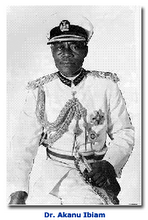
My book titled: Nation Building and Ethnic Organisations – The Case of Ohanaeze in Nigeria, has addressed this issue. Ohanaeze is to Ndigbo what Afenifere is to the Yoruba. Ohanaeze was born early in the 1970s after the Nigerian civil war and its first leader and President General was the great and legendary missionary doctor, Dr. Akanu Ibiam, of blessed memory. This outstanding elder statesman was my own role model. Professor Ben Nwabueze was its Secretary-General for almost 20 years. I was unanimously elected President-General of Ohanaeze in November 2003 and we assumed office in January 2004. I became the head of Ohanaeze at a most challenging period in our national history and at a turbulent period in the organisation’s history. At that time, there were divisions in Ohanaeze primarily as a result of a major disagreement between the two eminent leaders of the organisation, its President General, retired Justice Eze Ozobu, and the Secretary-General, Professor Ben Nwabueze. This disagreement resulted in the filing of a civil action in a Lagos High Court by Professor Nwabueze in which he made several claims and allegations against Justice Ozobu. The crisis mentioned in your question was probably a spillover from this and other earlier crises situations that we inherited. In any event, my election was designed to promote unity and reconciliation within the organisation and beyond. I accepted this leadership challenge primarily for two reasons: The first was to unify the people and to promote harmony and mutual respect within and amongst the Igbo leadership elite. The second was to use the opportunity to build solid bridges of goodwill between Ndigbo and the leadership of other ethnic groups in our overall national interest. On balance, I believe these objectives were largely achieved, despite the divisive effects of partisan politics, visionless and self-centered leadership of ethnic organisations in our political environment today as illustrated in my book mentioned earlier in this interview.
What is your view about corruption in Nigeria?
Corruption is a universal problem, which exists in varying degrees in all human societies. It has become a major problem in Nigeria today because it has reached an alarming and destructive proportion, to the extent that it is now threatening our survival as a nation. It has damaged all aspects of our national life because it exists at all levels of our society in a most destructive manner. Our greatest problem is that some of the leadership elite, instead of helping to curb the negative effects of corruption, are seen by most Nigerians as the primary engines of corruption and promoters of massive corruption directed against our overall national interest. This is an alarming situation that calls for urgent and collective action designed to eliminate or reduce the destructive effects of corruption in the country. In the past 30 years, every administration has paid lip service to the so-called war against corruption. But there are no signs of victory. On the contrary, corruption has continued to increase, to the extent that Nigeria is now being described by the international community as one of the most corrupt nations of the world, despite our many anti-corruption seminars, workshops and conferences.
The only little hope and comfort is that some seemingly serious state agencies such as the Economic and Financial Crimes Commission (EFCC) and the Independent Corrupt Practices and other related offences Commission (ICPC) have been created to “fight” corruption. But the so-called “Nigerian factor,” an expression coined by our present cynical society, is impeding the efforts of these anti-corruption agencies. It is also heartwarming that some independent national organisations are making more positive anti-corruption declarations. We hope that all these efforts will lead to the practical reduction or eradication of this tragic canker worm.
Nigeria has been described as a terrorist state. Do you share this view?
We may have our political, economic and security problems, but Nigeria is certainly not a terrorist state. Despite the unfortunate and isolated event on Christmas Day (December 25, 2009) involving a young Nigerian from a respectable family, who was not based in Nigeria, which made some people to associate Nigeria with terrorism, no one who really knows Nigeria would rightly describe it as a terrorist state.
Which book are you writing at present?
I am writing two books right now. One on Corporate Governance and the other on Leadership. The book on Corporate Governance is virtually completed and should be available to the reading public before the end of the first half of this year. The book on Leadership will follow much later.
What’s your advice for the nation?
Nigeria is a potentially great nation and under the right leadership, it has the capacity to become a world power. It is one of the most highly endowed nations in the world. Despite our chequered political history, I am convinced that it is in the overall interest of all Nigerians that we should preserve this country as one great and viable African nation. As a multi-ethnic, multi-cultural and multi-religious developing nation, with more than 200 ethnic nationalities, our strength lies in our cultural diversity and the collective strength of the different ethnic nationalities that make up this potentially great African nation. We are now at a critical stage in our national history. My advice for the nation is that we should endeavour to save this potentially great nation from disintegration by working for a true federal constitution that is fair to all Nigerians and one that would create reliable and efficient national institutions that will produce selfless leaders of integrity who will sacrifice their personal interests for the collective good of all Nigerians. At present, the greatest challenges facing the country’s political leadership are the issues of constitution review and electoral reform. How we resolve these critical national issues will determine the future direction of this nation. My hope, advice, prayer and expectation is that God should give our political leadership, especially the National Assembly, the wisdom, not only to adopt the key recommendations of the Justice Muhammadu Uwais’ Electoral Reforms Committee as advocated by millions of well-meaning Nigerians, but also the vital constitutional amendments that would reflect the genuine aspirations of all Nigerians.
What is your comment on 50 years of Nigeria as a nation and 10 years of democracy?
You have just raised two formidable issues and it is difficult for me to do real justice to these subjects in the limited time we have for this interview. Luckily, I have written three books on these subjects in recent years. The books are: Nigeria at The Crossroads, The Challenge to Nigeria; and Nigeria: The Last Chance. I hope you will find the time to read these books. We were students in England 50 years ago when Nigeria became an independent nation on October 1, 1960. As patriotic students, we celebrated our independence with a great sense of achievement and satisfaction. We welcomed with pride, the birth of our own nation, free from what we saw as the indignity of colonialism. We had very high hopes at Independence. These high hopes were inspired by our vision of a great African nation that would be a source of pride to all Nigerians and the African continent. These high hopes, expectations and aspirations were proudly sustained during the first few years of independence.
During those early years, the pattern of governance under the Federal Parliamentary System was simple, dignified and inexpensive. The political leadership protected and respected the interests and wellbeing of the people. The term 419 was only known by lawyers and policemen as a section of the Criminal Code. Violent crimes, ethnic and religious conflicts, abuse of office and social injustice were virtually unknown. As a result, we enjoyed a good measure of political and social stability, as well as national unity and cohesion. Although we were not a rich country and had not yet embraced the “oil boom,” the country enjoyed a measure of social and economic development. Poverty was not a problem then as most ordinary Nigerians were well fed and met their basic needs. Because the quality of leadership was generally high and selfless, the people responded appropriately. The Nigerian society at federal and regional levels, were, on the balance, more humane and better disciplined than what we have today. Quality education with character building was very much a part of our national culture, especially for those aspiring to leadership positions at regional and federal levels and Nigerians were respected internationally.
This is not the position today. Since then the country has witnessed several political upheavals, a vast decline in our traditional values, 30 years of military rule and a destructive civil war. As a matter of fact, the genesis of our political problems was that the democratic process was stifled in its infancy when our post-independence political stability had not been firmly established. As a result, we experienced many traumatic and destabilising political upheavals, climaxing in a tragic civil war. This civil war marked the beginning of our decline as a nation and the virtual collapse of our value system. It was the beginning of the invasion of the country’s leadership by individuals who were not equipped for democratic leadership functions. Fifty years after independence, it would be reasonable to state that we may have witnessed some limited development in some respects, but the truth is that we have not yet achieved the level of social, economic and political development that we deserve, going by our vast human and natural endowments. Furthermore, the truth is that we are still a long way away from the achievement of the great African nation of our dream at independence.
In answer to the second leg of your question as to how we have fared during our 10 years of democracy starting from May 1999, my direct response is that the greatest achievement in this regard is the fact that we have managed to sustain the democratic process and its institutions without the intervention of the military, as was the case in the past. This in itself is a major achievement. But we still have a lot to do before we can claim to have become an efficient and reliable modern democracy. We must strengthen our democracy, especially our electoral process and our judiciary, as well as the democratic institutions to ensure that those who preside, govern and direct our affairs and political institutions are men and women of honour and integrity who will place our national interest and the wellbeing of the people, including the handicapped and disadvantaged, above their personal and sectional interests.
How do you unwind?
I used to play table tennis and walk around before. But now that my house is close to my office, I don’t take such a walk again because of the risk of getting embarrassed by people around. I stopped playing table tennis because once I clocked 70, I realised that time was against me and saw the need to begin writing for posterity sake. That is the only way I believe I can leave a worthy legacy for the generations coming. I only walk when I’m in the village. There, I don’t get bothered by any unnecessary questioning from people around.
In recent time, you have come to be identified by your cap. Why the sudden attraction?
For many years, I have noticed that a lot of people take me too seriously. So, I decided to tone it down my own way. The intention is to divert people’s attention from that seriousness to the hilarious part of me. To make them think that I have some sense of humour. I have them in different colours and I guess they are just good for me.
Friday, October 9, 2009
Irukwu on Nigeria: 'God is fed up with Us

By Ndubuisi Orji, Sun News Online
Former President-General, Ohanaeze Ndigbo, Professor Joseph Irukwu (SAN) has said that the problem of ethnicity is a major impediment to the development of the Nigerian State. He said the country would begin to triumph, the day it puts ethnicity behind in its national life, especially in producing the leadership of the country.
The eminent lawyer and Insurance guru told Daily Sun in an interview in Lagos that ethnicity is not only a Nigerian problem, but also a major challenge confronting the African continent.
His words “Ethnicity is still an impediment to the development of the Nigerian nation of our dream. It is also a major African problem, especially in multi-ethnic nations like Nigeria. This is why we still talk about an Igbo President, a Yoruba President, a Hausa-Fulani President, an Ijaw President and so on. Nigeria as a modern nation would triumph the day we elect national leaders entirely on the basis of their personal merits and attributes, without considering the ethnic factor.
“We have some lessons to learn from the American system that produced an Obama who is an African-American with a father who is a Luo from Kenya. Interestingly, in Kenya today, it would have been virtually impossible for the Kikuyu and other Kenyan ethnic groups to elect an Obama, a Luo as President, just as Nigerians are not in a hurry to elect an Igbo or an Eastern Nigerian as President, 49 years after independence.”
The elder statesman who also bared his mind on Nigeria’s forty nine years of nationhood, his alleged support for the former President Olusegun Obasanjo’s third term project and the leadership question in Nigeria said the salvation of the country lies within Nigeria.
According to him, the growth and development of Nigeria depends on the Nigerian people and the leadership. He said no outsider is “qualified” to solve the problems confronting the country.
However, he said God would intervene in the affairs of the country when it becomes evident that Nigerians especially the leadership class has taken steps towards building a country founded on equity and justice.
Excerpts:
Nigeria is 49 years old. How have we fared as a nation?
In 1960 when Nigeria achieved its political independence, we were students in England. It was a glorious event, which we celebrated with a great sense of achievement and satisfaction as we welcomed with pride the birth of our own nation, free from what we saw as the indignity of colonialism.
We had very high hopes at independence. These high hopes, inspired by our vision of a great African nation, was sustained during the first few years of independence. During those early years, the pattern of governance under the Federal Parliamentary System was simple, dignified and inexpensive. The political leadership protected and respected the interests and well-being of the people. The term 419 was only known by lawyers and policemen as a section of the Criminal Code. Violent crimes, abuse of office and social injustice were relatively unknown. As a result, we enjoyed a reasonable measure of political and social stability, as well as national unity and cohesion.
Although we were not a rich country and had not yet embraced the “oil boom”, the country enjoyed a good measure of social and economic development. Poverty was not a problem then as most ordinary Nigerians were well fed. Because the quality of leadership was generally high and selfless, the people responded appropriately. The Nigerian society at Federal and regional levels, were on balance, more humane and better disciplined than what we have today. Quality education and character building was very much a part of our national culture, especially for those aspiring to leadership positions at regional and federal levels, and Nigerians were respected internationally.
The genesis of our national political problems was that the democratic process was stifled in its infancy when our post-independence political stability had not been firmly established. As a result, we experienced many traumatic and destabilizing political upheavals climaxing in a most tragic civil war. This civil war marked the beginning of our decline as a nation and the virtual collapse of our value system, as well as the end of our respect for institutions, our human life and we in general. It was the beginning of the invasion of the country’s leadership by individuals who were not equipped for democratic leadership functions. This tragic invasion of the country’s leadership introduced the money culture which destroyed quality leadership based on character and integrity. With the civil war, violent crimes set in and our national politics declined to the extent that integrity, good leadership, self respect, respect for our institutions and for others virtually gave way to the “money cult”, abuse of office and corruption at all levels of society.
Forty-nine years after independence, the only factor that matters most in our national political culture is money, no matter how it was acquired. Those, who have it in abundance, hold those who do not have it in total contempt because they know that they can acquire practically everything with their money, including the people and their votes. At 49, our major national problems are corruption, ethnicity, poverty and massive unemployment amongst our youth, which breed violent crimes, indiscipline and insecurity including the new wave of kidnapping for ransom which was totally alien to our national culture.
The universal perception today is that we now have a society that breed poverty in the midst of plenty, with the leadership elite not showing much visible concern for the poverty-stricken ordinary Nigerians. This general perception tends to fuel the cynical and hostile attitude of the people towards the leadership elite, which is not good for societal equilibrium. There is nothing new in these views, which have been expressed by several discerning Nigerians before now.
Many people are of the view that the leadership of the country has not been what it is supposed to be. What is your take on that?
On the issue of the Nigerian leadership, I am unable to dispute the point impliedly made by your question, to the effect that many Nigerians feel betrayed and let down by the country’s leadership in most important respects. Unfortunately, that happens to be the view of millions of Nigerians and they cite several reasons in support of these views. There is some merit in your suggestion that plurality of leadership, on the whole, is not “what it is supposed to be” to use your own words.
Considering our vast human resources. Our past records, the many good people we have in the country and the excellent records of several Nigerians in all disciplines from all parts of the country, including those serving or working abroad, it is difficult to explain the poor performance of the country’s leadership in most institutions at home. There must be something seriously wrong with our systems, institutions and values as well as the process through which our leaders are selected or emerge. However, as we blame our leaders, we should examine ourselves, our society and the systems that produce these leaders. We should also blame the followers and institutions that create these leaders we complain about, especially as we help to empower and sustain them. There must be some merit in the universal axiom, which reminds us that most human societies produce the kind of leaders they deserve at all material times.
What then is the way forward for the country?
The way forward is a positive change of attitude by the country and it’s leadership. We must return to those values that made us great and respectable. There was a time when Nigerians and their leaders were highly respected nationally and internationally. As we propagate the present Administration’s re-branding project, we must also re-invent those values, institutions and systems that made us great. Nigeria is one of the most highly endowed nations in the world and we have the natural and human resources to make us a world power. With commitment on the part of the people and the leadership, we can achieve the desired positive change that should propel us to the better Nigerian nation of our dream, a nation that would be a source of pride to all Nigerians, irrespective of their belief or religious orientation.
My belief is that our future depends on the people of Nigeria and our leadership. No outsider is qualified to solve our problems for us. Some well meaning Nigerians genuinely concerned about the continuing decline of our national values and institutions have been praying to God for salvation and redemption. Unfortunately, the indications are that God is so fed-up with our antics that that He does not seem ready to intervene, until we have taken some practical steps to atone for our sins. God’s intervention will come only when it becomes evident that Nigerians especially the leadership elite, have started taking positive steps towards the building of the African nation founded on equity, justice, and with a committed God fearing selfless leadership. Only then will God grant us the redemption and salvation we desperately require as part of our national transformation.
The national transformation exercise should begin now and we should start by eliminating all those negative factors that impede our national stability, progress and development. In the process, we should note that there are broadly two types of Nigerians with each group fully represented within the leadership class. The first group is those who passionately and genuinely believe in the Nigerian national concept and are therefore willing to make the necessary sacrifices to ensure that Nigeria survives and thrives. The second group are those who have no interest in or have lost interest in the Nigerian experiment for several reasons and would like it dead sooner or later. This second group are not interested in any lasting solutions to our numerous national problems. All they want is to stick around for as long as possible as they exploit and milk the country’s resources for their personal and sectional benefits until it is pronounced dead. There is also a relatively small but influential group who selfishly insist on the prevailing status quo because they are benefiting from the system and situations.
Fortunately, the vast majority of Nigerians recognize the great potential of this country and the huge benefits of such a potentially great African nation. We should team up with this group to ensure the survival of the Nigerian experiment, despite its British colonial origin. We must create the necessary political and structural changes that will produce a Nigerian nation that would be a source of satisfaction and pride for all Nigerians irrespective of their ethnic and religious orientation. We desperately need a selfless, visionary and committed leadership.
Undoubtedly, there is no shortage of leadership materials in Nigeria today. There are several first class potential national leaders from all parts of Nigeria, but the system and the nature of our politics does not inspire and sustain such quality leadership and the ethnic factor has not helped matters. Ethnicity is still an impediment to the development of the Nigerian nation of our dream. It is also a major African problem, especially in multi-ethnic nations like Nigeria. This is why we still talk about an Igbo President, a Yoruba President, a Hausa-Fulani President, an Ijaw President and so on. Nigeria as a modern nation would triumph the day we elect national leaders entirely on the basis of their personal merits and attributes, without considering the ethnic factor.
We have some lessons to learn from the American system that produced an Obama who is an African-American with a father who is a Luo from Kenya. Interestingly, in Kenya today, it would have been virtually impossible for the Kikuyu and other Kenyan ethnic groups to elect an Obama, a Luo as President, just as Nigerians are not in a hurry to elect an 19bo or an Eastern Nigerian as President, 49 years after independence. The prayer of most well meaning Nigerians is that God should give us an enlightened leadership from any part of Nigeria, who will take us to the Promised Land, sooner than later.
To accelerate our national reformation process, we should produce a truly Nigerian Peoples’ Constitution that is genuinely federal and in line with our Independence Constitution formulated and adopted by our visionary and politically wise founding fathers who took into account the fears, interests and cultural disposition of the country’s ethnic groups. Such a constitution should create structures and institutions that will eliminate those areas that create social injustice and instability. Nigerians are now more politically mature and fully conscious of their rights and interests. Above all, they demand more selfless and committed leaders and a truly democratic process based on the rule of law and credible elections.
They demand good governance and less expensive governments. The present situation in which the cost of governance is above 80% of the annual budget, with less than 20% for development, cannot be right for a developing nation like Nigeria, if we really want to grow and survive in the highly competitive world environment of the 21st century.
Finally, we should embark urgently on some form of National reconciliation strategy. We are now 49 years old as an independent nation, and next year we will celebrate our 50th Anniversary. Considering our huge national and human endowments, most Nigerians and friends of Nigeria believe that we have not done very well as a nation. In all my recent books about Nigeria, I have made a strong case for a genuine national reconciliation strategy devoid of any form of political hypocrisy and rancour. Some people with influence, integrity and authority should take up this national assignment before our 50th independence celebration as part of the way forward. This national reconciliation strategy is necessary for several reasons. There are too many angry members of the Nigerian Family. In any African family in which there are many aggrieved persons, the Elders generally intervene by convening a Family Reconciliation meeting for the reconciliation of all the aggrieved members so that the family does not disintegrate. As part of the reconciliation exercise, the Elders will ensure that the perceived injustices that provoked the anger are eliminated in the interest of unity, peace and stability.
The best insurance against anarchy, violence, militancy and instability is JUSTICE AND FAIRNESS FOR ALL. A good Nigerian Constitution, with the right political structures that take into account the interests of all sections of the country and a national reconciliation strategy as suggested will be steps in the right direction as we move towards our 50th Anniversary as a modern 21st Century African nation.
You were alleged to have supported the third term project of former president, Olusegun Obasanjo. What is the true position?
The Third Term issue came up when I was President-General of Ohanaeze Ndigbo. The official position of Ohanaeze under my leadership, which I supported and propagated, was that the Nigerian Constitution provides for a four-year term, subject to a possible second term of another four years and no more. This was the Ohanaeze position and as President-General, I supported this official position and signed a memorandum supporting this constitutional provision.
At no time did I support the third term concept. The rest is now history and if you read my book mentioned earlier, you will get all the details. At that time in our national political history, the third term issue was a potent political instrument, which some people utilized as a weapon to discredit those who did not share their political aspirations. This was the context in which the so-called allegation to which you referred featured. The allegation was false and sections of the media were used to distort and disseminate the falsehood. In the interest of unity, progress and development, we prefer to forget such divisive distractions in order to avoid chasing shadows and in the process lose out on the substantive national issues.
What is your take on the state of the Igbo nation in Nigeria today and the Ohanaeze Ndigbo question?
When you requested me to grant you an interview, you stated that the interview was about Nigeria at 49 and how we have fared as a Nation since independence, but now you have now moved on to the Igbo Nation and Ohanaeze, and the question is so heavily loaded that it will take time and space to do justice to your question. Luckily, 1 have written a comprehensive book on the subject. The book in question is titled: Nation building and ethnic organisations: The case of Ohanaeze in Nigeria. This book was published in February 2007 when 1 resigned as President-General of Ohanaeze after dedication of the Conference Hall, Library and Auditorium, which I built with my hard earned personal resources, and donated to Ohanaeze in memory of two eminent Nigerians, and great leaders, who are my eternal role models.
These two leaders are Akanu Ibiam and Dr. Pius Okigbo, who played important roles in my life as a young man. In the case of Dr. Akanu Ibiam, he was the President-General of Ohanaeze immediately after the Nigerian Civil War and because of his impact on me at an early stage in my life, promised his family, when I became President-General of Ohanaeze, that 1 will build an auditorium for Ohanaeze in his memory. In the case of Dr. Pius Okigbo, he virtually dragged me to Ohanaeze meetings for well over twenty years, and 1 am sure that if he had been alive, my tenure as President-General would have been a lot more fulfilling. 1 built and equipped the library in the Ohanaeze Secretariat in his memory.
In specific answer to your questions on the Igbo Nation in Nigeria, I invite you to read my book on the subject. For the present exercise, 1 would say that you cannot discuss the Igbo Nation today outside the context of the Nigerian Nation. Nigeria is a multi-ethnic nation made up of well over 200 ethnic groups, with three or four major ethnic nationalities running into several millions, of which the Igbos are one, the success of Nigeria is the success of the Igbos. If Nigeria is “fixed” to the satisfaction of the various ethnic groups that make up the country, the Igbos will naturally be happy.
My understanding is that every Igbo person is anxious to see a better Nigerian nation in which all ethnic groups will feel a total sense of belonging. Like other ethnic groups, they demand better institutions and good governance based on justice for all under a true democracy and the rule of law with equal opportunities for all Nigerians. Part of Nigeria’s strength lies in its immense cultural diversity and the rich culture of its many ethnic nationalities. The greatest strength of the Igbos, which is also a national asset, is that they are generally creative, industrious, hard working and enterprising.
These endowments are also Nigeria’s national assets as well as the strength and weakness of the Igbos as a group in the sense that the kind of individualism, these virtues generate, most times work against the collective or group interests of the people. Arising from this individualism, the position now, especially amongst the vocal post-civil war Igbo leadership elite, is that when they are not actively engaged in pursuing their personal or individual interests, they tend to dissipate their energy and resources in personal squabbles to the detriment of their collective interests as a group.
As we contemplate the future, my plea is that we should devote our energy and resources in promoting mutual respect and unity amongst ourselves and our neighbours and in building goodwill and understanding with Nigerians from other ethnic groups. We now live in the 21st century in which knowledge is power. There is a lot of merit in the Igbo concept of “Ako-na-Uche” which means tact, wisdom and good sense as a way of life, as against avoidable and divisive confrontations. This was the policy we promoted, during my tenure as President-General of Ohanaeze. Our bridge-building policy of friendship and goodwill, founded on the ancient principles of Igbo social justice, earned for Ndigbo at that time, great respect and goodwill from Nigerians of other ethnic groups. This was most evident during the 2005 National Political Reform Conference.
The unique achievements of that Conference, which included a unanimous agreement to create at least one more state in the South East Zone, on grounds of justice and equity, was aborted due to that absence of the desired political will on the part of the nation’, political leadership. As regards your question on Ohanaeze, the answer is there are several ethnic organizations in Nigeria today and Ohanaeze is one of them. It was established as an umbrella organization for Igbo speaking Nigerians, just as we have Arewa, Afenifere, Ibibio State Union and Ijaw National Conference, to mention just a few.
It is unfortunate that the prevailing political environment makes it necessary for us to have these ethnic and sub-national organizations; primarily because most ordinary Nigerians maintain that these organizations offer them the kind of political and social protection they believe they cannot get from Federations Administrations. This is not good enough. Those of us, who are patriotic and passionate about Nigeria, hope and expect that we will soon evolve a national political culture that would make unnecessary for Nigerians to resort to the umbrella protection of their ethnic organizations. Until then, I am afraid that these ethnic organizations will continue to perform their protective social and political roles.
Subscribe to:
Posts (Atom)