Showing posts with label The Orbit. Show all posts

Tuesday, August 17, 2010

OBI NWAKANMA'S VISION OF A RENASCENT ONITSHA CITY


By Okenwa Nwosu, MD, Igbo Forum

“It was the city that drew the great generation of Igbo, and indeed Southern Nigerian modernists. The city of the great Zik, whose statue still adorns an important historical site of the city; the city of Denis Osadebe, Mbonu Ojike, Nwafor Orizu, Ikejiani, Raymond Amanze Njoku, Pius Okigbo, Chike Obi, Sylvanus Cookey, Birabi, Ben Enwonwu, Cyprian Ekwensi, and too many others too numerous to mention.
It was the city, whose centrality in the evolution of modern Nigerian culture has been recorded permanently in Emmanuel Obiechina’s canonical study of the literature now called, “Onitsha Market Literature,” produced in the great forges of its little presses, much like the grub street, which basically disseminated the most significant tradition of city penny literature in that march towards the modern. Onitsha once had a great newspaper too: the Nigerian Spokesman, which gave this city its certain flavor.

The city exhibits the marks of dystopia. Yet it is a city of possibilities, if only the Anambra state government, can think slightly out of the box and commence an ambitious City redevelopment plan, by bringing a number of things to bear: the reconstitution of Onitsha as a Metropolitan district with its own city government, and execution of a plan that would integrate Ogidi, Obosi, Nnewi, Oba, and the surrounding districts, as part of the conurbation of a new Onitsha Metropolitan District.

This metropolitan authority should then think about raising property and other municipal taxes and begin the very clear process of redesigning and rebuilding Onitsha as a modern, 21st century city that should integrate the grandeur of its own history as the first epicenter of Igbo modernity, and promote that history as part of its culture and image, and its new offering.

This is what great cities do. It should also work inexorably towards the development of its valuable water front into a great residential, business and culture district, with splendid private and public residential facilities, fine offices, great restaurants, galleries, theatres, well designed public parks, and such a place that would draw people to its profitable use, and that would enrich the city significantly; and in some ways, connect it to its twin city across the river, Asaba, for the benefit of all.”

Obi Nwakanma


IF you asked most people today to go to Aba or Onitsha to settle and live, the first impulse would be to think that you are placing a curse on them. And I am totally serious. Young men and women, the most productive and active catalysts of city life, do not find any incentives to go to these once thriving cities of the East to settle, and live a full life.

I once asked a friend of mine who grew up in Onitsha, and who now teaches at the University of Denver, Colorado, if he could ever think about living in Onitsha or raising his children in Onitsha, and his response to me was quite frank: “there is nothing for me in Onitsha!” he said.

It was no longer even the city in which he grew up. The decay of a city like Onitsha is so terrifying that an encounter with both the image and reality of the city is nightmarish - a true ghostly miasma that is.

Until you have felt and seen it, it is quite unimaginable. The sludge of human and industrial waste that runs on the public and private spaces; the sense of the brokenness of everything; the disorder in city planning; in code enforcement; in street planning; in the general ordering and layout of the city makes Onitsha today, one of the most polluted and certainly one of the most ungainly sites of human habitation anywhere on God’s earth.

Yet encrusted in that pod of waste is a possible gem; a once well planned city which becomes only clear from the air, which has only been distorted by the barbarous rage of a most philistine generation for whom beauty and civility are alien values.

Onitsha still has some of the finest colonial architecture which are indeed great set pieces and which could just be rehabbed with a little imagination, care, and some respect for heritage. Yet also, Onitsha is dotted with some of the most monstrous forms of architecture, a pretence at the high-rise apartments, which give little room for aesthetics. The buildings are often largely utilitarian.

They are most times constructed with little rhyme or reason, possibly inspired by the competitiveness of the Onitsha landlord who draws the design on the sand, and builds just to prove to everyone else that his “four decking is higher than yours.”

The result in Onitsha, as one drives in, is a sense or an impression of a vast project – those low income, box-like constructions of high-rise apartments that dot the landscape of American urban ghettoes that are infested with drugs, prostitution and poverty. I have nothing, of course, against urban housing, but let it be built with respect for the people, with a sense of spatiality, with some aesthetic purpose.

Onitsha’s image suffers from its certain lack of awareness of its own history or importance. My early vision of Onitsha was shaped by an early encounter with Chinua Achebe’s novella, Chike and the River, a book I read in primary five.

I also associated Onitsha with what one imagined to be the magnificent bridge across the Niger at Onitsha, which even now, remains as powerful as New York’s Brooklyn Bridge, as an authentic symbol of Nigeria’s entry into high technological modernity.

The Brooklyn Bridge has been celebrated in the epic poetry of great American Romantic and modernist poets like Walt Whitman and Hart Crane, but not the bridge across the lordly Niger in Onitsha. Onitsha was for many years the cultural and commercial center of the East – something of the Boston of Southern Nigeria – with its place as the epicentre of Christian missionary movement into the Igbo heartland.

For many years, it was the headquarters of the Church of the Niger. It was the city of Basden and the Archbishop Denis, as well as the Joseph Shanahans. Those icons of the Roman and the Anglican churches, who ironically were also figures of early Igbo modernity of the late 19th century.

Onitsha was the intellectual capital of Southern Nigeria, with its famous parochial schools, like the Christ the Kings College, the Catholic boarding school for boys, or the Denis Memorial Grammar School, the Anglican equivalent, or the Queen of the Rosary School, the Catholic boarding school for girls, or the famous St. Charles Teachers College, and so many pioneer schools that made Onitsha the gathering of the early Igbo towards cultural modernity.

It was the city that drew the great generation of Igbo, and indeed Southern Nigerian modernists. The city of the great Zik, whose statue still adorns an important historical site of the city; the city of Denis Osadebe, Mbonu Ojike, Nwafor Orizu, Ikejiani, Raymond Amanze Njoku, Pius Okigbo, Chike Obi, Sylvanus Cookey, Birabi, Ben Enwonwu, Cyprian Ekwensi, and too many others too numerous to mention.

It was the city, whose centrality in the evolution of modern Nigerian culture has been recorded permanently in Emmanuel Obiechina’s canonical study of the literature now called, “Onitsha Market Literature,” produced in the great forges of its little presses, much like the grub street, which basically disseminated the most significant tradition of city penny literature in that march towards the modern. Onitsha once had a great newspaper too: the Nigerian Spokesman, which gave this city its certain flavor.

I could go on and on, but I hope the picture is clear, that from the time of the Saro and Caribbean middle class of lawyers, doctors, teachers, and so on, who first constituted the society and culture of Onitsha, of the Onitsha Literary Society, funded by a remarkable whiteman whose grave is still marked in one silent corner of the of the Onitsha city cemetery, to today, a city like Onitsha has undergone radical transformation. A cultured middle class seems absent.

The city exhibits the marks of dystopia. Yet it is a city of possibilities, if only the Anambra state government, can think slightly out of the box and commence an ambitious City redevelopment plan, by bringing a number of things to bear: the reconstitution of Onitsha as a Metropolitan district with its own city government, and execution of a plan that would integrate Ogidi, Obosi, Nnewi, Oba, and the surrounding districts, as part of the conurbation of a new Onitsha Metropolitan District.

This metropolitan authority should then think about raising property and other municipal taxes and begin the very clear process of redesigning and rebuilding Onitsha as a modern, 21st century city that should integrate the grandeur of its own history as the first epicenter of Igbo modernity, and promote that history as part of its culture and image, and its new offering.

This is what great cities do. It should also work inexorably towards the development of its valuable water front into a great residential, business and culture district, with splendid private and public residential facilities, fine offices, great restaurants, galleries, theatres, well designed public parks, and such a place that would draw people to its profitable use, and that would enrich the city significantly; and in some ways, connect it to its twin city across the river, Asaba, for the benefit of all.

This is the only way to stimulate growth and economic development on a scale that is purposive and significant. I have used Onitsha clearly as a foil even in my description of the other city, Aba. I have always said that one of the most important reflections of the kind of mindset that have destroyed once well-made cities like Aba, designed by Pius Okigbo as Development Officer in 1947, is in the destruction of the Aba golf course and its parceling off to speculators who quickly turned this once beautiful place into a monstrous space.

Aba and Port-Harcourt are also inevitably bound to shake hands and rejoin themselves at the hip, as it was once conceived, sooner than later.

And so it is important for the authorities in those two cities to begin the process of joint planning and remodeling, including creating joint sewer districts, protected forest areas, river and lake recreation areas, that would link the triad development from Owerri, Aba and Port-Harcourt, starting at the Owerrinta Port, near Okpala.

But as it is, it seems like very little thinking is going on at a grand scale in government. These cities cannot recover their economic powers, if they do not attract the right kind of human energy. It is imperative therefore, to draw people back, with great schools, great city hospitals, great museums and galleries, and generally, great environments to live and nurture families in a healthy and sustainable way.

Sunday, August 1, 2010

A governor, clapping with one hand

By Obi Nwakanma, The Orbit/Vanguard

A reader of this column sent me a note last week thanking me for bringing the situation in Imo state to light, and for being in what he calls “informed opposition.” I did thank him, but I made it clear that I’m not in opposition to Ohakim. I am a critic of the government that he leads.

An opposition is an organized platform – a sort of government in waiting – with its alternative programs and ideas in clear distinction from the government of the day in a democracy. Sometimes they draw critical insights from informed sources to canvas their position among the electorate. But there is no opposition in Imo state. There is political opportunism. That is why the Imo state government is looking, and increasingly sounding surreal and weird.

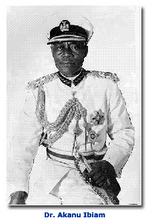
We grew up in the East as the inheritors of fine examples of robust and dynamic leadership that saw Nnamdi Azikiwe straddling the African imagination like a force of nature, or men like Michael Iheonukara Okpara, whose leadership of the East remains without compare. While the Igbo was riding the crest of development and progress from 1957 to 1967, it felt like the rest of Nigeria could not touch its political helms, what with such colorful and eponymous names among its leaders: Akanu Ibiam, educator and missionary doctor, who approached public service with the instincts of a missionary.

Denis Osadebe – poet and brilliant legal mind, whose parliamentary skills were legendary. K.O. Mbadiwe – man of timbre and caterpillar, not only full of rhetoric and bombast, but also full of purpose. A first class political strategist and negotiator who knew his personal interest alright, but never messed with the group interest, for always, the group was the basis of their politics. There was Mbonu Ojike, brilliant economic thinker of his generation, whose early death robbed the Igbo and Nigeria greatly.

There was Nwafor Orizu; there was Jaja Wachukwu, there was Eni Njoku, there was Nwapa, there was Reuben Uzoma; there was Raymond Amanze Njoku, and there were numerous others, any of whom could have, were they born in any other clime, led any nation politically. I have said that perhaps the divine author of things played a terrible joke on the East and the Igbo particularly: he sent them a glut of first class men in one generation, and in a later generation gave them only burnt offering – political lilliputs whose conduct of politics insults the illustrious past of our 20th century political ancestors. Today, there is no memorable Igbo politician.

At the eventual passing of the great Dim Odumegwu-Ojukwu, the last of the relay of great Igbo leaders of the 20th century, the Igbo of Nigeria will not have a single memorable political figure who could rally them to great political purpose. For a people whose leaders were at the fore of the independence movement, this would be a great lesson in irony. The irony was made most poignant in the ring-kissing visit of Ikedi Ohakim, governor of Imo state, last week to Raji Fashola, governor of Lagos state.

The highlights of that visit mark Mr. Ohakim, not only as a second fiddler, but also as a governor without a clear social or economic program, who does not deserve to be re-elected in the forthcoming elections as the governor over a great state like Imo. We must help him return him quickly to his personal business in Lagos, where he says Governor Raji Fashola has made the lives of the Igbo residents worth living and Igbo businesses secure. “I have come to greet a great man, so that I too will be great” said Ikedi Ohakim to Raji Fashola in Lagos.

It sounds cute and gracious. But it also sounds like the servile declaration of a hopeful almajirin to his lordly benefactor. Ohakim was recently paid the left-handed compliment of the Sarduana Award for leadership. It is therefore not surprising from where Ikedi Ohakim draws his inspirations and examples: not from the great Zik or Okpara or Mbakwe. The trouble is that he is on his way to leading Imo state to beggarly ruin.

True, Fashola stays in Lagos and directs its transmutation from a vast slum, while Ohakim gallivants, paying courtesy visits, and spouting strange excuses for his lack of achievement. Once, his excuse was that his opponents had stymied his mandate in court with litigation, and his hands were tied. Now, the Supreme Court has declared him governor, no such excuse is valid any longer.

Now it is revenue: while Lagos has all the revenue, Ohakim says, Imo has all the ideas. This is poppycock of course. Across the fence in Enugu, we see slow but apparent change. Imo is richer in revenue and resources than Enugu. But Enugu has greater purpose. Governor Ohakim needs now to account for the revenue accruing to Imo state in the last three years-plus of his administration. There is no evidence of infrastructural investment. There is, of course, a lot of hot talk about really hot plans to build Oguta and Nworie into tourist utopia.

There is nothing on the ground. There is much talk about rural roads. I went round Imo state last year, I saw only signposts proposing IRROMA. The road from Owerri to Umuahia, much touted as dualized, and commissioned by the late president Yar Adua, is in fact a glorified dirt road, not expanded, but divided with concrete barriers into a narrow two way macadam. Every school and hospital I visited in Imo state was in profound stages of decay. The main city, Owerri, is overcrowded and has lost the serenity of which Owerri was once known because of serious code violations.

There is no evidence of new plans to recreate the city, or build new well developed counties and satellites, or even invest in new urban centers like Orlu, Okigwe, Oguta or the Ahiara-Aboh conurbation. At the office of the Owerri Capital Development Authority, there was nothing left but two old earth-movers, and a huge sign. There was an overwhelming sense of insecurity in Imo State – I had never felt more unsafe in my life.

The greatest development in Owerri is “Keke Napep” and the vast number of posters advertising Governor Ohakim colourfully. There was absolutely no doubt in my mind that Ikedi Ohakim was playing hoochie with Imo state. It has possibly to do with the party – the PPA with which he came to power in Imo state – which was some sort of ersatz arrangement foisted between Olusegun Obasanjo and Orji Uzor-Kalu on the East. It had no ideas.

But it also seems to me that much has to do with Mr. Ohakim’s own limitations: his servility to the golden calf of self-imagery for instance. I take again from Ohakim’s statement to Raji Fashola to highlight my concern: “people came from the Lagos” Ohakim said, and asked the Igbo to invest in the stock market. The crash of the stock market, he claims is the cause of the kidnapping in the South-East because Igbo lost their investment.

Ohakim is wrong on several fronts, but let me quickly say that the crime situation in the South-East is connected to the rapid impoverishment and alienation of a critical segment of the population as a result of the inability of government to provide social programs that would cushion the harsh economic environment, stimulate re-investment, create opportunities for young entrepreneurs and expand the growth of the job market both at the public and private sectors.

What does Imo do with its federal allocations? What is its exact tax base? Perhaps it is time the people themselves – long used to indolence and quiet desperation -get some backbone, and demand for accounting for the use of public funds, through either establishing an independent citizens auditing of the state’s finances or through the auditing oversight of its House of Assembly – which seems consistently complicit with the executive arm.

It is time to stop our governor panhandling from Lagos; time to plug all the leaks through which public funds disappear. In short, it is time to get the priorities right in Imo state. It is time for this governor to stop clapping with one hand and get some serious work done.

Sunday, March 14, 2010

Jos Massacres Follows A Pattern Of Unpunished Crimes

By Obi Nwakanma/The Orbit/Vanguard


Reflect on this irony: a young army captain helps to organize a military coup and supervises the liquidation of his commander-in-chief and the host governor, another senior military officer, of a region to which he was paying a state visit. The facts are bare: even in a military situation under a properly trained and disciplined military officer, a General must be accorded his full compliments even in death.

He is given the choice to fall on his own daggers or he is given a dignified exit given the circumstance. But neither General Ironsi nor his host Colonel Francis Adekunle Fajuyi was given that option.

These two distinguished military officers were first beaten to a pulp; indeed severely and roundly humiliated by subalterns under the direction of this young captain before they dragged them off to some far-off location, on Iwo road, we are told, executed and buried in a shallow grave. Of course, the act does not stop there.

This horde of putschists go round all the military installations – the Army barracks – and drag their brother officers and men from their beds in the dead of night and execute them. The execution is methodical and cold. The only criterion for death was to be identified as an Eastern Nigerian officer, and particularly an Igbo officer, and you were marked.

This decimation of military officers of Eastern Nigerian origin did not end there. Perhaps if it did, there might have been some explanation that it was a purely military affair – soldiers killing off their rivals and contenders for power within the military system that had dawned upon Nigeria following another military coup, six months earlier, led by Emmanuel Ifeajuna and other mid-level officers, most of them identifiably Igbo. There might have been some validity in the later claim that the coup makers of July 29, 1966 were avenging the death of their brother officers from the north and their political leaders who had been killed in the January coup. But no, the bloodlust was not contained in the barracks.

It spilled into the streets, particularly in the northern streets, but also in the west of Nigeria, and a systematic elimination of the Easterner, particularly the Igbo was carried out to the letter from July through September, in waves that created the first massive case of internal displacement and movement in Nigeria and in West Africa in the post-colonial era. This cold, calculated killing of the Igbo –the first pogrom – was carefully planned, well-coordinated, and executed with the precision of a military plan.

It left no careful observer of the events, and subsequent historians of that era who have carefully examined the data in any doubt that the pogrom was a carefully planned and well coordinated operation – a selective annihilation or ethnic cleansing of particularly the Igbo in particularly the north of Nigeria. Internally displaced Easterners, particularly the majority Igbo population sought refuge in Eastern Nigeria. Perhaps because of the extended family system still intact in that period, a great refugee crisis was averted, and it possibly blunted the outcry and an international response to the situation.

Perhaps the “international community” simply wanted to let an armed horde settle the problem of the “uppity Igbo.” But long before the Rwandan genocide, a great wave of genocidal killings of the Igbo had taken place. The failure of the world community, led particularly by the great western powers in deference to Great Britain, the erstwhile colonial power and the United States, its ally, and in a policy of appeasement to the wider Muslim lobby led by Saudi Arabia whose connections to the Northern Nigerian Islamic community is through an old Ottoman link, to call the act by its proper name, genocide, foreclosed any consequence against the perpetrators of this act.

But the situation eventually blossomed to one of Africa’s most brutal conflicts following the secession of the Easterners when they felt the nation was no longer able to protect its citizens, thus declaring their own Republic of Biafra, resulting in the brutal civil war in which about three million died in the former Biafran enclave, mostly starved to death as a result of war policy. No one was forced to pay for these deaths. This has created a situation of impunity because no one was made to face the laws in these circumstances.

But to this day, contemporary reporters and analysts of the Nigerian crisis continually fail to connect the cyclic violence that erupts in Nigeria to a history of unpunished crimes most times financed and led by some of the most powerful figures of the community who seize the state and stay above the law. The law indeed is blind in Nigeria. Impunity pays. This cycle of violence and ethnic cleansing starting in 1945 in Jos, 1953 in Kano, in 1966, in 1978, down to the Akaluka beheading in Kano are the ancestral spirits of what has now become the Jos massacre of Christians by so-called Fulani Moslem pastoralists.

It follows the same pattern of unpunished crimes. These killings are also at the contradictory nexus of the nationality question; the indigene/settler conundrum. It is the conundrum which the Igbo have long exemplified in the Nigerian unconscious. They have been killed for daring to settle the nation called Nigeria. The perpetrators and financiers of these crimes understood that in Nigeria the crime of killing pays.

Oh yes, no one of significance has paid for killing. On the other hand people have been handsomely rewarded for acts of “heroic” murder. So, then, fast-forward to the year 2010, and that young captain who supervised the murder of his commander-in-chief, in a successful military operation also called a coup, becomes on that single account alone, a successful soldier.

He became a General before he turned forty and became Chief of the Nigerian Military. He has been lionized, and feted, and he even had a biography commissioned and farmed out to a hagiographer to tell a great heroic fib. He continues to be feted for supervising the liquidation of his commander-in-chief. His reward for that act led the nation to a civil war. And the terrible music plays on because in Nigeria the harsh law is only meted against the powerless. So will it be in this case of the massacres in Jos: there will be no justice.

Sunday, October 25, 2009

Restoring Nigeria will require hard choices

By Obi Nwakanma, The Orbit/Vanguard

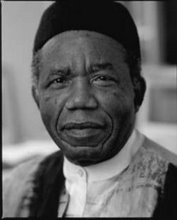
LAST week, the famous Nigerian novelist, Chinua Achebe received an unlikely guest at his home in the Catskills. Nuhu Ribadu, Nigeria’s former anti-corruption cop went to see the sagely fabulist. It might have been a social visit, but one thing led to another, and soon Nuhu Ribadu and Achebe began to talk about the prodigal nation.


By the end of the day, Achebe had uttered his wish: Nigerians should rise towards a revolution. The times demand it. A revolution, in the circumstance of Nigeria, is a good thought; even a great advice. Chinua Achebe is not known for flippancy.

He does not use words carelessly. He must have taken a hard and steady look at things and come to his conclusions. The trouble is that revolutions require revolutionaries. Nigerians have no revolutionaries. She has NGO-radicals; mostly paper tigers. But there is no greater urgency today than to find among Nigerians, as among the inhabitants of Sodom, just one virtuous leader for whom history will spare the impending consequence of our historical mistakes.

It is an impossible task, perhaps because we’ve have been looking for a leader – that is, one archetypal herculean figure – on whom we can rest the crown and who would then embody the will of the nation.

The wrong aspect of that search for this singular individual remarks upon something that we have hardly factored into the causes of the crisis of leadership in Nigeria. Nigeria has absorbed far more of the monarchical and feudal tendencies than the democratic and egalitarian tendencies that humanizes modern societies.

We do not need “a leader.” We need leaders. Highly conscious and capable men and women who can dream, roll up their sleeves, and dig out the muddle in which Nigeria is stymied. However, our language – the question of those who would “rule” rather than about those who can “lead” us – reflect this monarchical tendency. In modern terms, humans ought not be “ruled.”Citizens ought to be “served” by its true leadership.

But we in Nigeria invest so much in the rhetoric of “rulership” that we sometimes forget the particular implication of these terms. Perhaps also, it reflects the exact situation of our lives as long oppressed and mastered people, who have found ourselves mostly under the jackboots of those to whom we delegate the power to govern this nation. For long, Nigerians abandoned their rights of consent. They kept quiet under tyrannies.

They hid their heads, unwilling to fight for their freedom. Only a handful of courageous women often stood up, and when it came to the crunch, they were often left in the lurch, abandoned. In the end, scoundrels became our “rulers.” But developments in Nigeria in recent times seem to suggest that people are increasingly unhappy, and unwilling to be oppressed or “ruled” any more.

There is an increasing destruction, perhaps challenge, to the sources of authority in the nation. The kidnappings; the failure of the institutions of law to rein-in disorder; lawlessness, and insecurity are increasing symptoms or manifestations of dissent; a testimony that the state as it is constituted is rapidly decoupling.

This is merely indeed a reflection of the unhappy truth that more people are tearing up the social contract with Nigeria, because it is increasingly seeming like a dud cheque. There are, of course, the optimists who may say, well, this is an extreme view. It may well be. But if we look a bit around, the answer my friends, may be blowing in the wind.

And this leads me to two recent reports in the Nigerian newspapers, which provide important food for thought as we grapple with the situation in Nigeria. Last week’s Mobolaji Johnson’s interview with the Sun newspapers, and about three weeks ago, the renowned political scientist, Professor B.I.C Ijomah’s address at the Igbo day lectures in Owerri specifically. I will touch slightly on what each man said.

First, the retired Brigadier Mobolaji Johnson, pioneer governor of Lagos, took us on a tour de force of the Aburi conference. This was a landmark interview in two respects, for me. One is that it destroyed the argument that “Ojukwu’s ambition” led to war. Secondly it points to the missed opportunities that Aburi offered for a transition towards a restoration of the republic.

Since January 1966, Nigeria has suspended its republic, and the federalism principle which guarantees the foundations of the federal republic. The central government has so fully appropriated the power and rights of the federating regions that what we have in Nigeria is effectively a feudal centre.

This is not working for Nigeria, and it is obvious that the crisis of the nation stems chiefly from the distortion of our republican status. Indeed, it is a subject which Professor B.I.C Ijomah touched upon in his lecture to the Igbo in Owerri this past September. Any clear observer of Nigerian affairs ought indeed to know that the forces are drawing us closer towards a massive crisis. The current president is too sick to act.

The structures of the state are too weak to remain resilient against the pressures of Nigeria’s multiethnic character. Professor Ijomah specifically noted, and I agree with him, that Nigeria must return to the agreements of 1957 which the nationalist leaders reached and incorporated into the independence and republican constitutions, but which the subsequent military regimes suspended.

Those agreements created the basis upon which Nigerians agreed to live together as a nation. Unless we return to those principles incorporated in our foundational charter, which were suspended in 1966, Nigeria will inevitably head to the rocks.

In its current character, this country does not represent many of us; its current formation is the product of an oligarchic military order set towards conquest and control. But to restore Nigeria will require us to make hard choices.

Indeed, one of the haunting questions, and I think it is urgent, is to rest the ghosts of 1966-70.This country is unlikely to move forward without reconciliation, and without restoring the basis of law and citizenship.

Sunday, October 4, 2009

The Problem With Nigeria

By Obi Nwakanma, The Orbit/Vanguard

I am profoundly skeptical about the meaning of Nigeria and about its ultimate destiny. This, of course is no news. I am like most Nigerians in that emotional place where I have been forced to almost completely come to terms with the tragic fact that the Nigerian project, in spite of the blood and passion wasted on it, and in spite of the benefit of our doubts, is almost proving to be futile. Not because Nigerians do not want a great country. Not because Nigeria has no extraordinary talents to guide its renewal. Not because we do not sense the great rewards in having a great country, proud of its human accomplishments, and its natural and built landscapes. But let us in fact say, the Tarot card leaves me a reading of the state of Nigeria, as exemplified in that mysterious character in one of my poems in The Roped Urn, throwing daggers blindly into the elemental void.

He is a figure of the uncanny. He also in my mind embodies what the Latin American, Alejo Carpentier, would call the “marvelous real.” Sometimes the extended and fantastical aspect of the Nigerian reality is heady and entertaining; sometimes it gets overwhelming and futile, and compels watchers of its events to inevitable fatalism.

I got this sense of futility and fatalism recently from my conversations with a very distinguished Nigerian poet, scholar and statesman who said to me, with resignation in his voice, “I feel no need to write my memoir because, what really does it matter anymore in Nigeria?” It was startling, the depth of his frustration. This is a man whose eloquence and involvement with the Nigerian nation has been extensive, vital, and historic.

I did of course urge him to see that it is the ruptures or gaps in the Nigerian narrative that have left us incapable of creating the kind of continuous scale of history, whereupon the impassioned image of our giant fixed to some usable past will become a guide to those intent on nation-building. Therein lies, to quote the Colombian Gabriel Garcia Marquez, the crux, and perhaps even “the scale of our solitude.”

It appears to me, and to many Nigerians indeed, that Nigeria no longer has a compelling national mission. It seems that the most compelling national raison d’ĂȘtre in Nigeria today remains the jaded war mantra “to keep the nation one;” that is, to hang together by all means necessary. Every other goal is secondary. This is the consequence of the “national security state” created by the military.

But when the value of an abstraction called nation becomes far more important than the concreteness of citizenship the state ought to wither. This fatality of “abstract nationness” has made Nigeria ambiguous. The Federal Republic of Nigeria seems to have no further a reason for being, other than to share oil money and keep the rents coming. Nigeria has not managed to transcend the history of its colonial origins.

She is driven by crass, and its current situation is the product of crude and careless governance as well as lethargic citizenship. We are all now, more than ever since the end of the civil war in 1970, faced with that inexorable question “What is Nigeria to me?” It is no longer the Igbo alone who are challenged by the anxiety of citizenship and national belonging.

It is a condition which even those who once claimed the virtue of preserving Nigeria as the lone historical and spiritual task now confront and ruminate upon, for even the simplest obligation of nations – to provide security to those who claim its membership – Nigeria can no longer, it seems, render or guarantee. The president gets sick, he is quickly flown to Saudi Arabia or Egypt on tax payers’ account.

The tax payers get sick, they have no places to go but to hell, and there are no hells worse than a government hospital in Nigeria. The only other place worth comparison to this hell called Nigerian hospitals is the Nigerian Police station and its jails. They exist in such states of primitive incontinence and cruelty that it seems as though time itself was arrested within their confines.

Last week Umar Yar Ardua embarked upon another trip to Saudi Arabia, while other world leaders were meeting in New York for the UN General Assembly. Yar’Adua was seen being entertained by the governor of Makkah, and as he was being chaperoned around the new King Abdullah University in Riyadh, Nigerian universities remained shut. As many other commentators have pointed out, the incongruity of Yar’Adua’s visit to Saudi Arabia is provocative.

It is simply the case of a mad Nero fiddling while Rome burns. Asked about this by reporters in New York, the foreign minister, Ojo Maduekwe said, the president had an obligation to honour the invitation of a friendly government. Yeah, right! I think it was the minister’s lamest response yet to any serious question. That response telegraphed his own befuddlement. There are those who say, the president is actually too distracted by concerns about the state of his own health to worry seriously about the health of the nation to whom he is chief minister.

He is quite unable to carry out state duties with due concentration and priority. Parliament, full of really mostly weird, third-rate, and inconsequential people, is on a perpetual leave on these matters. In other words, there seems no longer a fierce obligation or desire, even on the part of those handed the sacred guardianship of nation to perpetuate the existence of Nigeria as a real nation within the current history of nations.

The ship of the Nigerian state has not only lost course, but like the massive Titanic, it is sinking right before our very eyes. And many are jumping ship – including ministers of government, who enter for and win visa lotteries to America, where they keep their children, while they maintain a farcical presence in Nigeria.

Any country whose ministers enter for lotteries to enable them and their families reside in another country while pretending to serve another leaves us little doubt, indeed no irony, about the insanity of the situation. But no one really seems to mind any longer. That is the trouble with Nigeria.

Tuesday, July 7, 2009

The Lost Years

By Obi Nwakanma, Vanguard Newspapers

ON May 29, some Nigerians, particularly those who currently describe themselves as partisans of the Peoples Democratic Party, PDP, celebrated what they now call “Democracy Day.”

Yet, this day has no democratic symbolism for anybody else who is conscious, and who is an honest follower of Nigerian history and politics.

For one, May 29 was the day in 1966, when waves of premeditated killing began in the North of Nigeria targeting the Igbo, leading to the first phase of the pogroms in the north, which in turn snow-balled into the full scale event that was the Nigerian civil war.

It was also on May 29 that Jacob “Yakubu” Gowon made his moves signalling events that would lead to the final destruction of the old federation, the foundations of which were painstakingly negotiated by the nationalist politicians as a federal union, following his unilateral acts creating the 12 states with neither plebisctory nor parliamentary authority.

That act today is at the roots of Nigeria’s unhealable wound of history - its fragmentation. So for most Igbo, that day - May 29 - belongs on the register of infamy and is never celebrated. But it was typical Olusegun Obasanjo chutzpah to stick it, warts and all, to the Igbo, and to typically make a profound and dramatic point of it. So he chose to found his own second messianic regime on a date that carries such hurtful symbolism for them, as indeed for many other Nigerians, and to name such a day “democracy day.”

It was an act, epic in its wide presumptions. Olusegun Obasanjo was embarking upon a thoroughly revisionist project whose intention was neither renewal nor rejuvenation of nation, but of a will to claim new fronts of conquest: a Nigeria shaped in the image of the man who seriously thought himself the Maximus Pontifex of modern Nigeria. So, May 29 became from then - that day of his second inaugural - “democracy day” although nothing about it smells nor hints of democracy.

Indeed, it was quite ironic that Obasanjo’s mandate came with so little by way of democracy. A transfer of power had been made through a cabalistic process, by which Obasanjo became, a Greek gift from the ancien regime of disgraced military oligarchs seeking an easy way out of a historic quandary.

They found in him an old trusted ally to make their escape free of sanction.
They imposed their final will on Nigerians and gave us, through a flawed process, an old dinosaur waking from the slumber of his caged sleep to become Nigeria’s president in a millennium that demands new ways and new ideas of people; but especially of Nigeria which was in urgent need of new beginnings.

That is another story. But it does mark an important point of departure in my view, to examine the nature of the “democracy” we inherited, and which we currently practice, in order to see how clearly odd is the term “democracy day,” and how challenging these last ten years of “democratic” transition have been.

I should in fact say without equivocation that Nigeria is incapable of creating a democratic order in its current situation and at this stage of its historical formation. To be plain, Nigeria is not a democracy. It is some kind of hybrid monstrosity between a feudal society and a colonial order sustained by a thoroughly martial mindset or culture.

Three questions ought to clarify these claims: first, are Nigerians participants in this democracy; secondly are the oversight institutions of democracy functional, and above all, is the Nigerian state an organic entity that reproduces the values constant with the values of democracy?

I base my claims from the basic enlightenment perspective that situates man at the epicenter of the will of nations. I’m afraid that Nigeria does not reflect the values that conduce to the provisos of democracy, chief of which is the very fact of the autonomy of the self as a fully conscious and objective being capable of acting in total self interest.

The political rhetoric should inform us: Nigerian politicians are “rulers” not “leaders.” They are accountable not to the people but to their “godfathers” and have scant need for the their constituents beyond the symbolic moment. The last ten years have been lost years.

In that period Nigeria should have strengthened its civic capacity to create true democratic values. But it is clear that it is not in the interest of the current “stake holders” on the Nigerian colonial state to free the national space for democracy.

They will not without a fight. In 1998, when the military wing of the Nigerian ruling class was about to be forced out of power by a concert of factors which had confluenced with the June elections in 1993, they quickly created a diversionary crisis, sacrificed a number of their allies among whom ironically indeed was Bashorun MKO Abiola, a complex man who had been an arch supporter of every military regime and whose fingers were in every corrupt pie in Nigeria prior to June 12. Moshood Abiola became the standard bearer of the democracy movement in Nigeria by default.

He was basically hijacked and martyred to provide cause for the coalition that had formed against the military oligarchy, and the election of June 12 had become, in spite of itself, the rallying principle by which Nigerians gathered to challenge the military oligarchy.

But not long after, the key figures of the oligarchy regrouped and were once again recycled into the new order with Obasanjo.

Many of them emerged as ministers, party chieftains, parliamentarians, and key factors of politics in the last ten years. Former opponents of democracy became champions of democracy over night.

They used their substantial investments in power to muscle through the rather feeble democracy movement, whose leaders kept quibbling at the crucial moments until the nation was hijacked from them, and the initiative was taken from them.

The fact is that the last ten years has been characterised by a most disturbing truth: Nigeria’s political space was hijacked by a shrewd and ambitious group of men and women, who have very little democratic credentials, whose preparation for civic leadership is scant and possibly even non-existent, and many who in normal societies belong to maximum security prisons found themselves by default in state houses, and as ministers of government and lawmakers.

These men and women have sustained themselves by using means of terror rather than of discourse and dialogue.

We have witnessed political assassinations and chicanery of the worst kind in Nigeria; we have seen governors operating the accounts of states as though they were running their domestic grocery accounts; we have seen the collapse, perhaps because their foundations have been fundamentally weak, of the structures of bureaucratic governance of states in a proportion that compels us to ask the question: how can democracy exist without the kind of apparatus of oversight necessary for the internal regulation of state?

Among the most glaring issues of the past ten years have been the sanctity of elections: election is the sacred point of democracy.

But in Nigeria the institution that conducts elections is so centralized and the president of the electoral body so powerful that he or she can decree who wins or loses an election irrespective of the mandate of the people.

The last show of shame in Ekiti testifies to the anomaly of democracy in Nigeria and to the urgent need for the peoples of Nigeria to begin to ask questions, read the minutes of the last meetings, and above all, form compelling coalitions to restore the integrity of the electoral and democratic process.

Among the more important questions that must be asked should also be that question about the structure of the Nigerian state. That is the national question.

That we have postponed this question to this moment is a futile delay tactic, but it also signals the loss of these past ten years because it is a question that must be asked before we begin to practice democracy. And that question? What is Nigeria to me?

Sunday, March 1, 2009

The unemployment bomb

By Obi Nwakanma

JUST last week, the federal government released the unemployment figure in Nigeria. The Bureau of Statistics, not always on the mark in these matters, has to indeed confirm that a whopping 40 million Nigerians are unemployed.
This is a startling number by any standards. It means that we have over 65 per cent unemployment rate among employable Nigerians. This figure has national security implications. Let us consider the old clichĂ© about the devil’s workshop and the idle hand, and we may not look too far in sensing the incipient catastrophe that threatens this nation with that many hungry and angry people on the loose and in the margins.

For many years, our kinship and extended family systems had borne the brunt and the weight of our social crisis, providing the basic social security safety nets that have largely cushioned and prevented the violent rupture that should naturally come with this level of economic insecurity. But increasingly the severe weight of the problem is also weakening the once solid foundations of the kinship system and the extended family traditions that were once the vital recourse of people largely unprotected and ignored by the formal system of governance.

As our societies grow more complex, such basic, some might even say primordial forms of social security will definitely, increasingly become insufficient in dealing with the complexity of social belonging.

Of the most significant indications of the absence and increasing irrelevance of government in the lives of Nigerians, the most fundamental is in its inability to create a systematized means of social security: there is no unemployment benefit, no disability benefits, no access to credit for those who might in fact wish to explore private entrepreneurial alternatives; no well organized small business initiatives, no social welfare scheme, and so on and so forth to stem the direst consequence of social disorder, the result of increasing anger, alienation, and distrust of one’s own nation.

Forty million unemployed Nigerians is, let me repeat it, a national security threat. I will illustrate my claim by telling the story of Chima X. He grew up a typical Nigerian lad. He was raised in a small town in the Eastern Nigeria, full of dreams and hopes of a good life: a good job, nothing extraordinary, just work that would place food on the table, pay enough to secure a decent apartment in the city, a nice little car, and in good time a small family - marriage to nice girl with whom he would raise nice little kids, whom he would send to nice little schools.

He would have enough for his social commitments and civic responsibility: pay his dues to his town union, and make the yearly contribution to the community fund. Make his donations - just his widow’s mite - during the yearly town union launches at Christmas. Basically earn his dues and the ungrudging respect of his peers through fulfilling his social roles.

His dreams were that simple. Nothing earth shaking. He did not want to be a millionaire, or to be president of Nigeria. Just like a typical Igbo man, he would be content to be the lord of his own small domain - his house, beyond which threshold, he becomes a rightful agnate, with others, to the land.

That is, he simply wanted to be a true citizen: free and content, and with no big debts to pay. His provenances were simple and straight forward. Nothing special. Both his parents were educators, and taught in high schools. They had lived frugally and with apparent contentment, and provided Chima X and his siblings with basic, good education.

They had not much store, but they earned social capital as fine educators, those whose services, though not always now publicly acknowledged, had been pillars of their communities where they once earned respect as teachers, in an era when the teacher was the moral compass of communities in the East. They pinned a lot of hope on their children having an even better life than they had, and continuing the tradition of fine community service, and of bringing more social improvement and progress to their ancestral town.

They did not expect them to make a life, as they themselves did in their ancestral town, but to range farther afield as they may wish, but always touch base with home, even as they contributed to whatever society among whom they lived. It was a simple dream by parents who themselves had nothing much else but hope and prayers, after educating their children, to offer. Well, Chima X goes to the university, and graduates with a good second class degree in chemistry.

He does national service in some rural location in Ondo, and discovers that there is indeed much to be done if his country were to move, given its enormous resources and potentials, to walk at least among the company of medium industrial powers like Brazil, India, Korea, and such people with whom Nigeria had once been classified. He had the dream of all young people.

To be part of a transforming work force. To be, as the surrealist Congolese poet Felix Tchicaya U’Tamsi would say, “a pagan in the pagan renewal of the world.” In essence, to be acutely present in the social and economic transformation and regeneration of Nigeria. He was a good chemist.

A man of ideas. A believer in Nigeria; even “detribalized.” Six years after national service he was still in Lagos where he was busy looking for a job. Indeed he had come to Lagos, that melting pot of nation like most of his friends after national service, looking for jobs and opportunities, and applying for occasional openings listed in the classified sections of the newspapers.

The economic policies of the Buhari and the Babangida regimes that destroyed the manufacturing, industrial and commercial capacity of cities like Aba and Onitsha, had led towards evisceration and massive emigration of capital and labor to places like Lagos which prospered through deliberate banking and custom policies that rendered other places sterile. So Chima X came to Lagos. He soon found that Lagos was not an ordinary melting pot, it was a toxic cauldron: a haven for sharpers, smugglers, gun runners, and many who lived big on illusion.

Chima X was however lucky: he had found accommodation in the home of an old buddy, who had not, it soon came to seem, made the mistake of going to the university, but had come to Lagos as soon as they finished secondary school, and found a little niche for himself after some hard apprenticeship as a wharf rat at Apapa.

He lived on wharf ratting. He made good dough fronting for corrupt custom officials who wanted to dispose hot items through the under ground. It was thanks to his magnanimous soul that Chima X could live in Iyana-Ipaja. He also gave him occasional transport money to pound the streets of Lagos.

He pounded that street literally and metaphorically until the streets of Lagos echoed back to him. Nobody seemed in any urgent need of a chemist. He sought employment in every government agency; even in a private school that paid peanuts. He soon grew despondent until one day, he ran into another old buddy from the university. A chemist too.

But he was looking sharp and well fed unlike many chemists we know. He said he was a manufacturer’s agent. But that was not all the story as Chima X came to find. His old buddy had found a lucrative job passing old Soviet era munitions to whoever needed it across the borders of West Africa.

There was much arms floating around in West Africa from the wars in Liberia, Cote D’Ivoire, Sierra-Leone, and any enterprising young man could make something of himself mopping it up.

There was also the international connection with the old Soviet era commandos, and former South African crack commandos who had become mercenaries, recruiting and training, and supplying arms for troubled spots on the coast of West Africa.

Nigeria’s Niger delta is one lucrative spot. The rich Gulf of Guinea has since become a mercenary’s haven. Chima X, trained chemist, could find his own niche. And so did he. The last time we heard, he was busy crossing the borders of West Africa, a manufacturer’s agent for incendiaries.

Anybody who thinks this fictional scenario an impossibility should look closer. The attempts to overthrow the government of the small, oil rich Equatorial Guinea two weeks ago by non-state actors with their staging posts in Nigeria, is a flash light on the potentials for the massive recruitment of available, well trained human resources by states or even non state interests.

The recruits need not indeed be angry, they just have to be hungry and without the distraction of fulfilling work. It is up to the government of Nigeria to defuse this unemployment bomb. The alternative will not be pretty.

Saturday, February 21, 2009

A Toxic Diplomacy

By Obi Nwankanma

The tension of Nigeria’s ethnic architecture reared up its head decisively again in the last one week when the letter written to foreign minister, Mr. Ojo Maduekwe by the now erstwhile ambassador to the United States, Oluwole Rotimi, a brigadier and former military governor of the Western State, came to light.

In the letter, just not so as to rehash the circumstance as to highlight its implication and context, the former Brigadier Rotimi had written with elephantine angst to the foreign minister, calling him a “tribalist” and suggesting that he had dealt with people like him before.
How so? Well, Brigadier Rotimi had been, he wrote, the quartermaster-general of the Nigerian Army that dealt with Biafra’s “rag-tag army” of which Ojo Maduekwe was a captain. In swift response, the foreign minister had copied the president, pointing to the utter disdain which the presumptuous Rotimi held both his person and his office, and as events have proved, began what Brigadier Rotimi can now hardly call a “rag-tag” effort to recall the man from his sinecure position as ambassador to the United States.

The background to this situation might as well reflect the profound inadequacies and incompetence that generally characterize Nigeria’s public service, rooted as it were, in the profound cracks in the ideas of a nation which has now come to see sensitive public positions as ethnic pay-off or preferment rather than as an effort at nation-building.
The situation with Brigadier Oluwole Rotimi we have come to learn, came to its decisive heights during the inauguration of the US president, Mr. Barack H. Obama, when the Nigeria ambassador broke all known diplomatic protocols by shunting the foreign minister and chief ambassador in his introduction of the Nigerian delegation.

He had in fact treated Ojo Maduekwe with contempt and had introduced Mr. Emeka Anyaoku, former secretary-general of the Commonwealth, as head of the Nigerian delegation.
This was an act of gross insubordination, and came to its quite hilarious acme when Ambassador Rotimi, in response to the foreign minister’s query about his conduct went off the cliff of reason and launched what can now be described as the greatest diplomatic faux pas in Nigeria’s diplomatic history.

The ambassador’s dispatch to his principal was not only dripping with personal insult it was replete with toxic history. Rotimi woke the restless ghosts of Nigeria’s most terrible national disaster: the civil war in which millions of the Igbo and other Easterners had been killed, deliberately starved, and raped. That Rotimi, a key player in that event would still puff with unimaginable candour for his role in that slaughter points to something egregious and irresolvable in the national psyche of a nation and the context of national belonging.

In fact, while Rotimi’s role as quarter-master gneral in that event did not bring him directly to the fields, he now bears direct historical responsibility for supplying the armies that committed grievous evil against the civilian populations of the East and much of the Midwest.
The massacres at Asaba in which the Nigerian Army selectively annihilated an entire generation of men, from the age of fifteen and above, who had been called out at the Ogbo-Ogonogo square to be executed, remains fresh in many minds.

The writer and journalist, Emma Okocha, whose family had been virtually wiped out by that act has written a most unforgettable book of that event, which he has called Blood on the Niger, a haunting account of the operations of the Army of which Oluwole Rotimi had been quarter-master general, and of which he remains quite inordinately proud. There are many more accounts waiting to be written about the very genocidal acts of that war, of the bombing of civilian targets: markets, schools, hospitals, and even relief planes flying the cross of mercy, which had been shot down deliberately to enforce the food blockade of Biafra. There are many unmarked graves from Afor-Umuohiagu to Uzuakoli of innocent people who were killed by the guns sent to the fields by the quartermaster-general.

This is all too true. But what Oluwole Rotimi could never in good conscience say was that the Biafran forces were a “rag-tag” army. It was a disciplined force which held its grounds for three years. Indeed, it was an army which the French ambassador who visited Biafra in the period said: “before I came, I thought the Biafrans fought like real men. Today I know that real men fight like the Biafrans.” But because Brigadier Rotimi wanted to exact his full quarter of history in a futile fight with his superior, he had to sneak it all in, gloating about his exploits in the defeat of “a rag tag army” of which the current foreign minister was but indeed a subaltern.

These talks would have far less significance had there not been, within the context of post-war Nigerian history, a sense that the Igbo who returned to Nigeria have felt increasing isolation and alienation from the centre of Nigerian affairs. There have also been two streams of thought in Igboland, one which seems to suggest that the Igbo should forgive and integrate fully to Nigerian affairs irrespective of the egregious and obnoxious compacts that consistently seek to reduce its stakes in Nigeria, and the other which tends to feel that the Igbo should begin to deal very decisively with any further acts of violence of any kind - physical or epistemic - against it; essentially as deterrent to anybody who might seek unwarranted heroism on Igbo dead or interest. Among the last group have been advocates for bringing those who committed war crimes against the Igbo to the United Nations War Crimes Tribunal.

This group believes that had the Igbo taken these people to answer before the court of conscience, that such fatuous gloating by people like Oluwole Rotimi who prefer not to let the Igbo continue to chew their cuds on these matters, and quietly mourn their dead, would have been long resolved, and equifinally. Perhaps someone should remind Brigadier-General Rotimi, that war crimes in international law have no time bars.

The other aspect of this is that Brigadier-General Rotimi, unfortunately, has tapped into what many now see as the historical faultlines in the ethnic relationship between the Yoruba and the Igbo. I need to say this quite upfront, that General Rotimi’s comment does not reflect the Yoruba people, or their ordinary feelings about the Igbo with whom they have, to the best of my experiences, remained in healthy and fair competition as do many competitive cultures.
But it does seem that General Rotimi belongs to the party of the Yoruba elite in that historical divide who found their voices and discovered their lifetime work in the deconstruction of the Igbo as vital forces in the building of this nation.

The unfortunate thing is that General Rotimi is an educated man: one of the earliest university trained Nigerians to be commissioned into the officers corps of Nigerian Army, having earned the degree of the University of London. But his career was made in the bloodbath: he took over from the slain Arthur Unegbe as quartermaster-general; he became the governor of Western Nigeria under the Gowon administration, and he was apparently among those who held sway in enforcing a Carthaginian treaty with the East in spite of the “no victor, no vanquished” treaty that ended that war.

General Rotimi must be in some funk of war. It is so, I suggest, because many years later, he remains quite unaware that the war has ended. The Igbo have moved on. Indeed, the Igbo moved on to other things by January 16, 1970, one day after armistice was declared on both sides of the conflict. It is only sad that because people like Oluwole Rotimi remained influential in the affairs of Nigeria, and continued for many years to harbour, it seems, not the Olympian dreams of building a great country, but the Olympian dreams of teaching Igbo a lesson for daring to be at lead, from the anticolonial agitation to the first years of independence, and thus stamped their authority firmly, and in so doing, stamped on the egoistic feet of the Oluwole Rotimis of this world, Nigeria continues to have an Igbo problem. Rotimi was part of the project of a final solution on the Igbo problem.

But even that failed. It failed because, somehow, people transcend the straps that hold them bound to oppressive time and history. To heal Nigeria is a historical task. People like Oluwole Rotimi will have to give way. It is proper, therefore, that he has been recalled from his post by the president.

Monday, February 9, 2009

Healing the Igbo World

by Obi Nwakanma

LAST week, renowned novelist Chinua Achebe delivered the Ahiajioku lectures. The Ahiajioku annual lectures have become the most important public podium for a distinguished Igbo thinker to address the Igbo on a fundamentally Igbo issue. The visionary government of Dr. Sam Onunaka Mbakwe established the Ahiajioku lectures in Owerri, and the first lecture was given by the eminent scholar and critic, Professor MJC Echeruo on the subject: “Ahamefula: a matter of identity.”

Echeruo’s pioneering exploration set the tone for the Ahiajioku lectures which have hosted an array of distinguished Igbo scholars including the late D.I. Nwoga; Angulu Onwuejiogwu, Pius Okigbo, Bede Okigbo, Ben Nwabueze, Adiele Afigbo, Anya O.Anya, Victor Uchendu, Nolue Emenanjo, up to the past week, with Chinua Achebe. I still hope that the Ahiajioku committee will consider getting either the eminent Ben Obumselu or Dim Chukwuemeka Odumegwu-Ojukwu, if the gods of the Igbo world keep them, to give next year’s lectures and the year after. The harvest is consistently rich. It is one important forum where a lively gathering of the Igbo experience momentary epiphany.

This year’s lectures by Achebe did not, it seems, address a specific area of Igbo life, but spoke more in a general way about the challenges before the Igbo in the areas of the uses, and the development of the Igbo language and history, the sustenance of the Igbo ethical life of work, industry, innovation, probity, thrift, and honesty, and the fostering of a more coherent Igbo identity to reunite its confederal patchwork and re-ignite Igbo collective agency. Basically, a renewal of the Igbo spirit - that mystical sense of what the Germans call the “volk”- as a means of self discovery. There is a sense in the Igbo world, especially among its thinking classes today, that there is an Igbo crisis of identity and value, and that this crisis of the Igbo is at the roots of its contemporary limitations particularly in the formation of nation.

At the core of the Ahiajioku lectures is the project of self-interrogation; a means by which the Igbo ask questions of themselves. It was not accidental that only nine years after the end of the civil war that devastated the Igbo world and almost sapped its national will, the most self-aware government elected by the people since the end of the war, led by a visionary man, put together a committee of Igbo intellectuals to explore the possibility of what has now become the Ahiajioku lectures.
The conceptual frame of the “Ahiajioku” idea is particularly, thanks to the secular and historical imagination of the brilliant Donatus Nwoga and Gaius Anoka, to provide sacred grounds for pan-Igbo ruminations using its greatest mythos - its season of thanksgiving.

They did not limit the lectures to merely the concerns of “Imo state”- to that narrowing of the field of what it means to be Igbo. But they created the grounds of a pan-Igbo discourse community; a means of looking at, and renewing the Igbo world; in which a worthwhile Igbo was invited to explore the Igbo question. My point is that unlike today, the Mbakwe administration did not limit the possibility of the Igbo world. They saw the stark possibility of a renewed Igbo enterprise. It was called Igbo unity. This was also at the core of Chinua Achebe’s lectures last week. But Igbo unity is not a merely theoretical thing. It must be the product of generative action; a well thought-out and instrumentalized process that begins from that interrogatory stance: who are the Igbo?
What makes anyone Igbo? Igbo is of course the totality of identity, values, rituals, memory, heritage, left to us by the Igbo ancestors. But one is not Igbo merely because they bear Igbo names or have Igbo parents.

It is, as Echeruo said, “a matter of identity” – the product of consciousness. At the central philosophical core of Igbo conception of being and agency is the self (“onwe”), that fully Cartesian conception of the subjective.
In other words, long before Rene Descartes grappled with the question, one of the foundational thesis of the European enlightenment, outlined in his famous Discourse on Method, the Igbo had settled the problem quite elegantly of the self-conscious “I” of history. I will leave the more subtle theoretical issues around this to Igbo Philosophers like T. Uzodinma Nwala, but it is important to situate the idea of the Igbo self (“onwe”) in its relation to the collective other (“onwe anyi”) to understand the Igbo.

It is a cultural psychology that insists on the primacy of autonomy and shared autonomy, what some identify as the “king in everyone.” But ever so conscious of intricate dualism, the Igbo also understand that the autonomous self - the “onwe” - is subject to only one king: the “Oha”- the collective will. That is why the Igbo say, the king of the people is the Oha. Whenever the Igbo gather in freedom, there, their sovereign will is constituted.

I point this out basically to counter Asagba na Asaba, Professor Chike Edozien’s suggestion at the Ahiajioku lectures for the creation of the institution of “Eze Igbo Nile”- the Igbo King - on a rotation that would function like the papacy. his is a very bold proposition and move to create an Igbo monarchy. But the Igbo think of the monarchy as abominable (“Ezebuiro”), a fact which Achebe himself has noted in one of his essays in Home and Exile. So it will be futile to embark on such an illusion.

I, as Igbo, am my own king. But there are two kinds of Igbo today: a handful that want to institute the monarchy in Igboland, inspired by the feudal and monarchical cultures of the Igbo neighbors.
These pseudo royalists want an Igbo “ruling class” to be master over a vast, landless, new peasantry which they wish to create and dominate. Majority of the Igbo nevertheless remain skeptical and free; true democrats, who would never countenance the rise of the monarchy. They keep to the republican ideal of the Igbo world that has historically made the Igbo one of the most vital, resourceful, innovative, and freest cultures/people in the world. To lose that vitality is akin to death.

The Igbo world is in fact in crisis, and Achebe’s lecture was not fully able to capture the ramifications. But we must listen to Chinweizu’s admonitions about an urgent and necessary return and revival of Igbo culture.
The first place to start is to return to its authority system - the “Umunna” system and upturn the incipient “Igwe” or new warrant chieftaincies that now dot the Igbo world. The Igbo are faced with 21st century problems and must adopt 21st century solutions. It is a major tragedy that key, brilliant Igbo like the famous novelist V.C. Ike, the economist Green Nwankwo, the musicologist, Laz Ekwueme, and the famous bioscientist, Chike Edozien, among many have succumbed to the “Igwe” antinomy. It is largely a waste of human resources. Their peers in Europe and America are chairing large foundations, helping to raise funds for research institutions, remaining active in scientific and humanistic education; heading the trusts of major universities and independent laboratories, creating values that sustain and validate the highest pursuits of their societies, and leading their communities as volunteers and models of the highest civic acts: democratic involvelment.

They should be talking about remodeling, re-equipping, and upgrading facilities in all schools in Igboland to meet the needs of the current century; they should be concerned about creating a new generation of Igbo and even Nigerian leadership through deliberate, strategic action and education; they should be proposing the establishment of the Mbonu Ojike Medical Research Centre as the teaching hospital for the School of Health Sciences of the Federal University of Technology Owerri; they should be putting their heads together to raise money throughout Igbo land for the Anioma University; they should establish the Igbo People's Fund with seven trustees, to raise money and fund Igbo Education and Scientific Research, Igbo political Action, Igbo People's Security Initiative; the Nnamdi Azikiwe professorships; the Ibiam residency; the Eni Njoku BioTech Fund; the Jaja Wachukwu Centre for Strategic and International Studies; the Osadebe Prize; the Odumegwu-Ojukwu Centre, etc. etc.

Saturday, January 3, 2009

The Igbo agitation for state creation is a ruse

by Obi Nwakanma

Let me repeat this again: the agitation in certain quarters for new states to be created out of South Eastern Nigeria is a monumental distraction. The Igbo of South-Eastern Nigeria do not need another state. They need a massive infusion of resources for the rehabilitation of the five states already present and functioning at various levels of incompetence.

The Igbo need, far more urgently than a new state, a proper husbandry and accounting of the resources currently available to the current states of the South-East from the federal grants.
The Igbo need a different kind of equity. Parity of states will not fully resolve the crisis of resources, or the crisis of governance in the so-called states of the South East, which in truth are now no more than what I would call “Bakassi states” – mostly basket cases in which government seems absolutely absent from the ordinary or quotidian lives of the citizens.What the citizens of these sorry states currently in the South east really need is for the current governments in place to impact meaningfully on their lives. But that has not happened, in spite of the agitation for state creation in Nigeria. All that talk about bringing government closer to the people is sham.

People felt closer to governance when there were fewer states than now when every little corner of the Nigerian yardage seems to have become either an “autonomous community” or an “autonomous state.” In other words, there has been very little, discernible, direct or clear benefit to the ordinary citizen from the various dysfunctional exercises of state creation that has gone on in Nigeria since 1984. Instead what has become obvious is the alienation of citizens from government.Once capable and prosperous and potentially coherent political or administrative units were dismantled and in their places, these “magi cube” states have been created. The aim, it seems, was to intentionally dissolve the legitimacy and powers of the federating states of the union, create a powerful central government, and create a very weak federation in which control of the centre becomes the basis of the control of the federation.

For the Igbo of south eastern Nigeria, a long experience with political marginality has quite expectedly driven them to a search for parity with other so-called political regions on the matter of state creation. But on that question of political and economic justice for the South East and the Igbo people in general, the creation of a new state, vigorously canvassed by a very well organized and vocal minority among the Igbo, will not cut it. I say this from sampling a cross section of Igbo opinion on this matter: most Igbo do not care for the creation of new states in the East.

They do not see it as a solution to the problems of the East. Indeed a majority of the Igbo from my investigations regard this call for a new state in the east as simply part of a now familiar gimmickry by its current political elite who seem totally and frightfully out of touch with Igbo needs and expectations.The question for many Igbo is: what is the purpose for a new state in Igboland if it is not to serve the goals of further balkanization of the South east as a coherent, and potentially powerful political entity? What have the Igbo done with the current five states in the South-east? Whose benefit would this new agitation for states serve? The answer to the last question seems rather obvious.

The current agitation is driven by a cabal of interests whose goals are neither developmental nor visionary, but who seem given to the rather familiar “agbata-ekee” paradigm of political chop-and-quench. It does not matter what is at stake, for as long as the issue is the distribution of pork, this cabal of current political leadership seem prepared to undermine long term Igbo interests. In fact, it is not in the long term interest of the Igbo of the South East for another state to be created out of the South-East, in spite of what the retailers of this strange fantasy say.The argument for new states to be created out the South east is fundamentally premised on the grounds that the South eastern region of Nigeria has the least number of states among the six geographical zones. This is hardly a sensible premise to create states, because, of all things, no one is still in the business of making new lands. But besides that fact of nature, the premise presumes a certain injustice against the Igbo on matters of allocation. But frankly, equity demands that we come with clean hands and utter clear truths to power.

First, the Igbo position is not absolutely true. The Igbo have seven states in which they have great stakes. Aside from the five states of the South east, two states in the South-South have major Igbo presence, and the Igbo cities of Asaba and Port-Harcourt are capital cities of two major South-South states. We must take that into account. But my greatest dismay is in the immediate implications of this agitation.One of the most myopic developments in the political affairs of the South-East is the weakening of the delivery of governance by the breakdown or fragmentation of old administrative units and centers. The South-East suffers today from a rather terrifying situation of balkanisation, which rather than offer grounds for effective political and economic action, only further dissipates the energy and resource necessary for rebuilding the political and economic base of South-Eastern Nigeria. Any close observer of affairs in the South-East of Nigeria will immediately and honestly note that state creation has not been of any particular benefit to the Igbo people.It may have benefitted just a handful of people – the so-called “stake holders” – but not the wider citizenry. If a true referendum is carried out today in South-Eastern Nigeria, as it ought indeed to be conducted, on the question of creating new states, it will fail with wide margins. The reason will be very clear.The creation of states has been more of a burden rather than a blessing to the East. It has separated and alienated once close neighbors; it has made the East far too politically, economically, and socially fragmented, and it has not solved the problems of the East. Indeed, the east had far better going for it when it was Eastern Nigeria or even East Central state than now with its five states, where nothing works. Resources that could have been used in solving the material and social concerns of the people are used in “administering” governors lodges and maintaining advisers to governors. Not much has accrued from the federation from the East from state creation.

For instance, the Federal government did not build new infrastructures for the Federal Medical Centres in Owerri or Umuahia, they used the existing facilities of the Queen Elizabeth Specialist Hospital and the Owerri General hospital; they appropriated the College of Agriculture in Umudike; the Alvan Ikoku College of education in Owerri and the State polytechnic at Nekede, Owerri and turned them into Federal institutions.
The so-called “federal presence” in the east from state creation is pure madoffy. So indeed, there is no great benefit from these matters. The greatest and most immediate need of the Igbo of the South east is not the creation of a new state: it is the creation and expansion of Research and Production infrastructure to re-engage and redirect Igbo productive ingenuity and energy.

It is the rehabilitation of Aba and Onitsha; two cities that have basically collapsed because even the current state structure is unable to maintain and expand them as epicenters of commerce and the nerves of regional economic activity; it is the rebuilding of schools and reforms in education: no new schools have been built in the east by any government since the 1980s; no new investments on existing schools or educational infrastructure. Anybody who doubts should visit the Government College Umuahia, once the most beautifully laid government school in Nigeria.

Today it is a sorry ghetto not fit for prisoners of war. The Abia state government is unable to maintain that vast estate. Notably, the same goes for the Government Colleges at Afikpo and Owerri. Yet these were properly maintained under the single Eastern regional government. Anybody who sees the state of government owned schools or hospitals or even the local community markets will understand that what the South east needs is not more states. It needs effective, visionary governance.

Tuesday, April 1, 2008

Not Aba, Not Onitsha

Written by Obi Nwakanma

Sunday, 30 March 2008

IF you asked most people today to go to Aba or Onitsha to settle and live, the first impulse would be to think that you are placing a curse on them. And I am totally serious. Young men and women, the most productive and active catalysts of city life, do not find any incentives to go to these once thriving cities of the East to settle, and live a full life.
I once asked a friend of mine who grew up in Onitsha, and who now teaches at the University of Denver, Colorado, if he could ever think about living in Onitsha or raising his children in Onitsha, and his response to me was quite frank: “there is nothing for me in Onitsha!” he said.

It was no longer even the city in which he grew up. The decay of a city like Onitsha is so terrifying that an encounter with both the image and reality of the city is nightmarish - a true ghostly miasma that is.

Until you have felt and seen it, it is quite unimaginable. The sludge of human and industrial waste that runs on the public and private spaces; the sense of the brokenness of everything; the disorder in city planning; in code enforcement; in street planning; in the general ordering and layout of the city makes Onitsha today, one of the most polluted and certainly one of the most ungainly sites of human habitation anywhere on God’s earth.

Yet encrusted in that pod of waste is a possible gem; a once well planned city which becomes only clear from the air, which has only been distorted by the barbarous rage of a most philistine generation for whom beauty and civility are alien values.

Onitsha still has some of the finest colonial architecture which are indeed great set pieces and which could just be rehabbed with a little imagination, care, and some respect for heritage. Yet also, Onitsha is dotted with some of the most monstrous forms of architecture, a pretence at the high-rise apartments, which give little room for aesthetics. The buildings are often largely utilitarian.

They are most times constructed with little rhyme or reason, possibly inspired by the competitiveness of the Onitsha landlord who draws the design on the sand, and builds just to prove to everyone else that his “four decking is higher than yours.”

The result in Onitsha, as one drives in, is a sense or an impression of a vast project – those low income, box-like constructions of high-rise apartments that dot the landscape of American urban ghettoes that are infested with drugs, prostitution and poverty. I have nothing, of course, against urban housing, but let it be built with respect for the people, with a sense of spatiality, with some aesthetic purpose.

Onitsha’s image suffers from its certain lack of awareness of its own history or importance. My early vision of Onitsha was shaped by an early encounter with Chinua Achebe’s novella, Chike and the River, a book I read in primary five.

I also associated Onitsha with what one imagined to be the magnificent bridge across the Niger at Onitsha, which even now, remains as powerful as New York’s Brooklyn Bridge, as an authentic symbol of Nigeria’s entry into high technological modernity.

The Brooklyn Bridge has been celebrated in the epic poetry of great American Romantic and modernist poets like Walt Whitman and Hart Crane, but not the bridge across the lordly Niger in Onitsha. Onitsha was for many years the cultural and commercial center of the East – something of the Boston of Southern Nigeria – with its place as the epicentre of Christian missionary movement into the Igbo heartland.

For many years, it was the headquarters of the Church of the Niger. It was the city of Basden and the Archbishop Denis, as well as the Joseph Shanahans. Those icons of the Roman and the Anglican churches, who ironically were also figures of early Igbo modernity of the late 19th century.

Onitsha was the intellectual capital of Southern Nigeria, with its famous parochial schools, like the Christ the Kings College, the Catholic boarding school for boys, or the Denis Memorial Grammar School, the Anglican equivalent, or the Queen of the Rosary School, the Catholic boarding school for girls, or the famous St. Charles Teachers College, and so many pioneer schools that made Onitsha the gathering of the early Igbo towards cultural modernity.

It was the city that drew the great generation of Igbo, and indeed Southern Nigerian modernists. The city of the great Zik, whose statue still adorns an important historical site of the city; the city of Denis Osadebe, Mbonu Ojike, Nwafor Orizu, Ikejiani, Raymond Amanze Njoku, Pius Okigbo, Chike Obi, Sylvanus Cookey, Birabi, Ben Enwonwu, Cyprian
Ekwensi, and too many others too numerous to mention.

It was the city, whose centrality in the evolution of modern Nigerian culture has been recorded permanently in Emmanuel Obiechina’s canonical study of the literature now called, “Onitsha Market Literature,” produced in the great forges of its little presses, much like the grub street, which basically disseminated the most significant tradition of city penny literature in that march towards the modern. Onitsha once had a great newspaper too: the Nigerian Spokesman, which gave this city its
certain flavor.

I could go on and on, but I hope the picture is clear, that from the time of the Saro and Caribbean middle class of lawyers, doctors, teachers, and so on, who first constituted the society and culture of Onitsha, of the Onitsha Literary Society, funded by a remarkable whiteman whose grave is still marked in one silent corner of the of the Onitsha city cemetery, to today, a city like Onitsha has undergone radical transformation. A cultured middle class seems absent.

The city exhibits the marks of dystopia. Yet it is a city of possibilities, if only the Anambra state government, can think slightly out of the box and commence an ambitious City redevelopment plan, by bringing a number of things to bear: the reconstitution of Onitsha as a Metropolitan district with its own city government, and execution of a plan that would integrate Ogidi, Obosi, Nnewi, Oba, and the surrounding districts, as part of the conurbation of a new Onitsha Metropolitan District.

This metropolitan authority should then think about raising property and other municipal taxes and begin the very clear process of redesigning and rebuilding Onitsha as a modern, 21st century city that should integrate the grandeur of its own history as the first epicenter of Igbo modernity, and promote that history as part of its culture and image, and
its new offering.

This is what great cities do. It should also work inexorably towards the development of its valuable water front into a great residential, business and culture district, with splendid private and public residential facilities, fine offices, great restaurants, galleries, theatres, well designed public parks, and such a place that would draw people to its profitable use, and that would enrich the city significantly; and in some ways, connect it to its twin city across the river, Asaba, for the
benefit of all.

This is the only way to stimulate growth and economic development on a scale that is purposive and significant. I have used Onitsha clearly as a foil even in my description of the other city, Aba. I have always said that one of the most important reflections of the kind of mindset that have destroyed once well-made cities like Aba, designed by Pius Okigbo as Development Officer in 1947, is in the destruction of the Aba golf course and its parceling off to speculators who quickly turned this once beautiful place into a monstrous space.

Aba and Port-Harcourt are also inevitably bound to shake hands and rejoin themselves at the hip, as it was once conceived, sooner than later.

And so it is important for the authorities in those two cities to begin the process of joint planning and remodeling, including creating joint sewer districts, protected forest areas, river and lake recreation areas, that would link the triad development from Owerri, Aba and Port-Harcourt, starting at the Owerrinta Port, near Okpala.

But as it is, it seems like very little thinking is going on at a grand scale in government. These cities cannot recover their economic powers, if they do not attract the right kind of human energy. It is imperative therefore, to draw people back, with great schools, great city hospitals, great museums and galleries, and generally, great environments to live and nurture families in a healthy and sustainable way