Showing posts with label Obi Nwakanma. Show all posts

Tuesday, August 17, 2010

OBI NWAKANMA'S VISION OF A RENASCENT ONITSHA CITY


By Okenwa Nwosu, MD, Igbo Forum

“It was the city that drew the great generation of Igbo, and indeed Southern Nigerian modernists. The city of the great Zik, whose statue still adorns an important historical site of the city; the city of Denis Osadebe, Mbonu Ojike, Nwafor Orizu, Ikejiani, Raymond Amanze Njoku, Pius Okigbo, Chike Obi, Sylvanus Cookey, Birabi, Ben Enwonwu, Cyprian Ekwensi, and too many others too numerous to mention.
It was the city, whose centrality in the evolution of modern Nigerian culture has been recorded permanently in Emmanuel Obiechina’s canonical study of the literature now called, “Onitsha Market Literature,” produced in the great forges of its little presses, much like the grub street, which basically disseminated the most significant tradition of city penny literature in that march towards the modern. Onitsha once had a great newspaper too: the Nigerian Spokesman, which gave this city its certain flavor.

The city exhibits the marks of dystopia. Yet it is a city of possibilities, if only the Anambra state government, can think slightly out of the box and commence an ambitious City redevelopment plan, by bringing a number of things to bear: the reconstitution of Onitsha as a Metropolitan district with its own city government, and execution of a plan that would integrate Ogidi, Obosi, Nnewi, Oba, and the surrounding districts, as part of the conurbation of a new Onitsha Metropolitan District.

This metropolitan authority should then think about raising property and other municipal taxes and begin the very clear process of redesigning and rebuilding Onitsha as a modern, 21st century city that should integrate the grandeur of its own history as the first epicenter of Igbo modernity, and promote that history as part of its culture and image, and its new offering.

This is what great cities do. It should also work inexorably towards the development of its valuable water front into a great residential, business and culture district, with splendid private and public residential facilities, fine offices, great restaurants, galleries, theatres, well designed public parks, and such a place that would draw people to its profitable use, and that would enrich the city significantly; and in some ways, connect it to its twin city across the river, Asaba, for the benefit of all.”

Obi Nwakanma


IF you asked most people today to go to Aba or Onitsha to settle and live, the first impulse would be to think that you are placing a curse on them. And I am totally serious. Young men and women, the most productive and active catalysts of city life, do not find any incentives to go to these once thriving cities of the East to settle, and live a full life.

I once asked a friend of mine who grew up in Onitsha, and who now teaches at the University of Denver, Colorado, if he could ever think about living in Onitsha or raising his children in Onitsha, and his response to me was quite frank: “there is nothing for me in Onitsha!” he said.

It was no longer even the city in which he grew up. The decay of a city like Onitsha is so terrifying that an encounter with both the image and reality of the city is nightmarish - a true ghostly miasma that is.

Until you have felt and seen it, it is quite unimaginable. The sludge of human and industrial waste that runs on the public and private spaces; the sense of the brokenness of everything; the disorder in city planning; in code enforcement; in street planning; in the general ordering and layout of the city makes Onitsha today, one of the most polluted and certainly one of the most ungainly sites of human habitation anywhere on God’s earth.

Yet encrusted in that pod of waste is a possible gem; a once well planned city which becomes only clear from the air, which has only been distorted by the barbarous rage of a most philistine generation for whom beauty and civility are alien values.

Onitsha still has some of the finest colonial architecture which are indeed great set pieces and which could just be rehabbed with a little imagination, care, and some respect for heritage. Yet also, Onitsha is dotted with some of the most monstrous forms of architecture, a pretence at the high-rise apartments, which give little room for aesthetics. The buildings are often largely utilitarian.

They are most times constructed with little rhyme or reason, possibly inspired by the competitiveness of the Onitsha landlord who draws the design on the sand, and builds just to prove to everyone else that his “four decking is higher than yours.”

The result in Onitsha, as one drives in, is a sense or an impression of a vast project – those low income, box-like constructions of high-rise apartments that dot the landscape of American urban ghettoes that are infested with drugs, prostitution and poverty. I have nothing, of course, against urban housing, but let it be built with respect for the people, with a sense of spatiality, with some aesthetic purpose.

Onitsha’s image suffers from its certain lack of awareness of its own history or importance. My early vision of Onitsha was shaped by an early encounter with Chinua Achebe’s novella, Chike and the River, a book I read in primary five.

I also associated Onitsha with what one imagined to be the magnificent bridge across the Niger at Onitsha, which even now, remains as powerful as New York’s Brooklyn Bridge, as an authentic symbol of Nigeria’s entry into high technological modernity.

The Brooklyn Bridge has been celebrated in the epic poetry of great American Romantic and modernist poets like Walt Whitman and Hart Crane, but not the bridge across the lordly Niger in Onitsha. Onitsha was for many years the cultural and commercial center of the East – something of the Boston of Southern Nigeria – with its place as the epicentre of Christian missionary movement into the Igbo heartland.

For many years, it was the headquarters of the Church of the Niger. It was the city of Basden and the Archbishop Denis, as well as the Joseph Shanahans. Those icons of the Roman and the Anglican churches, who ironically were also figures of early Igbo modernity of the late 19th century.

Onitsha was the intellectual capital of Southern Nigeria, with its famous parochial schools, like the Christ the Kings College, the Catholic boarding school for boys, or the Denis Memorial Grammar School, the Anglican equivalent, or the Queen of the Rosary School, the Catholic boarding school for girls, or the famous St. Charles Teachers College, and so many pioneer schools that made Onitsha the gathering of the early Igbo towards cultural modernity.

It was the city that drew the great generation of Igbo, and indeed Southern Nigerian modernists. The city of the great Zik, whose statue still adorns an important historical site of the city; the city of Denis Osadebe, Mbonu Ojike, Nwafor Orizu, Ikejiani, Raymond Amanze Njoku, Pius Okigbo, Chike Obi, Sylvanus Cookey, Birabi, Ben Enwonwu, Cyprian Ekwensi, and too many others too numerous to mention.

It was the city, whose centrality in the evolution of modern Nigerian culture has been recorded permanently in Emmanuel Obiechina’s canonical study of the literature now called, “Onitsha Market Literature,” produced in the great forges of its little presses, much like the grub street, which basically disseminated the most significant tradition of city penny literature in that march towards the modern. Onitsha once had a great newspaper too: the Nigerian Spokesman, which gave this city its certain flavor.

I could go on and on, but I hope the picture is clear, that from the time of the Saro and Caribbean middle class of lawyers, doctors, teachers, and so on, who first constituted the society and culture of Onitsha, of the Onitsha Literary Society, funded by a remarkable whiteman whose grave is still marked in one silent corner of the of the Onitsha city cemetery, to today, a city like Onitsha has undergone radical transformation. A cultured middle class seems absent.

The city exhibits the marks of dystopia. Yet it is a city of possibilities, if only the Anambra state government, can think slightly out of the box and commence an ambitious City redevelopment plan, by bringing a number of things to bear: the reconstitution of Onitsha as a Metropolitan district with its own city government, and execution of a plan that would integrate Ogidi, Obosi, Nnewi, Oba, and the surrounding districts, as part of the conurbation of a new Onitsha Metropolitan District.

This metropolitan authority should then think about raising property and other municipal taxes and begin the very clear process of redesigning and rebuilding Onitsha as a modern, 21st century city that should integrate the grandeur of its own history as the first epicenter of Igbo modernity, and promote that history as part of its culture and image, and its new offering.

This is what great cities do. It should also work inexorably towards the development of its valuable water front into a great residential, business and culture district, with splendid private and public residential facilities, fine offices, great restaurants, galleries, theatres, well designed public parks, and such a place that would draw people to its profitable use, and that would enrich the city significantly; and in some ways, connect it to its twin city across the river, Asaba, for the benefit of all.

This is the only way to stimulate growth and economic development on a scale that is purposive and significant. I have used Onitsha clearly as a foil even in my description of the other city, Aba. I have always said that one of the most important reflections of the kind of mindset that have destroyed once well-made cities like Aba, designed by Pius Okigbo as Development Officer in 1947, is in the destruction of the Aba golf course and its parceling off to speculators who quickly turned this once beautiful place into a monstrous space.

Aba and Port-Harcourt are also inevitably bound to shake hands and rejoin themselves at the hip, as it was once conceived, sooner than later.

And so it is important for the authorities in those two cities to begin the process of joint planning and remodeling, including creating joint sewer districts, protected forest areas, river and lake recreation areas, that would link the triad development from Owerri, Aba and Port-Harcourt, starting at the Owerrinta Port, near Okpala.

But as it is, it seems like very little thinking is going on at a grand scale in government. These cities cannot recover their economic powers, if they do not attract the right kind of human energy. It is imperative therefore, to draw people back, with great schools, great city hospitals, great museums and galleries, and generally, great environments to live and nurture families in a healthy and sustainable way.

Saturday, August 7, 2010

North and South

By Obi Nwakanma, The Orbit/Vanguard

For most Nigerians from the South, anybody above ridge of the Benue is a “northerner” – Ndi-Hausa – as the Igbo used to say. They were lazy cattle-rearers, and illiterate.

They were generally all religious fanatics. In more recent times, they are the trouble with Nigeria, since “they” have “ruled” Nigeria for much of its postcolonial years. This means, only the northerners have caused Nigeria’s troubles and dragged us all back because of the North’s absolute lack of commitment to Nigeria, and their absolute lack of know-how about how to govern a modern nation.

This is absolutely false. It is as false as the general image in the mind of other Nigerians of the Yoruba – whom I have been told, even by so-called educated and, you might think, sophisticated Nigerians, as “dirty, fun-loving, corrupt and clannish.” This too is absolute nonsense. It is as nonsensical as the image of the Igbo whom many Nigerians see as money-grabbing, greedy, and lawless.

In the past, it was the Igbo who were often described as “clannish.” But that aspect of their national character has been displaced by the Yoruba in the popular Nigerian imagination. It is clear that Nigerians hardly or genuinely know each other.

Every minority from the south is the “Niger delta” – oppressed, and blameless; a victim of Nigeria’s cruel majority ethnic groups. This, of course, is not true. Very key members of the minority groups – north and south – have been complicit in the Nigerian crisis. Minorities have also governed as Heads of the government of Nigeria – Balewa, Gowon and Babangida. Now, Jonathan, is a Southern minority. The image of the southern minorities has been the result of the certain fervour of the Nigerian media which has basically also made the “minorities” question a regional question rather than a situation of human injustice.

There are religious minorities in many places; there are ethnic minorities. For instance, if you have one thousand Yoruba or Efik or Hausa people living in Owerri with an overwhelming Igbo population, they constitute a minority population irrespective of where they come from.

If you have ten Igbo living in Obubra, the Igbo are minority irrespective of their general or putative number in Nigeria. There are other kinds of minorities: paraplegics for instance are minorities. There is a Lebanese-Nigerian minority living in Kano and Ibadan, and such places. These minority populations have questions which ought to be fully addressed with the context of the polity. How we treat the infirm and the weak define the quality of our consciousness.

Those too have rights and ought to be protected by law where the provisions of law are inadequate. But I was talking about this divide – the national divide that makes Nigeria schizophrenic. I have had cause to enter very furious and testy debates on the question of Nigeria with regards to its imbalances. First let me say that the current talk by many southerners that the North, especially through the military ran Nigeria and underdeveloped it is false.

The closer truth is that a very complex alliance of business interests from the North and the South, with their international banking and security links ran Nigeria, and continues to run Nigeria. The ordinary northerner – Hausa or Fulani or Berom or even Tiv – has not benefited in any significant way from the so-called rule of Northerners. Individual northerners and southerners have benefited in immense ways, from their close associations and links with power, and we must pay heed to this fact.

The perplexing level of hatred we promote about each other has made it impossible for Nigerians –North and South – to take ownership of their nation, and to establish a clear reason for taking this country beyond its origin as a contraption of the British. Let me of course say that we have unburied ghosts: the Igbo still feel betrayed by the massive loss of lives from the pogroms and the civil war, and to the various religious riots in which they were targeted.

The image of the North of Nigeria as the hotbed of religious fanaticism and intolerance persists. In the northern mind, the South exists as a greedy, troublesome, cunning, oppressive and inhospitable lot. The South sees the North as a useless drainpipe on Nigeria.

They view the North from the prism that shows us its indolent elite or rulers. There are many truths in the broad canvas of images, but there are also many norths as there are many souths. Nigeria is made of people – complex and varied: kind, cruel, greedy, industrious; the zealot and the one of measured faith.

Nigeria’s diversity is both rich and troubling. There are currently serious separatists movements, North and south, and we all think that each of us keep the other from a certain manifest destiny

There may be truth in all that. But there is also truth in the possibility of what might become Nigeria if it is truly and properly governed. The evolution of modern Nigeria must come with our overcoming these forms of estrangements and a willingness to deal with the question of power – for at the core of the Nigerian crisis is the question of power: who has it and who does what with it. Perhaps we might learn something from Kenyans this week, who went peacefully to the polls to vote for a reduction in the power of the president.

Perhaps Nigerians must place this question of executive power before a ballot. Nigeria must also come to terms with the other issues of political reform: a restructuring of the nation into six regions to reduce both the cost of administering Nigeria, and to create serious institutions, stronger and more competitive than the current postage-stamp sized states that drain the national wealth through unnecessary administrative costs.

Nigeria also needs a new kind of leadership. As analysts follow the current elections, two candidates seem immediately viable: the incumbent President Goodluck Jonathan, and former military head of state, Mr. Muhamadu Buhari, a retired Major-General of the Nigerian Army. Nigerians must ignore the North-South question in making their choice. Let us examine each of these men by the contents of their character and the quality of their service.

Goodluck Jonathan is highly educated – a research scientist, and also from the Niger Delta – a region which makes a claim for a historical debt owed to it by Nigeria. Buhari comes with a past of stern and disciplined leadership, although there are those who claim that there many chips in his armour. Perhaps many more might emerge for this race. Nigerians owe it to themselves to hold each man who comes to serve to account for their past, and for their vision of the future.

The question of North and South – the inchoate binary that symbolizes our discontent with each other and with this inheritance from the British called Nigeria – must come close a bit. This is the year of our jubilee. Let it be the year of our renewal too. Whoever wins in this election must convene a conference of the nations in search of healing and reconciliation. Otherwise there will be no point wasting our time.

Sunday, August 1, 2010

A governor, clapping with one hand

By Obi Nwakanma, The Orbit/Vanguard

A reader of this column sent me a note last week thanking me for bringing the situation in Imo state to light, and for being in what he calls “informed opposition.” I did thank him, but I made it clear that I’m not in opposition to Ohakim. I am a critic of the government that he leads.

An opposition is an organized platform – a sort of government in waiting – with its alternative programs and ideas in clear distinction from the government of the day in a democracy. Sometimes they draw critical insights from informed sources to canvas their position among the electorate. But there is no opposition in Imo state. There is political opportunism. That is why the Imo state government is looking, and increasingly sounding surreal and weird.

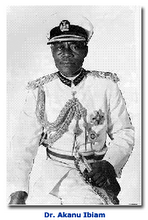
We grew up in the East as the inheritors of fine examples of robust and dynamic leadership that saw Nnamdi Azikiwe straddling the African imagination like a force of nature, or men like Michael Iheonukara Okpara, whose leadership of the East remains without compare. While the Igbo was riding the crest of development and progress from 1957 to 1967, it felt like the rest of Nigeria could not touch its political helms, what with such colorful and eponymous names among its leaders: Akanu Ibiam, educator and missionary doctor, who approached public service with the instincts of a missionary.

Denis Osadebe – poet and brilliant legal mind, whose parliamentary skills were legendary. K.O. Mbadiwe – man of timbre and caterpillar, not only full of rhetoric and bombast, but also full of purpose. A first class political strategist and negotiator who knew his personal interest alright, but never messed with the group interest, for always, the group was the basis of their politics. There was Mbonu Ojike, brilliant economic thinker of his generation, whose early death robbed the Igbo and Nigeria greatly.

There was Nwafor Orizu; there was Jaja Wachukwu, there was Eni Njoku, there was Nwapa, there was Reuben Uzoma; there was Raymond Amanze Njoku, and there were numerous others, any of whom could have, were they born in any other clime, led any nation politically. I have said that perhaps the divine author of things played a terrible joke on the East and the Igbo particularly: he sent them a glut of first class men in one generation, and in a later generation gave them only burnt offering – political lilliputs whose conduct of politics insults the illustrious past of our 20th century political ancestors. Today, there is no memorable Igbo politician.

At the eventual passing of the great Dim Odumegwu-Ojukwu, the last of the relay of great Igbo leaders of the 20th century, the Igbo of Nigeria will not have a single memorable political figure who could rally them to great political purpose. For a people whose leaders were at the fore of the independence movement, this would be a great lesson in irony. The irony was made most poignant in the ring-kissing visit of Ikedi Ohakim, governor of Imo state, last week to Raji Fashola, governor of Lagos state.

The highlights of that visit mark Mr. Ohakim, not only as a second fiddler, but also as a governor without a clear social or economic program, who does not deserve to be re-elected in the forthcoming elections as the governor over a great state like Imo. We must help him return him quickly to his personal business in Lagos, where he says Governor Raji Fashola has made the lives of the Igbo residents worth living and Igbo businesses secure. “I have come to greet a great man, so that I too will be great” said Ikedi Ohakim to Raji Fashola in Lagos.

It sounds cute and gracious. But it also sounds like the servile declaration of a hopeful almajirin to his lordly benefactor. Ohakim was recently paid the left-handed compliment of the Sarduana Award for leadership. It is therefore not surprising from where Ikedi Ohakim draws his inspirations and examples: not from the great Zik or Okpara or Mbakwe. The trouble is that he is on his way to leading Imo state to beggarly ruin.

True, Fashola stays in Lagos and directs its transmutation from a vast slum, while Ohakim gallivants, paying courtesy visits, and spouting strange excuses for his lack of achievement. Once, his excuse was that his opponents had stymied his mandate in court with litigation, and his hands were tied. Now, the Supreme Court has declared him governor, no such excuse is valid any longer.

Now it is revenue: while Lagos has all the revenue, Ohakim says, Imo has all the ideas. This is poppycock of course. Across the fence in Enugu, we see slow but apparent change. Imo is richer in revenue and resources than Enugu. But Enugu has greater purpose. Governor Ohakim needs now to account for the revenue accruing to Imo state in the last three years-plus of his administration. There is no evidence of infrastructural investment. There is, of course, a lot of hot talk about really hot plans to build Oguta and Nworie into tourist utopia.

There is nothing on the ground. There is much talk about rural roads. I went round Imo state last year, I saw only signposts proposing IRROMA. The road from Owerri to Umuahia, much touted as dualized, and commissioned by the late president Yar Adua, is in fact a glorified dirt road, not expanded, but divided with concrete barriers into a narrow two way macadam. Every school and hospital I visited in Imo state was in profound stages of decay. The main city, Owerri, is overcrowded and has lost the serenity of which Owerri was once known because of serious code violations.

There is no evidence of new plans to recreate the city, or build new well developed counties and satellites, or even invest in new urban centers like Orlu, Okigwe, Oguta or the Ahiara-Aboh conurbation. At the office of the Owerri Capital Development Authority, there was nothing left but two old earth-movers, and a huge sign. There was an overwhelming sense of insecurity in Imo State – I had never felt more unsafe in my life.

The greatest development in Owerri is “Keke Napep” and the vast number of posters advertising Governor Ohakim colourfully. There was absolutely no doubt in my mind that Ikedi Ohakim was playing hoochie with Imo state. It has possibly to do with the party – the PPA with which he came to power in Imo state – which was some sort of ersatz arrangement foisted between Olusegun Obasanjo and Orji Uzor-Kalu on the East. It had no ideas.

But it also seems to me that much has to do with Mr. Ohakim’s own limitations: his servility to the golden calf of self-imagery for instance. I take again from Ohakim’s statement to Raji Fashola to highlight my concern: “people came from the Lagos” Ohakim said, and asked the Igbo to invest in the stock market. The crash of the stock market, he claims is the cause of the kidnapping in the South-East because Igbo lost their investment.

Ohakim is wrong on several fronts, but let me quickly say that the crime situation in the South-East is connected to the rapid impoverishment and alienation of a critical segment of the population as a result of the inability of government to provide social programs that would cushion the harsh economic environment, stimulate re-investment, create opportunities for young entrepreneurs and expand the growth of the job market both at the public and private sectors.

What does Imo do with its federal allocations? What is its exact tax base? Perhaps it is time the people themselves – long used to indolence and quiet desperation -get some backbone, and demand for accounting for the use of public funds, through either establishing an independent citizens auditing of the state’s finances or through the auditing oversight of its House of Assembly – which seems consistently complicit with the executive arm.

It is time to stop our governor panhandling from Lagos; time to plug all the leaks through which public funds disappear. In short, it is time to get the priorities right in Imo state. It is time for this governor to stop clapping with one hand and get some serious work done.

Wednesday, May 5, 2010

Culture and its discontents

By Obi Nwakanma/The Orbit/Vanguard

In the pit of Nigerian politics lies the soul of philistines. A nation cursed with a political leadership without the subtle refinements of culture is doomed to crassness. We see this truth as a matter of fact, reflected in the utter disregard to which the political establishment places culture and matters of cultural policy.
For example, this federal administration, and I’m quite certain, all the administrations of the governments of the affiliating states in the Federal Republic of Nigeria, has no policy on culture and no cultural programs. In other words the federal government of Nigeria has no cultural policy upon which a culture program can be administered.

This has been so for a long time. Indeed, it does seem that the last administration in Nigeria to appoint a Federal Adviser on Culture was the short-lived administration of General Aguiyi-Ironsi, who retained Nigeria’s famous, world renowned Painter, the now late Professor Ben Enwonwu as Federal Adviser on the Arts, a preferment he held with Balewa also as the Prime Minister’s Adviser on the Arts.

But it was a different era, when political leadership was well educated and highly conscious: the founding president of Nigeria, Dr. Nnamdi Azikiwe, it must be remembered was a renaissance intellectual and a poet of some significance, and the Prime Minister Balewa was not only an intellectual, a well-read man, but also a novelist who wrote one of the most important Hausa-language novels to date.

The difference today is quite apparent in the emergence of a badly educated and philistinic political leadership who view politics only in terms of the crude structures of power. These men and women today, its often seems, did not receive the kind of sophisticated orientation and exposure that could allow them the judicious insight offered by abstract thought and the subtle power of humane intuition inherent in aesthetic awareness.

Many have never been to a gallery for an exhibition or to an evening of classical musical performance or to a reading of poetry. The Nigerian political leadership is in sum crass and profoundly uncultured. It is an elite without culture; unaware of Nigeria’s artistic heritage and the complexity of her cultural production.

Let me give two startling examples: this past week, I heard about the passing of the poet and publisher, Dr. T.C. Nwosu and the famous broadcaster, Lawrence Emeka. None of the governments in the East, or even the Federation itself, put out a notice in acknowledgement of the contributions of these men to our cultural life. These are just two most recent examples.

When the sculptor Lamidi Fakeye recently passed, there was no gesture to celebrate his contributions. The various governments in Nigeria are unaware of the damage they do in obscuring Nigeria’s cultural capital. Toyin Akinosho, Geologist, Journalist, culture critic and art collector, has done more for the Nigerian artist as an individual than the entire federal government of Nigeria. I am talking of a modest man with modest means.

He has used his personal resources, and at no personal gain, to promote and circulate the works of contemporary Nigerian artists and writers. His home – Mars House – had become a sort of refuge for writers, artists and musicians who find themselves at the edge, or who are passing by, or who need a little consoling space for a bit of solitude to create.

He takes in stray artists like stray dogs. It is easy to run into the cream of Nigeria’s contemporary artists, poets, dramatists, novelists, and critics at Mars House.

I too found occasional refuge in Mars House myself while writing the Okigbo biography for instance, a fact which alas, I failed to acknowledge fully by some inscrutable, inadvertent oversight in the book, but which I make bold here to testify, as part of my gratitude to such easy generosity.

But people like Akinosho cannot, irrespective of their willingness be expected to support Nigeria’s cultural infrastructure as lone rangers. It is unsustainable. It is a burden that requires more substantial foundational support.

There is an urgent need therefore to overhaul the entire culture establishment.

For many years, the ministry of culture has been shunted about and paired with Information, and most recently with Tourism. This is sacrilege. There is need to establish a proper culture ministry, and if it is to be paired with another, the Ministry of Education should be appropriate.

The Ministry of Education and Culture should be overhauled to situate the basic mission of a Nigerian education, and its exposure of its recipients to Nigeria’s classical and contemporary contributions to human cultural production – in literature, in music, in art, in craft, and film.

There is such a thing today called contemporary Nigerian literature and contemporary Nigerian film, but it seems like the basis for affirming and producing as well as circulating these remain fundamentally ambiguous. It is this ambiguity that stultifies Nigeria’s intellectual tradition; the production of citizens civilized by the humane essence of culture rather than by the crass pursuit of deadening lucre.

There is an urgent need to rehabilitate our edifices of culture, and create a very responsive culture administration that should connect heritage to contemporary expressions of aesthetic and social thought. It is time for instance, to place all traditional shrines of our indigenous religions and their scared groves under a heritage trust, make all these federal protected areas under a heritage administration.

There is equally an urgent need to introduce a serious culture curriculum in our public education: I speak of giving our young children opportunities to acquire aesthetic habits through music, art, reading, and other forms of education in our schools.

Art and music education in Nigeria seems dead.

The enrichment, through government aided opportunities for young Nigerians to acquire violins, cello, trombones, saxophones, or even participate in studios and art exhibitions will in many ways reduce dependency on other kinds of distraction.

The opportunity to have music classes or art classes will not only strengthen the visual education, it will also provide serious capacity for abstract thought necessary for creating original and inventive minds.

There is an urgent need to review our funding regime for city, county, regional, and municipal libraries, and the kind of programs that these libraries can embark upon to create a literate society. It is such a terrible shame that some of the ugliest public buildings in Nigeria are its centers of knowledge.

This speaks to the moral condition of Nigeria. This administration must treat as urgent, the establishment of the National Endowment for the Arts and the humanities that should provide grants to artists and intellectuals and support public libraries, independent galleries, bookshops and residences in Nigeria, and generally provide stipends for those engaged in artistic creation.

Nigeria wants rebranding, it has the cultural resource, all it needs to do is put its money where its mouth is. It is time to create a full, sufficient, and fully engaged and forward looking culture establishment. This mistreatment of culture – and I do not mean the “Durbar” and “virgin dance” version of national culture – is a mark of our hollowness.

Monday, April 19, 2010

A View From The Igbo Studies Conference In Washington, DC

By Obi Nwakanma/Vanguard/All Africa

Last week, the International Igbo Studies Association held its annual conference at the Howard University Law School in Washington DC. Igbo Studies has indeed come a long way.

The quest for a comprehensive understanding and preservation of the arts, culture, scholarship and other forms of knowledge production by and around the Igbo world has engaged scholars, particularly since the early 20th century with the Igbo encounter or contact with the west.

The remarkable ways by which that contact has shaped the Igbo continues to be the basis of reflections by scholars - and increasingly by Igbo scholars who feel the powerful "urgency of now" to call attention to the intricate as well as intriguing situation of the contemporary Igbo of modern Nigeria, in its current relationship with nation and with the emergent world.

The question of a "transnational Igbo" with a growing Diaspora was at the roots of the first convention of the International Igbo Studies Conference convened by the now late Igbo historian, Dr. Don Ohadike, former Director of African Studies at Cornell University in Ithaca in 2005.

I was at that inaugural conference of Igbo studies but I'm afraid I have been absent from its proceedings until this year. The Igbo Studies Association conference has nevertheless held consistently since that first outing at Cornell now at Howard University, Washington DC since 2006 through the commitments of Dr. Udo Mbanaso and the authorities at Howard University.

The Howard University Law School has offered the grounds for this annual meeting of the Igbo Studies Association and it is imperative to underscore the importance of this historical relationship with Howard University.

It is particularly important to note that, that distinguished Igbo and African statesman, Nigeria's first president, Dr. Nnamdi Azikiwe had attended Howard University late in the 1920s where he came under the tutelage of some of the most distinguished African-American scholars of the 20th century:

Alain Locke in Philosophy, Ralph Bunche in Political Theory and Leon Hansberry for whom he named the Institute of African Studies at the University of Nigeria, Nsukka when he established it. Indeed this famous scholar of the African world was the first Director of that institute at Nsukka from 1963 with Dr. Chukwuemeka Blyden, Edward Blyden's grandson as deputy Director.

It was the beginning - and as it has now proved - a mostly unrealized dream of making the University of Nigeria the gathering ground - the new Timbuktu - for scholars from Africa and its diaspora, to form what I have described as the "third zone" of African modernist thought. Because Azikiwe was critical in the formation of Igbo modernist ideas, his education and encounters with Howard which now hosts Igbo Studies rings with symbolic significance.

But beyond the symbolism are some very basic questions of what Igbo Studies seeks to accomplish and whether, as some Igbo scholars themselves have seen it, Igbo Studies is different or should be constructed autonomously from Nigerian Studies or framed within the entire dialectic of an African Studies program.

Those who argue for an Igbo studies argue for an autonomy that makes Igbo studies assume the same philosophical and historical purpose of say Jewish Studies or Irish Studies or Slavic Studies, and so on all within the aegis of European Studies.

I think that the central issue for me is to understand the link between Igbo Studies and the preservation of Igbo ideas, but also the creation of these ideas in the context of Igbo visions of itself in a new world in rapid transition. It is also to understand that Igbo Studies cannot be conducted on the mere whim of "self preservation" but on the greater problematic of what we preserve and for whom. In other words, why Igbo

Studies? What is its greater purpose beyond the annual ritual of gathering some Igbo scholars of various fields to examine Igbo life - mostly in a very agonistic way? What shall we do- meaning, how should we instrumentalize some of these ideas that emerge from the fecund and occasionally quixotic minds of those engaged with interpreting the Igbo and their current circumstance?

It does seem to me that these questions should be at the core of the future of Igbo Studies. Many years ago, the Center for Igbo Studies was endowed and inaugurated by Dim Chukuwemeka Odumegwu-Ojukwu at the Abia State University, Uturu. That center has apparently gone into abeyance. Governments in Igbo land have sought no productive links or connections with this important center as a way of providing the shaping ideas that might help transform the Igbo world. Igbo Studies therefore exists in some abstract away outside of its own genetic source - in a tabula rasa. It is rather urgent to re-examine this situation.

Indeed, it is crucial to link the Hansberry Institute at Nsukka with the Center for Igbo Studies at Uturu with the proposed International Center for Igbo Studies at Howard University for which the trustees of the Igbo Studies Association are proposing an endowment.

The emergence of the International Center for Igbo Studies at Howard will be a very important development given the reality of a large and growing Igbo Diaspora in the Americas. Many discussions took place at Washington in the two days of the conference - starting with the Poetry Reading session featuring the poets Chimalum Nwankwo, Dubem Okafor and Akachi Ezeigbo who read from their new works. I was also featured to read.

There were also glaring absences like the distinguished scholar-poet MJC Echeruo who retires this year from Syracuse after 50 years of university teaching, the historian Godfrey Uzoigwe of the University of Mississippi, Ernest Emeyonu of Michigan State University, the artist and Art historian Nkiru Nzegwu of Binghampton University, New York, among many.

In sum, the Igbo Studies Association conference this year remarkably consolidates on the work of the last five years and signals something of the slow but steady discussion of the Igbo situation in the current era. That this self-reflexive and critical discussion is taking place is the crucial and most important news.

It means that a climate of opinion may soon emerge on the solutions to issues of identity, the crisis of Igbo education, the question of insecurity, and the dilemma of under-investment and slow economic growth in the East, the result of what the distinguished Sociologist, Dr. Christian Chikwendu Ukaegbu of Northwestern University, Evanston, Illinois describes as incipient "fatalism" in the Igbo public imagination.

Another important question was raised: when would the International Conference on Igbo Studies hold in a university in the homeland? This is a matter of critical consideration.

Sunday, March 14, 2010

Jos Massacres Follows A Pattern Of Unpunished Crimes

By Obi Nwakanma/The Orbit/Vanguard


Reflect on this irony: a young army captain helps to organize a military coup and supervises the liquidation of his commander-in-chief and the host governor, another senior military officer, of a region to which he was paying a state visit. The facts are bare: even in a military situation under a properly trained and disciplined military officer, a General must be accorded his full compliments even in death.

He is given the choice to fall on his own daggers or he is given a dignified exit given the circumstance. But neither General Ironsi nor his host Colonel Francis Adekunle Fajuyi was given that option.

These two distinguished military officers were first beaten to a pulp; indeed severely and roundly humiliated by subalterns under the direction of this young captain before they dragged them off to some far-off location, on Iwo road, we are told, executed and buried in a shallow grave. Of course, the act does not stop there.

This horde of putschists go round all the military installations – the Army barracks – and drag their brother officers and men from their beds in the dead of night and execute them. The execution is methodical and cold. The only criterion for death was to be identified as an Eastern Nigerian officer, and particularly an Igbo officer, and you were marked.

This decimation of military officers of Eastern Nigerian origin did not end there. Perhaps if it did, there might have been some explanation that it was a purely military affair – soldiers killing off their rivals and contenders for power within the military system that had dawned upon Nigeria following another military coup, six months earlier, led by Emmanuel Ifeajuna and other mid-level officers, most of them identifiably Igbo. There might have been some validity in the later claim that the coup makers of July 29, 1966 were avenging the death of their brother officers from the north and their political leaders who had been killed in the January coup. But no, the bloodlust was not contained in the barracks.

It spilled into the streets, particularly in the northern streets, but also in the west of Nigeria, and a systematic elimination of the Easterner, particularly the Igbo was carried out to the letter from July through September, in waves that created the first massive case of internal displacement and movement in Nigeria and in West Africa in the post-colonial era. This cold, calculated killing of the Igbo –the first pogrom – was carefully planned, well-coordinated, and executed with the precision of a military plan.

It left no careful observer of the events, and subsequent historians of that era who have carefully examined the data in any doubt that the pogrom was a carefully planned and well coordinated operation – a selective annihilation or ethnic cleansing of particularly the Igbo in particularly the north of Nigeria. Internally displaced Easterners, particularly the majority Igbo population sought refuge in Eastern Nigeria. Perhaps because of the extended family system still intact in that period, a great refugee crisis was averted, and it possibly blunted the outcry and an international response to the situation.

Perhaps the “international community” simply wanted to let an armed horde settle the problem of the “uppity Igbo.” But long before the Rwandan genocide, a great wave of genocidal killings of the Igbo had taken place. The failure of the world community, led particularly by the great western powers in deference to Great Britain, the erstwhile colonial power and the United States, its ally, and in a policy of appeasement to the wider Muslim lobby led by Saudi Arabia whose connections to the Northern Nigerian Islamic community is through an old Ottoman link, to call the act by its proper name, genocide, foreclosed any consequence against the perpetrators of this act.

But the situation eventually blossomed to one of Africa’s most brutal conflicts following the secession of the Easterners when they felt the nation was no longer able to protect its citizens, thus declaring their own Republic of Biafra, resulting in the brutal civil war in which about three million died in the former Biafran enclave, mostly starved to death as a result of war policy. No one was forced to pay for these deaths. This has created a situation of impunity because no one was made to face the laws in these circumstances.

But to this day, contemporary reporters and analysts of the Nigerian crisis continually fail to connect the cyclic violence that erupts in Nigeria to a history of unpunished crimes most times financed and led by some of the most powerful figures of the community who seize the state and stay above the law. The law indeed is blind in Nigeria. Impunity pays. This cycle of violence and ethnic cleansing starting in 1945 in Jos, 1953 in Kano, in 1966, in 1978, down to the Akaluka beheading in Kano are the ancestral spirits of what has now become the Jos massacre of Christians by so-called Fulani Moslem pastoralists.

It follows the same pattern of unpunished crimes. These killings are also at the contradictory nexus of the nationality question; the indigene/settler conundrum. It is the conundrum which the Igbo have long exemplified in the Nigerian unconscious. They have been killed for daring to settle the nation called Nigeria. The perpetrators and financiers of these crimes understood that in Nigeria the crime of killing pays.

Oh yes, no one of significance has paid for killing. On the other hand people have been handsomely rewarded for acts of “heroic” murder. So, then, fast-forward to the year 2010, and that young captain who supervised the murder of his commander-in-chief, in a successful military operation also called a coup, becomes on that single account alone, a successful soldier.

He became a General before he turned forty and became Chief of the Nigerian Military. He has been lionized, and feted, and he even had a biography commissioned and farmed out to a hagiographer to tell a great heroic fib. He continues to be feted for supervising the liquidation of his commander-in-chief. His reward for that act led the nation to a civil war. And the terrible music plays on because in Nigeria the harsh law is only meted against the powerless. So will it be in this case of the massacres in Jos: there will be no justice.

Sunday, March 7, 2010

Imo State: News about Kidnappings

By Obi Nwakanma, The Orbit/Vanguard

The news out of Imo State is not good. There is a sense of failure and a general feeling of siege; a situation that calls us all to rise and confront two important questions: first, how is it that a state so endowed with some of Africa’s best educated people can sit and allow the use of primitive and unregulated power to undermine its civic authority?
Second, how can the residents of Imo State tolerate the current situation in which the state slips suddenly into this primitive cauldron of violence that resembles Colombia under the siege of the drug lord Escobar?

What has happened to this state, once among the most stable and productive of states in Nigeria? Let me first note something that I find profoundly disturbing, which is given scant attention, and which might become the subject for sociologists to grapple with and which ought to disturb any person of conscience.

It is the absolute breakdown of the democratic community in the East in general, but in Imo State specifically.

Two conditions now best describe the relationship of people to community, and their connection to the idea of a collective public in Imo State: lethargy and fatalism. Imo people are lethargic because of a profound skepticism about the value of government in their lives.

There is equally a powerful sense of helpless fatalism about the ends to which society might arrive; that is this belief that governments are no longer established to cater and minister to people.

Government is now considered a cabal, a mafia, in which very closeted powerful interests come together in a devious partnership to subdue the will of the people and conduct public affairs as though it were a private party – with invitations only.

Since 1983, the Imo people have not had a great government with the kind of public spirit that characterized the administration of the late Dr. Sam Mbakwe (please note that Sam Mbakwe earned his doctorate degree academically and was not a dot.com or honorary or “Aba-na-anya” “doctor”). Mbakwe was the last productive governor of the old Imo State – comprising Imo, Abia and parts of Ebonyi State today.

His administration had immense respect for the people, and he established a clear programme of action; set goals that have thus far remained unsurpassed by any succeeding administration after him. Imo was lucky in two respects: one, it had an energetic and dynamic founding military governor in the now retired Admiral, then Commander Godwin Ndubisi Kanu, and in the founding civilian administration of governor Sam Mbakwe. These two set the tone of government and the expectations of the public in Imo.

But alas, since the Buhari years – from the administration of General Ike Nwachukwu to the current administration of Mr. Ikedi Ohakim, a nearly 20-year spectrum, Imo State seems to be trapped in a limbo.

Unemployment, very slow social and economic development; and now increasing crime – especially kidnappings seem to be the legacy of governments in Imo State.

The news in Imo state is increasingly dreary: reports of kidnappings and other crimes that were once unimaginable here proliferate. I was talking earlier on about a breakdown of community and its undergirding social mores. Nothing drove this more forcefully home to me until last year, when I was burying my father.

I returned to a changed society. In the old Igbo world, wherever death occurred, neighbours brought food to the compound to feed the bereaved from the backyard. The community joined in the ritual of mourning and burial.

There was a full accent of what the Igbo call the “umunna” and it took ownership of the dead. Today in Igboland, the “church” the nuclear “family” and the “social club” have replaced the “umunna” – the bedrock of community.

The new fangled “Traditional ruler” has replaced the Town Council, and there is a profound breakdown and dangerous alienation taking place in Igbo land today. This kind of alienation makes it impossible to deal with the social questions that confront us, or indeed, to create grounds that would sustain a civic order based on shared, cohesive visions for social development.

Once upon a time, it would have been impossible, for instance, for anybody to just walk into a community, kidnap or rob anyone, without confronting the will of that community. Escape would be impossible.

But today, the fracture in the architecture of community makes security – the security of the populace – almost impossible to guarantee. Now, comes the news last week that kidnappers brazenly took journalists, among them a sports crew from a South African Television network which came to report some event in Owerri; Professors, and the Chief Judge of the Imo state customary Court on their way from the Airport.

implication of this ought to startle us: Imo State has finally slipped into lawlessness. All it takes now is for any group of young men to acquire some guns and some logistics and they’d go off on a limb and seek targets for kidnapping.

This is the highest symptom of social failure. Highly educated and disenchanted youth, with an increasingly fatalistic outlook on life, acquire more sophisticated means of organizing crimes while public policy and action on social security remains primitive. We are on dangerous grounds here.

Targeting a judge for kidnap is, to date, the boldest act against the authority of state and its institution of law. To put it simply: the law, in its formal sense no longer exists in Imo State. It is now a jungle out there.

The administration of the current Governor Ohakim has clearly lost control of the situation. We must hasten to add, that Ikedi Ohakim did not create the situation that has now snowballed into a kidnap and crime culture. He inherited a broken people from this past 20 years of visionless governance of the state.

But he has contributed immensely to a mood of disenchantment by continuing to perpetuate the absolute lack of accountability and inaction which continues to alienate people and make government meaningless in the lives of people.

A current allegation – and we take it for now as simply allegation until further clarity – by a citizen of Imo state, Mr. Samuelson Iwuoha that he was assaulted and battered by the governor of the state in connivance with some public security official in Government House is serious.

It reflects the increasing sense of the jungle in Imo state. It calls for independent investigation of the governor on both the substantive allegation of corruption and in the secondary allegation of assault following Mr. Iwuoha’s attempt to force the state government to come clean on public account.

Finally, the failure to open up alternative channels for public action drives people towards serious crimes.

A state like Imo, without credible social and economic programs for its teeming population of the jobless and underemployed; or whose programs are more on paper and declared intentions than on reality risks the kind of anomie that now threatens to make Imo state a kidnappers den. The situation in Imo state is serious, and calls us all to action -both the administration and the citizens of the state.

Sunday, November 15, 2009

On Ojukwu and war

By Obi Nwankanma, The Orbit/Vanguard

WHEN Odumegwu-Ojukwu sneezes, the nation catches cold. That is to be expected. General Ojukwu showed his paces in war. He led one of the most famous wars of the late 20th century. General Ojukwu led the people of the former Eastern Nigeria with its majority Igbo population in a war in self-defence when they became targets of a genocidal rage.

Easterners declared secession and founded the Republic of Biafra; and for three years, fought for their lives and proudly defended their republic, but exhausted by the onslaught, lost Biafra and returned to Nigeria after the treaty that declared “no victor no vanquished” by the federal government led by General Yakubu Gowon. Nigeria, I daresay, has never fully recovered from that enterprise.

All men of conscience who fought in that genocidal war recoil from its memory. War is sweet music only to those who have never witnessed it. Only this past week, General Akinrinnade, one of the field commanders on the Nigerian side of that war publicly confessed his regrets for fighting the civil war. As a child of war myself – a war survivor – war is nightmare.

The Igbo say, “Oji oso agbakwuru ogu, amaghi s’ogu wu onwu” – simply put: those who hurry to war never stop to think that war is death. This is axiomatic and so true. General Ojukwu knows this axiom, and indeed has frequently cautioned against war and recoils from the experience. But the same Igbo, true to their dualist episteme also say, “anaghi aso mgbagbu eje ogu!” – again to put it simply: the fear of death and self-sacrifice does not prevent one from fighting a just war.

In other words, only a just war, and not a war of blame is worth the act in the Igbo cultural unconscious, because for the Igbo, war by all its implication is a great violation of the sacred law of the earth, at the end of which a necessary rite of cleansing – “ikpu aru” must be performed.

I am of course speaking about the “true” Igbo – not this generation of the Igbo who neither understands nor perhaps even values what it means to be truly Igbo, and have thus abandoned the ancient and sacred ways of the Igbo. This, of course, is a different question. But let me return to Ojukwu. Recently the General uttered what ought to be seen by all people who have ears as a timely warning.

Ojukwu used the metaphor of war. He would lead another just war, he says, in defence of the legal and democratic rights of the people, and in defence of the ethic of freedom enshrined in the notion of democracy and the ballot box. General Ojukwu was quoted on this matter after he addressed a press conference on what he perceived was an emergent shenanigan in attempts to use all manners of intrigue to undermine the democratic rights of people in Anambra state following Andy Ubah’s case, and arising from what people like Ojukwu perceive to be a potential abuse and corruption of the court process.

While some have called this use of the courts “ridiculous” others have seen it as within Andy Ubah’s constitutional rights to appeal to any court at anytime to seek interpretations and legal clarity. This right is precisely what Ojukwu vowed to defend in another war if it came to it: the right of a wider constituency and not for self-seeking politicians or processes that put to risk the foundations of the commonwealth. Ojukwu’s use of the terminology of war drew immediate reaction.

His adversary in the last war, Yakubu Gowon for instance, suddenly found his tongue, which everybody thought had been swallowed by the cat, except when he prays for Nigeria and such matters. He would, he told reporters, meet Ojukwu square feet by square feet on this matter of another war. Well, up yours Jack Gowon! That’s what Ojukwu is likely to say on this matter of meeting Jack Gowon again at war.

I think what we should have between Ojukwu and Gowon is a properly refereed boxing match at the national stadium. But on this matter of leading another resistance, Ojukwu is again right. He has called attention, in very prescient ways once more, about the dangers of using might to upturn the democratic will of Anambra people.

His synecdochal use of the terms of war merely reflect the mood of people, particularly in the East, but generally in Nigeria who have watched as their electoral rights have been abused by the use of force.

What General Ojukwu is telling Nigerians clearly is that Anambra state is a flashpoint in the emergent electoral scenario; that the PDP which since 1999, has used all kinds of illegal methods to retain power in Nigeria, through electoral fraud, intimidation, the use of corrupt judges, gerrymandering, violence, and so on, may finally bite more than they could chew with the current mood in Anambra state.

Among Ojukwu’s traducers are people like Ilochi Okafor, a former Law professor and Senior Advocate of Nigeria, who has boldly called Odumegwu-Ojukwu “a security risk,” and who has followed in the lockstep of other cheerleaders in calling Ojukwu names and threatening him, and blackmailing him with history: perhaps it is all politics.

But in the incendiary mood of Nigerians, and in their anger towards the government and the ruling party, and the endgame politics of certain participants who call themselves “stakeholders” in Anambra politics, the politics of Igbo land, and the politics of Nigeria, something is about to give, and Ojukwu has again courageously given voice to this possibility.

Instead of knee-jerk responses to Ojukwu, perhaps it is time to listen carefully to his considered views. A summary of that view simply is for all these ambitious men to take a look around them and read the tea leaves: things are not likely to remain as simple as in the past in these coming elections. Anambra state is likely to prove the first test of will between Nigerians who want a transparent democratic transfer of power and a political Mafiosi which wishes to use methods of intimidation to arrive at power.

The situation in Anambra might prove to be the catalyst to some uncontainable force of anger; indeed much repressed anger by people who have been long restrained because the last war took an incalculable toll on their will for another war. But there comes a time when people, irrespective of their disdain for violence are compelled to rise and say, “No! in Thunder.” That time, says Ojukwu may just be here and now. We better listen.


15 Responses for “On Ojukwu and war”
Emeka (London) says:
November 15, 2009 at 6:19 pm@ Rotimi, what is that you scribbled below? Gowon is…blah…blah…blah…
I tell you what, a five year old son could do better. Young man, go get your head unwind from the tale-by-moonlight stories your educated but ignorant elders induced in you. If dont know, research. But if cant research nor learn, then keep quite!

That was vintage Obi Nwakanma; he is always a delight to read. Unlike other brown envelope collecting Igbo journalists who are wont to call a spade a fork in other to be in the good books of the ragamufins calling themselves ‘Igbo leaders’ and their pay masters in Abuja, in Mr. Obi, we can always trust to find a journalist that could articulate and put forward the thinking of the majority of the Igbo people.
As for Ojukwu’s timely warning, it’s only a blind person that could not have envisaged the danger Andy Uba’s mis-adventure potend for not only Anambra State but the whole of Nigeria had he succeeded. Only God knows what the headlines would have been reading now had those honourable men of law allowed themselves to be used.
Talking of those paper tiger faceless Igbo crumb-pickers and their Nigerian counterperts who foolishly went for Ojukwu’s jogular for once again seeing beyond his time, I had rather direct them to go make an unbiased and detailed research as to what contributed to causing the Nigerian civil war. Because, if they do (including some ignorant ones who contribute on this forum), they will discover that unlike the cock-and-bull stories their parents must have taught them about the cause of the war, that apart from the pre-meditated massacre of Igbos in northern Nigeria, that another contributory factor to the war was the pre-war political crisis which engulfed the then Western Region, occassioned by the protracted and often bloody rivalry between Awolowo’s Action Group supporters and Akintola’s ruling party followers. It was this regional political rivary which later slowbald into what was then known as the ‘ wild wild west’ crisis. It was to avoid a situation where the killings, looting and political thuggery could spread to other parts of Nigeria that Nzeogwu and co were forced to terminate what was becoming a truly lawless First Republic.
For even though Nzegwu’s coup was foiled by Aguyi-Ironsi and other senior military officers, the latter was himself killed in a counter-coup led by Murtala Muhammed. Thereafter, started the indiscriminate slaughter of Igbo military officers in the barracks and innocent civilians on the streets in the north and west of the country. Feeling abused and unwanted, Ndigbo naturally decided to seek refuge in their part of the country by collectively deciding to secede. Following deafening call for secession from Nigeria by the Easterners, the then Eastern Consultative Assembly, being the body governing the then Eastern Region with Ojukwu, voted unanimously On May 26, 1967 to secede from Nigeria. Ojukwu, in carring out that order officially declared the Republic of Biafra on May 30, 1967. The Federal Government, led by Yakubu Gowon in response sent troops who attacked the Biafrans from the town of Garkem (close to Nsukka) on July 6, 1967. It was from thence we ended up with what is known today as the Nigerian-Biafran war, which started on the above date and ended on Januray 15, 1970.
I have decided to chronicle the above events leading to the civil war so to put paid to the lies being peddled by Ojukwu’s detractors to the effect that Ojukwu single-handedly declared a sovereign state or that the Biafrans. Just as it is lack of knowledge of Nigerian history which makes some Nigerians to suggest that the Biafrans “started the war”. Nothing could be far from the truth.
Ojukwu being a major player before, during and after that unfortunate conflict obviously knows that if the Anambra crisis is not handled with care, that it might lead to another national crisis; just as a mere quarrel between two Yoruba brothers (Awolowo and Akintola) ended up heating the polity to the extend of costing Ndigbo and other Nigerians humanly and otherwise.
So for someone like Gowon, who, like Ojukwu, lived those dark days of Nigerian history to misread what Ojukwu was implying, or to be so blind not to see the larger picture Ojukwu was portraying, means that Ojukwu is still ahead of Gowon in seeing vision today as he was when they signed the unimplemented Aburi Accord, which could have, apart from preventing the war, woud have also given the confederating Nigerian units (as agreed in the Aburi Accord) a road-map to individually and collectively pursue its goals. Sadly, it is lack of a clear-cut road-map such was outlined in the Aburi Accord and later the Ahaira Declaration by the Biafrans which is lacking amongst the Nigerian ruling class. The result is the arrested development which Ngeria has found itself since after the war ended.
If truth be told; Gowon has a lot to learn from Ojukwu, just as the Nigerians has a lot to learn from the rag-tag and malnourished Biafrans, who, despite the odds, were able to hold the Nigerian government and its western backers spell-bound for three good years. One could only imagine what the result could have been if the lonely Biafrans had the financial and military support the Nigerians had from from the west…Your guess is as good as mine.

As for the judgment itself, all I can do is to join all peace-loving and progressive Igbos to say: Our enemies has been exposed, defeated and shamed, and has been forever consigned to the dustbin of history.
kelly says:
November 15, 2009 at 5:34 pmRotimi
You sound like a bastard?, you are trained by a woman i am sure, while your father is busy marrying here and there and breeding bastards like you.
Emeka (London) says:
November 15, 2009 at 3:33 pmThat was vintage Obi Nwakanma; he is always a delight to read. Unlike other brown envelope collecting Igbo journalists who are wont to call a spade a fork in other to be in the good books of the ragamufins calling themselves ‘Igbo leaders’ and their pay masters in Abuja, in Mr. Obi we can always trust to find a journalist that could articulate and put forward the thinking of the majority of the Igbo people.
As for Ojukwu’s timely warning, it’s only a blind person that could not have envisaged the danger Andy Uba’s mis-adventure potend for not only Anambra State but the whole of Nigeria had he succeeded. Only God knows what the headlines would have been reading now had those honourable men of law allowed themselves to be used.
Talking of those paper tiger faceless Igbo crumb-pickers and their Nigerian counterperts who foolishly went for Ojukwu’s jogular for once again seeing beyond his time, I had rather direct them to go make an unbiased and detailed research as to what contributed to causing the Nigerian civil war. Because, if they do (including some ignorant ones who contribute on this forum), they will discover that unlike the cock-and-bull stories their parents must have taught them about the cause of the war, that apart from the premeditated massacre of Igbos in northern Nigeria, that another contributing factor to the war was the pre-war political crisis which engulfed the then Western Region, occassioned by the protracted and often bloody rivalry between Awolowo’s Action Group supporters and Akintola’s ruling party followers. It was this regional political rivary which later slowbald into what was then known as the ‘ wild wild west’ crisis. So to prevent the killing, looting and political thuggery from spreading to other parts of Nigeria, Nzeogwu and co stricked to terminate what was becoming a lawless First Republic. Even though Nzegwu’s coup was foiled by Aguyi-Ironsi and other senior military officers, the latter was however killed in a counter-coup led Murtala Muhammed. Then, came the indiscriminate slaughter of Igbo military officers in the barracks and innocent civilians on the streets in the nothern and western part of the country. Feeling abused and unwanted, Ndigbo naturally decided to seek refuge in their part of the country by collectively deciding to secede. On May 26, 1967, the then Eastern Consultative Assembly, being the body governing the then Eastern Region under Ojukwu voted to secede from Nigeria and gave Ojukwu the mandate to decalre a sovereign state called the Republic of Biafra. Consequently, Ojukwu officially declared the Republic of Biafra on May 30, 1967. And in response, the Federal Government led by Yakubu Gowon sent troops who attacked the Biafrans from the northern town of Garkem on July 6, 1967. Ladies and gentlemen, it was from there we ended up with what is known today as the Nigerian-Biafran war.
I have decided to chronicle the above events so a to put paid to the lies being peddled by Ojukwu’s detractors to the effect that Ojukwu single-handedly declared a sovereign state or that the Biafrans were the first to fire the shots, triggering the most brutal and savage war ever witnessed in Africa…. And as they say, the rest is history.
So, Ojukwu being a major player before, during and after that unfortunate conflict obviously know that if the Anambra crisis is not handled with care, that it might lead to another national crisis; just as a mere quarrel between two Yoruba brothers (Awolowo and Akintola) ended up heating the polity to the extend of costing Ndigbo and other Nigerians humanly and otherwise. But for someone like Gowon, who, like Ojukwu, lived that dark days of Nigerian history to misread what Ojukwu was implying, or to be so blind not to see the larger picture shows that Ojukwu is still ahead of Gowon in seeing vision in 2009 as he was when they signed the Aburi Accord over four decades ago.
As for the judgment itself, all I can do is to join all peace-loving and progressive Igbos to say: Our enemies has been exposed, defeated and shamed, and has been forever consigned to the dustbin of history.
Hassan Zaria says:
November 15, 2009 at 2:17 pmThis ojukwu war beat is getting too much. Obi Nwakanma or whatever that your name is, it is high time your ibo people desist from tribal ranting. ojukwu whom Gen. Yakubu Gowon cautioned understood so what is your own? First tell ojukwu to stop gallivanting across the globe launching briafra house in exile, I have browsed the site http://www.biafraland.com/biafrahouseopens.htm .What Gen. Gowon and his Nigeria Pray want for Nigeria is justice, peace and not war, so you must be advised to stop your tribal bigotry. On Monday, igbo day celebration; tomorrow, igbo marginalisation and on Wednesday, igbo presidential agitation. Go and put your house in order before insulting a national leader like Gen. Yakubu Gowon.
Rotimi says:
November 15, 2009 at 11:25 amObi Nwakanma, metaphoric of war are you painting? You should be ashamed of yourself for fanning the embers of tribalism by supporting ojukwu’s senselessness. Had most respected General Yakubu Gowon not whipped your commander ojukwu to line, he would have still continue ranting. Obi Nwakanma,, Ojukwu or whatever you called him is a failure and a tribal war head, see, ( http://www.biafraland.com/biafrahouseopens.htm ) and you can do well to ask his town people in Nnewi about a coward who ran away from a war he senselessly started…. Obi Nwakanma, General Yakubu Gowon will never meet Ojukwu square feet by square feet rather he will defeat Ojukwu square feet by square feet. Listen attentively Obi Nwakanma, never you, your 419ners and now kidnap tribe ever try to insult General Yakubu Gowon because he cautioned your war monger. What General Yakubu Gowon stand for justice, equity and peace and will continue to pray till Nigeria attains that enviable height. NIGERIA PRAY and not war.
EFOBI ANTHONY says:
November 15, 2009 at 11:15 amNigeria and PDP most not try to rig Anambra election come next year. We cannot take it peaceful again. We are not saying that PDP can’t take the post if they win through free and fair election. The election must be free and fair AND BE SEEN TO BE SO. Anambra election must not be rigged for the interest of Nigerian Unity. If the election is rigged, we cannot listen the saying that indicate that INEC and PDP is not the cause. They are of Federal Govt.. In the effort of keeping what we have, we may lose what hold us together under bundage.

Prof. Ilochi Okafor is not right to call Dim Ojukwu names. He is attracting unnecessary hatred to himself by insulting his father thinking that he is practicing politics. That is why he joined PDP as a political party knowing how bad the party is. Now, look at the first mark he is making in his political first appearance. He had told better of himself and who he is and the stuff he was made of. A PROFESSOR.

Anthony From U.K.
ogaju says:
November 15, 2009 at 10:40 amObinna,
I hope Ojukwu got you a ticket for abidjan this time……
tony says:
November 15, 2009 at 10:05 amPDP retreated having hard the roaring sound of a lion Ikemba?. Every one knows what PDP plan B looks like. They wanted to use Soludo to distract peoples attention , so that before the people could open their eyes the court has ruled in their favor. Ikemba saw it and roared and the wolves retreated.
Obinna says:
November 15, 2009 at 9:29 amGen.Gowon was absolutely wrong to have said what he said about Gen.Ojukwu’s comment in respect of Andy Uba’s antics in Anambra state.For Gowon to have made such utterances,he was merely chasing shadow rather than substance.Matching Ojukwu square feet by square feet isn’t the issue.The crux of the matter is that someone with questionable character wants to become the Governor of Anambra through the manipulation the Judiciary.What’s more,should a man such Andy become the Governor,chances are that Anambra state would suffer the fate it suffered during Mbadinuju days as Governor.

As a Phd holder in Political Science from the prestigious Warwick University,I thought that Gen.Gowon would have understood what the Ikemba said and meant.This tells me that Gowon went through the motion of studying Political science.One funny thing about Nigeria,is that we always approach issues that needs to be approached with pure reasoning with emotion.

I am of the opinion that if given equal circumstances,Gen.Gowon can not match Gen.Ojukwu in a warefare.Mention must be made here that the arms and ammunitions used by the federal forces was more than the all the arms and ammunitio used by the British forces through out the entire 2nd World War.This is to showcase the extent of how well armed and equipped the federal forces were.And yet,the rag-tag Biafran forces were still able to hold them back for 3 bloody years.
Kenice says:
November 15, 2009 at 1:44 amThank you Obi. I did comment that only intelligent and descerning minds would understand what Ojukwu had to say. The good news is some of our judges are beginning to realise that they are equal “stake-holders” in the Nigerian enterprise. The bold and upright are gradually being separated from the timid and corrupt. When the proper and accurate history of Nigeria is written we know on which side Ojukwu would be found.

Sunday, October 25, 2009

Restoring Nigeria will require hard choices

By Obi Nwakanma, The Orbit/Vanguard

LAST week, the famous Nigerian novelist, Chinua Achebe received an unlikely guest at his home in the Catskills. Nuhu Ribadu, Nigeria’s former anti-corruption cop went to see the sagely fabulist. It might have been a social visit, but one thing led to another, and soon Nuhu Ribadu and Achebe began to talk about the prodigal nation.


By the end of the day, Achebe had uttered his wish: Nigerians should rise towards a revolution. The times demand it. A revolution, in the circumstance of Nigeria, is a good thought; even a great advice. Chinua Achebe is not known for flippancy.

He does not use words carelessly. He must have taken a hard and steady look at things and come to his conclusions. The trouble is that revolutions require revolutionaries. Nigerians have no revolutionaries. She has NGO-radicals; mostly paper tigers. But there is no greater urgency today than to find among Nigerians, as among the inhabitants of Sodom, just one virtuous leader for whom history will spare the impending consequence of our historical mistakes.

It is an impossible task, perhaps because we’ve have been looking for a leader – that is, one archetypal herculean figure – on whom we can rest the crown and who would then embody the will of the nation.

The wrong aspect of that search for this singular individual remarks upon something that we have hardly factored into the causes of the crisis of leadership in Nigeria. Nigeria has absorbed far more of the monarchical and feudal tendencies than the democratic and egalitarian tendencies that humanizes modern societies.

We do not need “a leader.” We need leaders. Highly conscious and capable men and women who can dream, roll up their sleeves, and dig out the muddle in which Nigeria is stymied. However, our language – the question of those who would “rule” rather than about those who can “lead” us – reflect this monarchical tendency. In modern terms, humans ought not be “ruled.”Citizens ought to be “served” by its true leadership.

But we in Nigeria invest so much in the rhetoric of “rulership” that we sometimes forget the particular implication of these terms. Perhaps also, it reflects the exact situation of our lives as long oppressed and mastered people, who have found ourselves mostly under the jackboots of those to whom we delegate the power to govern this nation. For long, Nigerians abandoned their rights of consent. They kept quiet under tyrannies.

They hid their heads, unwilling to fight for their freedom. Only a handful of courageous women often stood up, and when it came to the crunch, they were often left in the lurch, abandoned. In the end, scoundrels became our “rulers.” But developments in Nigeria in recent times seem to suggest that people are increasingly unhappy, and unwilling to be oppressed or “ruled” any more.

There is an increasing destruction, perhaps challenge, to the sources of authority in the nation. The kidnappings; the failure of the institutions of law to rein-in disorder; lawlessness, and insecurity are increasing symptoms or manifestations of dissent; a testimony that the state as it is constituted is rapidly decoupling.

This is merely indeed a reflection of the unhappy truth that more people are tearing up the social contract with Nigeria, because it is increasingly seeming like a dud cheque. There are, of course, the optimists who may say, well, this is an extreme view. It may well be. But if we look a bit around, the answer my friends, may be blowing in the wind.

And this leads me to two recent reports in the Nigerian newspapers, which provide important food for thought as we grapple with the situation in Nigeria. Last week’s Mobolaji Johnson’s interview with the Sun newspapers, and about three weeks ago, the renowned political scientist, Professor B.I.C Ijomah’s address at the Igbo day lectures in Owerri specifically. I will touch slightly on what each man said.

First, the retired Brigadier Mobolaji Johnson, pioneer governor of Lagos, took us on a tour de force of the Aburi conference. This was a landmark interview in two respects, for me. One is that it destroyed the argument that “Ojukwu’s ambition” led to war. Secondly it points to the missed opportunities that Aburi offered for a transition towards a restoration of the republic.

Since January 1966, Nigeria has suspended its republic, and the federalism principle which guarantees the foundations of the federal republic. The central government has so fully appropriated the power and rights of the federating regions that what we have in Nigeria is effectively a feudal centre.

This is not working for Nigeria, and it is obvious that the crisis of the nation stems chiefly from the distortion of our republican status. Indeed, it is a subject which Professor B.I.C Ijomah touched upon in his lecture to the Igbo in Owerri this past September. Any clear observer of Nigerian affairs ought indeed to know that the forces are drawing us closer towards a massive crisis. The current president is too sick to act.

The structures of the state are too weak to remain resilient against the pressures of Nigeria’s multiethnic character. Professor Ijomah specifically noted, and I agree with him, that Nigeria must return to the agreements of 1957 which the nationalist leaders reached and incorporated into the independence and republican constitutions, but which the subsequent military regimes suspended.

Those agreements created the basis upon which Nigerians agreed to live together as a nation. Unless we return to those principles incorporated in our foundational charter, which were suspended in 1966, Nigeria will inevitably head to the rocks.

In its current character, this country does not represent many of us; its current formation is the product of an oligarchic military order set towards conquest and control. But to restore Nigeria will require us to make hard choices.

Indeed, one of the haunting questions, and I think it is urgent, is to rest the ghosts of 1966-70.This country is unlikely to move forward without reconciliation, and without restoring the basis of law and citizenship.

Sunday, October 18, 2009

Revisiting the Asaba Massacres

By Obi Nwakanma, The Orbit/Vanguard

My attempt this week is to bring some attention to the subject of the Asaba massacres, one of the haunting ghosts of Nigeria’s last civil war. I pay particular tribute to Emma Okocha – Onye Amuma Cable – author of Blood on the Niger, the chilling account of the Asaba massacres of October 7, 1967.


More than any other individual, Okocha has pursued the Asaba story with the temerity of a survivor, and the hardnosed instincts of a well-trained journalist. He has brought attention to the great evil that Nigerians love to forget: the attempt at selective annihilation of a people through acts of terrible war crimes.

Asaba has become Okocha’s life work; an obsession. He says it is to bring closure, and give final rest to those who perished that day in Asaba. But I suspect something much deeper and personal. Of course it is up close and personal for Emma Okocha. He is from Asaba; he survived the massacres; but his entire family perished.

The Igbo name their children, “Echezona/Echezola”- never forget, and “Odoemene/Ozoemena”- May this never happen again. These are names in recoil from harsh memory.

These I think are the profound sentiments that propel Okocha’s pursuit to reopen the case of the Asaba mass killings, compel the official acknowledgement of war crimes by the Nigerian government, and force a visible war memorial in honour of the dead of October 1967 – the “Asaba Memorial.”

Happily, Emma Okocha’s work is drawing attention to one of modern Africa’s darkest war crimes. Last week, the University of Southern Florida, Tampa, convened the Asaba Memorial symposium to reopen the issue, and unveil “the long-buried tragedy” led by the anthropologists Elizabeth Bird and Erin Kimmerle and Fraser Ottanelli, chairman of the department of history, in collaboration with the USF Libraries Holocaust and Genocide Studies Centre.

They have also recruited a Tampa Police homicide detective Charles Massucci to gather documents, record oral histories and to examine mass graves and recover evidence of the Asaba genocide.

Let me briefly place the Asaba tragedy in context for those who may either have forgotten, or who may not know about it, especially many contemporary Nigerians who may have been born after the war, and who ought to know the many evils that haunt Nigeria.

In May 1967, Eastern Nigeria declared secession from the old federation of Nigeria and declared itself the republic of Biafra. Eastern Nigerian secession naturally culminated in the Nigerian political crisis leading to the January 15, 1966 coup led by Emma Ifeajuna that overthrew the government of the first republic, and the July 29, 1966, led by Murtala Muhammed, and directed by Yakubu Gowon who subsequently took over as military head of state.

The July coup spiraled into the selective annihilation of all Igbo military officers and snowballed into a pogrom of the Igbo.

The Aburi agreements reached to stem the slide collapsed, and the Gowon administration in Lagos peremptorily dissolved the regions and created the twelve states on May 27, 1967, thus subverting as the government in the East saw it, the fundamental authority and rights of the regional governments, and complicating the East’s capacity to offer security to its people who had fled to it.

Odumegwu-Ojukwu, military governor of the Eastern region, on advise from the Eastern Nigerian Consultative Assembly declared secession, and announced the independent republic of Biafra three days later, on May 30, 1967.

The stage was set for an epic conflict. The government in Lagos declared war and attacked Biafra on July 6, fighting from Ogoja and Nsukka. By September, the Biafran capital was threatened.

That September, however, Biafra launched its own attack, a diversionary and tactical move through the Midwest; brilliant in conception, but poor in execution.

Brigadier Victor Banjo, leading the “Liberation Army” from Onitsha, made a lightning move into Benin City and was close to taking Lagos and Ibadan, in what then seemed a cake walk, when he suddenly lost the will to fight.

Old Biafra intelligence sources hint that Banjo had been told in unmistakable terms, in his meeting with the deputy British high commissioner in Benin, that the Brits might be forced to provide logistical support to Gowon from the sea, and attack Lagos with its special forces already nearby, off the coasts.

The prospects of the Brits bombing Lagos and turning “Yorubaland” into a bloody battle field forced Banjo to stymie the Liberation Army in Benin City, and order a hasty withdrawal. It also allowed the federal troops led by Murtala Muhammed to reorganize and retake the Midwest. Asaba was doomed from that moment.

The massacre of Igbo civilians began from Benin City with the arrival of the federal forces. Folks in Benin went house by house identifying and killing their Igbo neighbours. Murtala’s Army already war drunk thus arrived Asaba with bloodlust.

The account of what happened in Asaba is well documented in Emma Okocha’s Blood on the Niger. It is also the subject of my poem, The Horsemen, an elegy to that era.

But to put it quite simply, the troops under Murtala Muhammed and the late Colonel Ibrahim Taiwo, both of whom also ironically met death on the same day in 1976, supervised the killing of the adult males of Asaba.

They had ordered them to dance at the town square, separated the men from the women, and killed them.

Ironically, one of those killed was Sydney Asiodu, a potential Olympic medalist and undergraduate of the University of Nigeria, Nsukka. His brother, Philip Asiodu was then a super permanent secretary in Gowon’s administration in Lagos.

Even then, Asaba was only one of the places where the Nigerian military committed war crimes of such horrendous magnitude during that war, and have sought to cover it up and even erase them.

Many of those who have strutted about as Nigeria’s military heroes indeed ought to be brought to account for their war crimes.

It is the legacy of impunity that continues to haunt Nigeria, and continues to breed the kind of viciousness that would lead to the mindless destruction of people be it at Umuechem, Odi or Gboko because no one yet has been brought to account for such horrendous acts.

Reactions from Nwakanma readers:

Chigozie says:
October 18, 2009 at 7:34 pmThe annihilation plans of the Igbo race by Hausa/Fulani Yoruba hegemony are too many to enumerate. Col Mobolaji Johnson, the then criminal governor of Lagos State once ordered the execution of Ika Igbos in Lagos bragging that “an Ibo man is an Ibo man no matter from what state”.

One inhumane incident I can never forget in my life is an air raid that happened near my neighborhood on a market day in 1968. Around 12:30 at the peak of our local market Afor Umuohiagu 2 mig fighters circled around the market and its vicinity and disappeared. 15 minutes later another British Camberra medium-sized plane dived low at the center of the market and did an acrobatic summersault in the air, the crew of two white men were seen laughing and waving at the people. As soon as the plane disappeared a heavy bomber with earth-shaking noise circled the market and dived low releasing series of bombs in and around the market place. When the heavy bomber left another one came repeating the act of the first plane.

When the raid was over there was wailing and uncontrollable cries within the place. As the news of the massacre spread around the towns and villages, people rushed in to look for their dead or wounded relatives. Body parts were scattered here and there, the market looked like a pool of blood. That day many children were orphaned while many other victims either got amputation or serious wounds.

After so many years I still have nightmares of the ethnic cleansing called civil war. Since then I see the idea of one united Nigeria as a death trap for Igbos.
My fear of Nigeria is made stronger for the fact that the war criminal are still alive and many of them ruling Nigeria and deploying JFT very close to our borders. It troubles me also that the chief militants of our neighbors in the Niger Delta trust the Hausa/Fulani Yoruba soldiers. Perhaps they were either too young or not born during the genocide. Besides these soldiers cannot differentiate an Igbo from Ibibio, or Ijaw for that matter.

joseph N says:
October 18, 2009 at 4:52 pmlet us not open old wounds, Ali Chukwuma once said, if you consider the devastation that took place in Onitsha, he did not believe he will ever see Onitsha again. Let us forgive all the blood suckers who deprived us of the company and contributions of our siblings.
Their reward awaits them.

Michael Chuks says:
October 18, 2009 at 1:28 pmMy first encounter with the Asaba genocide story was from our neighbor in my childhood days. She always sang this soul-touching song every morning of how innocent Asaba youths were murdered during the Biafran war in Asaba. She lost all her siblings in that genocide.
While the Asaba genocide is yet to be acknowledged, Gowon moves around with a facial grin and like a psychadelic in his Nigeria prays talk-show. But deep inside him, I know Gowon must be a very sad man for the blood on his head and how he was used and dumped by the people he thought he was working with. And with the recurrent religious crises in Jos, Plateau, no one need to tell Gowon where he belongs in the ugly history of Nigeria.

Kotoko says:
October 18, 2009 at 10:30 amAs an eye witness of 1966 coupe in Kaduna; the Northern Araba progrom;
another at Makurdi bridge. On the break of the conflict, I saw genocide
from Ubolo Eke, Ubolo Afor at Nsukka and the death of late Col.Chukwuma
Kaduna Nzogwu at the Nsukka university campus. Personally met with
Brig. Banjo and Ifeajuna, crossed to Asaba from Igbariam, advanced to
Ore and were asked to withdraw. Witnessed actions in the Rivers from
Borri, Bony, Degema, Abonima, etc; and moved to Calabar where SS Nigerian ship shelling could not stop. Then to Abakaliki, Ogoja, Obubra
Ikom; setting stage on city defences like Enugu, Port Harcourt, Owerri;
Aba, Umuahia; Onitsha and Abagan Junction cum Post Office (Anambra).
Fought against Col.Adekunle’s (Black Scorpion) at Port Harcourt before being replaced by Brig. Olusegun Obasanjo’s (Otopus).; Murtula Muhammed (Div.), at Onitsha. Asaba is not the only spot massacre of civilians and war crimes were numerous. For instance, Col. Adekunkle
was charging civilians safety fees arround Port Harcourt sector., and not
all captured Biafrans were handed over to the International Red Cross
alive. Possibly, there might be some Biafran children sent over to Gabon for medical attention that have not been accounted for.

There were other areas innocent civilians were deliberately lined-up especially males suspected as Biafran soldiers and women suspected
to be spying for Biafrans were killed. Some women were captured by the
Nigerian soldiers, raped and kept as sex-slaves with them in the trenches.
There were reports of civilians who refused to leave their homes were
deliberatel locked-up in the same house and set ablaze by Nigerian
soldiers simply for being Igbos. Churches and market places including
hospitals were bombed . Patients were bionetted in some hospitals
especially orthopedic patients whose limbs were suspended for mere
suspicious of being Biafran soldiers. There were war crimes and lootings.
Typical evidence of lootings were the interceptions at Nsukka, Enugu and Oghe in Enugu state ;Abagana, Umuahia, Abriba, Calabar ,Obubra;
Port Harcourt and Afikpo areas. There were trully evidence of genocide
committed during the Biafran war upon which evidences might be hard
to assemble as a result of post war reconstructions, (ie. erecting building
on a war mass-grave site out of ignorance, adversely distorts evidence).
Obasanjo for some reason installed discipline when he took over from
Adekunle in Port Harcourt sector. Sympathetic nations were not allowed
to ship food to Biafra unless handed over to the Nigerian government. first.
Catholic (CARITAS) who insisted on night flights at make-shift strips at
Uli and Okigwe, were regularly bombed and many volenteers killed. Nigerian planes were predominantly manned by Egyptian and Arab pilots. Some Nigerian troops were also led by foreign mercenaries as “Field Advisers”.

Ray says:
October 18, 2009 at 9:16 amYoruba men are never to be trusted, the yorubas are double-headed, thats excatly what Banjo exhibited. ‘May the souls of my Asaba brothers rest in perfect peace’.Amen.

The Asaba memorial will be an important first step towards full disclosure and possible restitution.

saint says:
October 18, 2009 at 8:40 am@Omo Nuan…The midwest did not do anything offend the eastern Nigerian before Ojukwu ordered his troopers to invade the midwest and when the brifra troops arrived ,they planned to kill the midwest governor who escaped by the teeth of his skin; Also the people of the midwest were molested,killed and ladies raped by the brifra soldiers before they were recused by the FG military. The brifra soldiers over-ran and conquered the people of the midwest and they felt oppressed.They never gave the midwest a choice of either staying in Nigeria or joining brifra;They wanted to force their military might on the midwest.
The Asaba massacre is wrong and Nigeria needs to address that issue and ask for forgiveness .And I join other nigerians in asking for a federal monument build in asaba to remember the wrong that the nigerian state committed and honour those whose lifes were taken in the massacre; The country’s military did the same thing in odi, gbaramatu, benue state and if they are not stopped ,we can never tell if town or city they will massacre next.

meniru says:
October 18, 2009 at 8:26 amnever heard of an asaba massacre! now that i know, it will take its rightful place in http://www.icheoku.com with odi and zaki ibiam. thank you obi nwakanma for dusting up this historical fact of consequence as we hereby group muritala mohammed alongside olusegun obasanjo as disgruntled genocidal maniacs of nigeria.

George says:
October 18, 2009 at 8:01 amNigeria is suffering her kama for the killing of Igbo pregnant women, children and innocent civilians. Everyone who took part, condoned or supported the massacar, wether living or dead, will pay very very dearly for it. It will grow from personal Kama to national kama because those lives belong to God and the crimes so committed offend God. Nigeria will NEVER make progress until appologies and restitution are made to the Igbos and others so affected.
Omo Nuan says:
October 18, 2009 at 5:18 amThe whole of Anioma was marked for anihilation. While Cyril Iweze an Anioma man was fighting for Nigeria against his Igbo Kinsmen, his home town Isheagu was razed by the war criminals. Ubulu Uku, Igbuzo, Ogwashi Uku were not spared. Nigeria must atone for these atrocities. The complicity of other Midwesterners in the massacres shall never be forgotten either even though Ogbemudia tried to make amends.

The blood of these Igbo men on the Niger shall not be in vain. Gowon has apologized but Nigeria must pay reparations for the country to know peace. Otherwise, Nigeria will never progress or know peace until she atones for the blood of my people killed in cold blood!

Kenice says:
October 18, 2009 at 5:09 amWhen some of these war criminals turned war heroes talk about the civil war they tend to gloat over the fact that a generation of people were almost wiped out in a dastardly pogrom. The evils of what led to the civil war and the atrocities of the civil war itself can never be wished away. The consequence is what Nigerian and Nigerians are suffering today. The full closure and renaissance of Nigeria can only come when the government of Nigeria recognises the evil done to its citizens during and after the war; including those atrocities in Zaki Biam, Umuechem, Odi etc, as well as on going religious instigated massacres and offers the necessary apologies and takes steps to ensure adequate restitution to those affected.

saydtruth says:
October 18, 2009 at 2:47 amGowon and his hausa generals past and present one, with objs and yuroba generals past and present ones,some are death some of them still alive, have commited genocide against us because of oil, telling us one nigeria. in one they want inpose their nosseess sharia on us. they dominated govts in all level.
Harry Biosah, Santa Clarita, Ca. says:
October 18, 2009 at 2:22 amObi thanks for this masterpiece.What baffles me however, is why the
indigenes of Asaba were singled out for such treatment ?Brig. Banjo’s
name does not sound Ibo to me either. I am quite happy, that Mr Okocha
has documented what one can describe,as a very important aspect of our
history.Hopefully, we all can learn something from this as we reflect on our
past to serve as a navigator into what we believe will be a glorious future
for all true Nigerians, devoid of bitterness and conspiracy to deny certain
ethnic groups their rightful place as equal citizens of our sovereign country.

laz onunkwo USA says:
October 18, 2009 at 2:05 amHe who lives by the sword dies by the sword . Murtala Muhammed, the modern-day hero of the Hausa-Fulani paid for his evil acts towards the Igbos.Firs to deal with him was Hannibal Achuzie wiped off his entire Division of the Nigerian army and he was recalled to Lagos where Anthony Ochefo disciplined him for gross indiscipline,incompetence and mis-managementof human and material resources under his command.Then Dimka finally wasted the beast!

Nwimo Udoye says:
October 18, 2009 at 2:00 amI became aware of the Asaba Massacre, the day Gen. Murtala Mohamed was assassinated. My Asaba friend then was jubilitating, instead of joining the euphoria of National Mourning, that followed his now seeming well deserved death. He later told me the story. All his brothers survived because their mother had a prescience of an impending doom and talked the brothers out of attending the “welcoming party” for the about to be “butchers on the Niger”. Nothing justified the wanton killing and the blood thirsty manner it was carried out. It was clearly against the Geneva Convention and other UN agreed conducts in war, particularly as civilians were concerned.
I have Googled and searched Wikipedia, the online free encyclopedia. Information on the Asaba genocide and in deed other genocides associated with the Nigeria/Biafra war was sketchy. People who have the details should do the Igbo race a favor by documenting these gruesome Igbo historical events on the Internet, for posterity. We owe it to our younger generations of Igbos and Nigerians and the world, majority of whom have not heard this story.
There is no Statues of Limitation on genocide, even if it remains in the theater.realm of conscience/subconscious. Gen Haruna is still alive, I believe. Murtala met his Nemesis, but is still adorning the face of the N20 Naira note and named after many Nigerian landmarks, including the old Queen Elizabeth Hospital, Umuahia, Abia State, in Igboland. What a shame! Gen Yakubu Gowon am sure is living through his own sins every day till the rest of his life.
The collective history of the Igbo race should bind us together, just like the Jews and Armenians and Albanians, whether we are in Delta, Lagos, the North and other parts of former Eastern Nigeria. There is much that bind us together than divide us. These butchers whether during the Pogroms or during various genocidal acts during the prosecution of the war, did not discriminate among the various Igbo hues. Other non Igbo ethnic minorities of the East were not spared either, even in more recent religious riots in the far North. I dare any Boko Haram/Islamic Fundamentalist Jihadist from the Far North, to differentiate the Igbo from the Efik, Ijaw, Annang or Ibibio Christian or for that matter Ikwerre, Ogba, Aniocha/Western Igbos, from Igbos of the Core Igbo states of the Southeast.
The innocent dead in the Asaba Massacre should not be forgotten. Just Gowon has tendered his apology to Asaba people, we equally expect same from the remaining living actors in the tragedy and the Nigerian State, to follow suit. Only then would full closure be possible. Germany apologized to the Jews and only recently, Turkey accepted their role in the Armenia genocide. This act will not portray weakness, but humanity at its b