Monday, August 16, 2010

No Proper Political Parties In Nigeria


Written by Chris Ajaero, Demola Abimboye & Dike Onwuamaeze, Newswatch

Monday, 16 August 2010

Odia Ofeimun, poet, social critic and political activist, speaks to Chris Ajaero, assistant general editor, Demola Abimboye, principal associate editor, and Dike Onwuamaeze, principal staff writer, on the absence of credible opposition parties in Nigeria and what they should do to give the ruling People’s Democratic Party, PDP, a tough battle in the 2011 polls. Excerpts:

Newswatch: We are gradually moving to 2011 which is an election year in Nigeria. Although we have more than 50 registered political parties, virtually all the leading politicians are scrambling for the PDP presidential ticket. Is that good for the political health of the country?

Ofeimun: When you say all the leading politicians, by definition, they are leading because they were the big men either in government or the political parties. You have former vice-president, former heads of state and such people running for the PDP ticket. But there may be other people running who are actually leading but who are not known because their political parties have not built proper platforms that are recognisable and distinct.

A platform is made up of a body of ideas describing the state of the nation and how the problems can be solved. Not one of the political parties has managed to do it well. But in terms of candidacy, you can actually say that although the most visible people we know are running for the PDP ticket, there are other people who are angling to displace them, who ought to be better noticed, but for the fact that the media is over attracted by the had been. If we take a hard look at what is going on, it is not so much of a description of the PDP as a party, it is a description of Nigeria; the way we have been and the way we are.

Frankly, Nigeria lacks a political culture based on respect for the population. It is a political culture that is very leader-centred. Leader-centred to the point where unless a leader moves, the people do not move. Nigerians appear to grant too much idiosyncrasy credence to their leaders, so that leaders no longer feel they owe them anything. A leader can move because he knows the people will follow. The question is, why is our society so? It is largely because whoever comes to power is freed of all constraints, has the power to move resources anywhere he pleases without accountability.

Newswatch: You said that there are leaders from other political parties who are not known. Is it proper that with just a few months to the 2011 election, they are still sitting on the fence?

Ofeimun: How much of Barack Obama did you know until he became a hot candidate? I personally did not give him a chance, but once he was able to beat Hilary Clinton, I knew he had a good chance of winning. So, there may be such people in Nigeria that you do not know.

The problem with the Nigerian party system is that all the political parties amount to one. In other words, they all behave the same way. So, if they behave the same way, the distinction made between them because of the names they give to themselves really amount to very little.

The content that is completely missing in all parties across Nigeria is that the human content of government policy is completely absent. There is no concern for the government worker in Nigeria, there is no concern for the children and their future because a government that says it wants development and has no serious educational policy which covers the whole population is not a serious government.

Newswatch: On Monday, August 9, the Action Congress, AC, held a national convention in Lagos, and resolved to merge with the Democratic People’s Party, DPP, and factions of ANPP, and other parties. Do you think that the merger would work?
Ofeimun: The first question you should ask yourself is around what are they forming this coalition? In those days, when Obafemi Awolowo used to be the leader, anytime you talk about a coalition, he will say coalition is not a bad thing, but come, what are we going to do for the masses? And because Awolowo always asked that question, none of the other political parties ever understood him. They deliberately misunderstood him because they imagined that he was just generally raising stupid questions to slow down things or to make himself look important. But it was a very serious matter.

When the coalition between the Unity Party of Nigeria, UPN, and Nnamdi Azikiwe’s party, the Nigerian People’s Party, NPP, in the Second Republic was going on, do you know what they were asking for? That they wanted to make their leader an ambassador plenipotentiary with a private jet attached. All the things they asked for had nothing to do with the very masses they said they were leading. The UPN led by Awolowo never talked about what its leaders would gain. Whenever they discussed coalition, UPN began by saying what shall we give our people after we had formed the coalition. After you have identified those things, then you will begin to talk about who would do what job. But if I remember rightly, the only thing the NPP demanded from the UPN at that time was that an Igbo man should be Secretary to the Government and that was one thing that Awolowo could not grant because at that time, Gray Longe was the Secretary to the Federal Government and Awolowo said if I have to become the president of the country and the man I will remove from office is from an area where they voted for me, I will look like an ingrate, I will not do it.

To be honest, the kind of coalition you are seeing all around are not based on policies. They are based on the ambition of individuals. In Nigeria, we have very ambitious people but none of them has a programme, none of them has a policy that they can sell to Nigerians as a basis for aspiring to lead.

You heard about the mega party talk. The mega party is dead. It was bound to die because it was not based on anything but how individuals can acquire power for their selfish interests.

Newswatch: During the First and Second Republics, we had credible opposition parties like the ones formed by the late Obafemi Awolowo. When did the country start derailing so much so that we no longer have credible opposition parties today?
Ofeimun: Ah! Don’t put it that way. Nigerians have always said that there were no opposition parties. That all the parties looked the same. It was a blackmail imported from outside and pursued by very many Nigerian intellectuals and academics in order to rubbish the only opposition party in existence at that time.

But the truth is that all the parties were not the same. Some parties were not federalist. You must draw a line between those who wanted free education, press freedom, as well as industrialisation and those who did not, who just wanted to be in government to share loot. So, to a certain extent, you can say that there was a time when there was actually a proper political opposition and it was marked by the programmes it wanted to effect.

Newswatch: In the political history of Nigeria, mergers and alliances have always crumbled. How do we get a formidable opposition that will give PDP a tough battle in the 2011 polls?

Ofeimun: The first thing is to make it impossible for a person to actually become a leader unless he has been actually voted for. If aspiring politicians realise that they genuinely need the vote of that fellow in the slum to win an election, they will do something about that slum. But because they know that every election can be rigged, they do nothing about it. Science is there to help Nigeria out of rigging. A biometric system will make it impossible to rig elections in Nigeria.

Newswatch: If by 2011, we still have a behemoth like the PDP and there is no strong opposition party, will that be healthy for the Nigerian polity?

Ofeimun: PDP is not a behemoth, the government is the behemoth. Frankly, the PDP as a party does not exist on ground. It is a gathering of elite thieves in the society. They do it well. If you don’t share in the loot, you are knocked out. Talking about the PDP as a party is a mistake. It is about a system of government that is not accountable to itself.

Newswatch: So, what is the way forward so as to stop the country from drifting into a one party state?

Ofeimun: Form proper political parties. And as I have been saying, a proper political party is one which has a platform. A platform is built on programmes and policies which you are prepared to carry into government. If you don’t have that platform on which to stand, when people vote for you, they are voting for the wind.

Tuesday, August 10, 2010

2011: Support for Jonathan ‘ll Strengthen Nigeria’s Unity

This Day Interview

Chief (Hon.) Gabriel Pidomson, is a former member of the Rivers State House of Assembly and Secretary to the Government of Rivers State (SSG) during the administration of Mr. Celestine Omehia. In this interview with Chuks Okocha, he speaks on zoning and its implications for future generations


What do you make out of the last meeting of Northern governors as regards the zoning controversy?

This question must necessarily be addressed from the Nigerian political perspective in view of Nigeria’s socio-economic position today. This creates imperatives in several ramifications, from a strategic perspective and in view of what is expected from our future as a country and our leaders in particular, the position of the Northern governors is null and void, devoid of any unifying ramification. The reason is that Nigeria has grown beyond Northern, Southern, Eastern, or Western geo-political politics or rather expected to have grown beyond tribal sentiments. Governors should not be talking about tribe or regional dichotomy 50 years after our independence. Tribal and religious sentiments and any of such factors that set us apart should be trashed by the expectations of conventional wisdom.

Multi-cultural countries like Canada, United States, Russia, Mexico and others have over the years found it expedient to sheath ethnic rancour and aggregate efforts toward national development and unity, and have been able to move forward. In this context, the Northern governors’ position on the Presidency, apart from being divisive, lacks both merit and vision. At this stage in our history, governors are not expected to advocate dichotomy. They should focus on developmental strides, their future and the future of their children.

I want to say and stand to be quoted that Northern governors have a date with history. God has placed them at a strategic point in the history of this country. They can constitute themselves into agents of national setback or work in tandem with what God desires of them to do in order to recast the foundation of this country on equity and justice. They can do this by uniting in support of President Goodluck Jonathan come 2011, in order to change Nigeria into a country where citizens, irrespective of tribe or religion are assured of equal opportunities at any time to aspire for any office.

So, I want to use this opportunity to call on the Northern governors to support Goodluck Jonathan; forget the issue of whether somebody is from the North or South because North-South divide is a mere abstract perception of the true configuration of this country. Even in the North, you have North and South. In the South, you have the North and South. Governors should elevate themselves above divisive abstractions that hold little for national unity and the image we hope to present of ourselves to the international community. If we continue to talk about tribe, then it means that the over 300 tribes that make up this country can agitate for a shot at the presidency based on rotation, meaning about 75 tenures and three centuries before it goes round. Thrashing the idea of rotational presidency and zoning of elective offices would create the opportunity for every citizen of Nigeria to at any point in time aspire to any position, based on competence and together, we can build a stronger nation driven to greater heights by unity of followers and transformational leadership. I wish to reiterate that governors from the North should see this as an opportunity, given them at this point in time to support somebody that will usher in the wind of change towards the direction we expect to go in our year of golden jubilee.

What about the argument of the Northern governors that the gentlemen agreement of the PDP on zoning should be respected?

First of all, I want to say unequivocally that such idea should be dropped. I don’t understand what you mean by gentleman agreement? Gentleman agreement that is right or wrong? Is this agreement in tandem with the Constitution of the Federal Republic of Nigeria which they swore to protect and defend? These are critical questions that need to be asked. We should not say that there is a gentlemen agreement and because of that, the foundation and basis of our unity should be violently attacked. I think this is an opportunity for us to right the wrong that had been done by the PDP constitution. Yes, I am a member of PDP, and would remain a member, but even illiterates are aware that any law, guideline, regulation or the constitution of any organization that is inconsistent with the provisions of the Constitution of the Federal Republic of Nigeria, is to the extent of that inconsistency null and void.

So, we should not be talking about gentleman agreement. Governors, senators and all our leaders should begin to look at current events in this country from a different, but positive perspectives. The emergence of President Goodluck Jonathan should teach us valuable lessons and drive home to them the message that God is bent on transforming this country. I am very sure that Northern governors and indeed all governors are destined to play strong roles in re-writing the history of Nigeria, the writing of which has already started. They should sheath their swords; forget about North and South dichotomy, for the sake of the stability of our country, for the sake of peace and the direction that our dear country is headed.

But they are not stopping Jonathan from contesting, except that they may not offer him their support?

Why are we talking about support here? The reason Goodluck needs their support is because it is necessary for all of us to come together as one fist. It doesn’t mean that anybody cannot contest; I can also contest that office. Consultation and consensus within and outside the PDP is necessary because it is imperative that this country unite as one in view of the change and new direction that is within the power of our generation to propagate. It is important that national consensus bear on the fact that we are moving forward in right direction and that zoning is a strategy that is apt to exclude the best of our generation based on ethnicity, and it is wrong. Moreso, it is not in tandem with the constitution, violates the fundamental human rights of young and capable people who would love to aspire to positions of responsibility come 2011 and beyond.

On the other hand, consensus is necessary within the PDP so that any person that emerges would enjoy the party’s support. If Goodluck Jonathan, like any other party member emerges, he should be supported and not discriminated against, based on his tribe, current position or environmental dynamics. Note that the position that Goodluck occupies today, it is God Who put him there. The manner of his ascendancy to the position of President is a clear testimony to what God wants to do in this country and so, North, South, East and West and all the over 300 ethnic nationalities in this country need to aggregate their support for change, unity, progress, and a new Nigeria. For now, the only glaring symbol of that change is Goodluck. He should be supported to ensure that change is embedded in the polity of this nation. One way to ensure this is to gather around Goodluck and support him to win a free and fair election.

Apart from Northern governors, are the South-south governors sincerely in support of Goodluck?

That is another question. The same call I am making to the Northern governors is the same call I am making to the South-south, South-east, and South-west governors. Specifically, I am calling on the South-south governors to support Goodluck Jonathan not because he is from the South-South or because he is the President of Nigeria. I am calling on them to support Goodluck Jonathan because of the wind of change he represents. I don’t want to be talking about South- south governors, Eastern governors, the Northern governors or the Southern-western governors. Let me make it clear that South-south governors should not support Jonathan because there is no alternative. They should see him as a son from the South-south ordained by God to turn Nigeria towards a positive path of growth. This, perhaps, is God’s 50th anniversary gift to Nigerians. I think it is myopic and short-sighted to assume anything to the contrary. We should look at the distant tendencies of immediate situations.

I am calling on South-south governors to unite for Goodluck Jonathan since charity begins at home and because their rallying behind Goodluck Jonathan will create the required impetus necessary to strengthen the resolve of Northern governors to also support Goodluck. Such support is bound to reverberate among Eastern and Western governors and by extension, the whole country. Most especially, the PDP need to unite in this purpose so that we can use this party to usher in the wind of change in this country and steer this country towards another direction, a direction that tally with the will of God.

Saturday, August 7, 2010

North and South

By Obi Nwakanma, The Orbit/Vanguard

For most Nigerians from the South, anybody above ridge of the Benue is a “northerner” – Ndi-Hausa – as the Igbo used to say. They were lazy cattle-rearers, and illiterate.

They were generally all religious fanatics. In more recent times, they are the trouble with Nigeria, since “they” have “ruled” Nigeria for much of its postcolonial years. This means, only the northerners have caused Nigeria’s troubles and dragged us all back because of the North’s absolute lack of commitment to Nigeria, and their absolute lack of know-how about how to govern a modern nation.

This is absolutely false. It is as false as the general image in the mind of other Nigerians of the Yoruba – whom I have been told, even by so-called educated and, you might think, sophisticated Nigerians, as “dirty, fun-loving, corrupt and clannish.” This too is absolute nonsense. It is as nonsensical as the image of the Igbo whom many Nigerians see as money-grabbing, greedy, and lawless.

In the past, it was the Igbo who were often described as “clannish.” But that aspect of their national character has been displaced by the Yoruba in the popular Nigerian imagination. It is clear that Nigerians hardly or genuinely know each other.

Every minority from the south is the “Niger delta” – oppressed, and blameless; a victim of Nigeria’s cruel majority ethnic groups. This, of course, is not true. Very key members of the minority groups – north and south – have been complicit in the Nigerian crisis. Minorities have also governed as Heads of the government of Nigeria – Balewa, Gowon and Babangida. Now, Jonathan, is a Southern minority. The image of the southern minorities has been the result of the certain fervour of the Nigerian media which has basically also made the “minorities” question a regional question rather than a situation of human injustice.

There are religious minorities in many places; there are ethnic minorities. For instance, if you have one thousand Yoruba or Efik or Hausa people living in Owerri with an overwhelming Igbo population, they constitute a minority population irrespective of where they come from.

If you have ten Igbo living in Obubra, the Igbo are minority irrespective of their general or putative number in Nigeria. There are other kinds of minorities: paraplegics for instance are minorities. There is a Lebanese-Nigerian minority living in Kano and Ibadan, and such places. These minority populations have questions which ought to be fully addressed with the context of the polity. How we treat the infirm and the weak define the quality of our consciousness.

Those too have rights and ought to be protected by law where the provisions of law are inadequate. But I was talking about this divide – the national divide that makes Nigeria schizophrenic. I have had cause to enter very furious and testy debates on the question of Nigeria with regards to its imbalances. First let me say that the current talk by many southerners that the North, especially through the military ran Nigeria and underdeveloped it is false.

The closer truth is that a very complex alliance of business interests from the North and the South, with their international banking and security links ran Nigeria, and continues to run Nigeria. The ordinary northerner – Hausa or Fulani or Berom or even Tiv – has not benefited in any significant way from the so-called rule of Northerners. Individual northerners and southerners have benefited in immense ways, from their close associations and links with power, and we must pay heed to this fact.

The perplexing level of hatred we promote about each other has made it impossible for Nigerians –North and South – to take ownership of their nation, and to establish a clear reason for taking this country beyond its origin as a contraption of the British. Let me of course say that we have unburied ghosts: the Igbo still feel betrayed by the massive loss of lives from the pogroms and the civil war, and to the various religious riots in which they were targeted.

The image of the North of Nigeria as the hotbed of religious fanaticism and intolerance persists. In the northern mind, the South exists as a greedy, troublesome, cunning, oppressive and inhospitable lot. The South sees the North as a useless drainpipe on Nigeria.

They view the North from the prism that shows us its indolent elite or rulers. There are many truths in the broad canvas of images, but there are also many norths as there are many souths. Nigeria is made of people – complex and varied: kind, cruel, greedy, industrious; the zealot and the one of measured faith.

Nigeria’s diversity is both rich and troubling. There are currently serious separatists movements, North and south, and we all think that each of us keep the other from a certain manifest destiny

There may be truth in all that. But there is also truth in the possibility of what might become Nigeria if it is truly and properly governed. The evolution of modern Nigeria must come with our overcoming these forms of estrangements and a willingness to deal with the question of power – for at the core of the Nigerian crisis is the question of power: who has it and who does what with it. Perhaps we might learn something from Kenyans this week, who went peacefully to the polls to vote for a reduction in the power of the president.

Perhaps Nigerians must place this question of executive power before a ballot. Nigeria must also come to terms with the other issues of political reform: a restructuring of the nation into six regions to reduce both the cost of administering Nigeria, and to create serious institutions, stronger and more competitive than the current postage-stamp sized states that drain the national wealth through unnecessary administrative costs.

Nigeria also needs a new kind of leadership. As analysts follow the current elections, two candidates seem immediately viable: the incumbent President Goodluck Jonathan, and former military head of state, Mr. Muhamadu Buhari, a retired Major-General of the Nigerian Army. Nigerians must ignore the North-South question in making their choice. Let us examine each of these men by the contents of their character and the quality of their service.

Goodluck Jonathan is highly educated – a research scientist, and also from the Niger Delta – a region which makes a claim for a historical debt owed to it by Nigeria. Buhari comes with a past of stern and disciplined leadership, although there are those who claim that there many chips in his armour. Perhaps many more might emerge for this race. Nigerians owe it to themselves to hold each man who comes to serve to account for their past, and for their vision of the future.

The question of North and South – the inchoate binary that symbolizes our discontent with each other and with this inheritance from the British called Nigeria – must come close a bit. This is the year of our jubilee. Let it be the year of our renewal too. Whoever wins in this election must convene a conference of the nations in search of healing and reconciliation. Otherwise there will be no point wasting our time.

Knife-edge power struggle

By Ocherome Nnanna, Vanguard

THE issue of zoning: to be or not to be, is now being taken away from the discussion or debate level. The two sides to the dispute: the South-South and the conservative section of the Northern political class, are now sabre-rattling. They are mobilising their instruments of intimidation with a view to coercing the nation to succumb to their respective demands.
In the South-South, apart from the unanimous decision of the six states there to support President Goodluck Jonathan’s undeclared bid for the presidency, the ex-commanders of the militant cartels have, after series of meetings, issued a warning that there would be war of Jonathan is frightened out of the presidential race.

On the other hand, following the voting by 10 to seven in favour of zoning by the Northern Governors’ Forum last week, the hawkish Northern conservatives have become more emboldened to raise the stakes and force the nation to make a Northerner the president of Nigeria in 2011.

According to a story published in the Monday issue of Vanguard newspapers, a prominent traditional and religious leader from the North West has been enlisted to, in effect, incite the people of the North by telling them that if Jonathan becomes president next year in spite of their agitation their land, culture and religion would be “jeopardised”.

I hope this is just one of those harmless newspaper speculations. If it is true that this unnamed foremost traditional ruler has allowed himself to be roped into this dangerous regional game that could threaten the future of this nation, then we really have to watch it.

It will be a matter of considerable shock to me if, indeed, the royal father thusly described will allow himself to be enlisted by desperate politicians to meddle directly in the affairs of the Peoples Democratic Party (PDP), whose zoning arrangement is at issue.

It will be surprising because since he ascended to the throne of his ancestors a few years ago, he has been a major bridge builder across the various divides of this beleaguered country. People like us have already started looking up to him to call in the dogs when things begin to get out of hand.

It will be a pity if it is the dogs now calling him to join their regional army where a section of the North will be pitched in a winner-takes-all war of nerves with a section of the South.

When traditional rulers who also represent religious authority become involved in a mundane issue such as the zoning controversy, the danger is that very soon the masses will be called to action, especially in a volatile environment such as Northern Nigeria. More dangerous than that is that the military could become negatively affected by primordial sentiment and intervene in a way that could lead to the Somalia, Sudan, Congo, Liberia, Burundi and Rwanda scenarios.

Our royal fathers and the clergy should keep out of the politics of PDP in their own interest and that of the nation. Let them remember our history and be cautioned by the famous Yoruba adage that says the person who rides the tiger will surely end up in its belly, as tigers are not meant to be ridden like horses. Let them also be warned by another popular Yoruba proverb that says the person who crowns the king is often the first to be destroyed by the king.

The masquerade you dressed up could turn its cane on you first. If it is true that first class traditional rulers are enlisting in the army of the political desperados, let them be reminded that it was these same people who, while in military uniform, deposed and enthroned Sultans of Sokoto at will. They brought down the prestige of that institution and demystified it.

It is only the noble efforts of Sultan Sa’ad Abubakar III that is gradually restoring the Sultanate.
We should dump this zoning noisemaking and encourage all interested aspirants to elected office to tell us how they intend to repair Nigeria to enable us choose who to vote for. That is what we want to hear. This land belongs to all of us.

We all have religions and cultures we are proud of and will defend if need be. We will not be intimidated by anyone. If zoning is all that politicians have to talk about they should shut up and take a walk.

For Jonathan, food for thought

ONE of my readers sent me this text message which I hereby share you. It says: “Nnanna, I woke up this morning to realise that no journalist has written on the failed attempt to kill President Jonathan! I read in The Punch newspaper few days ago that the President’s plane developed fault in the air. Nagging thoughts have since assailed my mind.

Supposed the plane had gone far and reached highest altitude before the discovery of the fault? Who checked the plane and certified it airworthy in Addis Ababa? Who in Nigeria checked and certified the plane fit for the journey?

When and how did the fault develop? Samora Machel of Mozambique was killed when his plane exploded in the air. General Zia Ul Haq of Pakistan was killed in a similar manner. The deaths of both presidents were planned and clinically executed.

They don’t want Jonathan to run for 2011 election and the man wants to contest. So, Jonathan is being targeted for elimination…”.

Let me translate an exhortation over Radio Biafra rendered in Igbo during the war. Jonathan will do well to heed it: Onye ndi iro gbara gburugburu na-eche ndu ya nche mgbe n’ile. Umu Biafra, onye arahul’ura! “He who is surrounded by enemies guards his life at all times. Biafrans, never fall asleep!”

Pomp as Ohakim Visited Lagos

THIS DAY NEWSPAPERS

Recently, Imo State Governor Ikedi Ohakim was hosted in Lagos by two Igbo groups. Charles Ajunwa who attended the events reports that the governor seized the opportunity to give account of his stewardship to Imo indigenes resident in Lagos

Two different Igbo organisations in Lagos, The Ndigbo Lagos and Imo State Towns Development Association (ISTDAL), recently hosted Imo State governor, Ikedi Ohakim in Lagos. The events had political colouration as they were held, one week after Ohakim secured a landmark victory at the Supreme Court in the protracted suit instituted against him by his opponent in the 2007 governorship election, Chief Martin Agbaso who is the candidate of the All Progressives Grand Alliance (APGA).

During his meeting with members of Ndigbo Lagos which was attended by important personalities like Rear Admiral Ndubuisi Kanu (rtd), Nigeria’s former Ambassador to United States of America, Chief George Obiozor, Prof. Anya O. Anya, Prof. Green Nwankwo, President, Ndigbo Lagos, Chief Chris Eze and many others. Ohakim who was still basking in the eupheria of his legal victory, explained his administration’s activities in the past three years.
He said that he had to battle not less than 24 court cases and 348 petitions written against him. Beside, he said that there were six fire incidents at the Government House, two attempts at his life and 150 articles planted in various news media, aimed at pulling him down.

The governor, who was accompanied by his commissioners and other personal aides, said for Igbos to achieve their manifest destiny, they have to come together, noting that the structure of Nigeria as presently constituted, doesn’t favour an Igboman. Ohakim who lamented the none cooperation among Igbos, said presently, there are 18 requests for state creation in the South-east zone.

According to Ohakim, this development doesn’t augur well for the South-east in its aspiration to have an additional state created in the zone.
On the menace of kidnapping in the South-east, Ohakim said that the five South-east governors are working together to ensure that the criminal act is nipped in the bud.
According to him, the governors have met with President Goodluck Jonathan on the issue of kidnapping adding that their decision not to participate in the 2011 presidential election was premised on the need to provide adequate security for the people of the zone.

“ Between 1999 to 2007 the whole five governors from Igboland were all presidential candidates. They continue to fight among themselves,none of them attracted one kobo project to Igboland from the Federal Government. They were only concerned with taking their campaigns from Yola to Maidugiri while Igboland was suffering.
“Because we are working together we decided that five of us, irrespective of party’s lineage should stay together because if one of us start to contest presidential election it will destroy Igboland. Others can contest but five of us signed memorandum of understanding not to contest, that we will stay together to find solution to Igbo problems. That, when any contestant comes to us, we will give him conditions on the projects he will do in Igboland if elected as president,” he said.

On allegation of multiple taxation against Igbos doing business in Lagos, Ohakim said when he discussed the matter with his counterpart in Lagos State, Babatunde Fashola, he assured him that there was nothing like multiple taxation in Lagos. He also said that Fashola assured him that Igbos in Lagos are being carried along in the scheme of things by his administration.
Speaking on the resignation of the former National Chairman of the Peoples Democratic Party (PDP), Prince Vincent Ogbulafor, Ohakim while denying having any hand in matter said that the former chairman resigned on his own to enable him face his case in the court. He said that he has a lot of respect for Ogbulafor saying that Ogbulafor was one of those that convinced him to return back to PDP from the Progressive Peoples Alliance (PPA).

“He resigned in order to go and face his matter in the court. We are still best friends and I don’t have anything against him”. he said.
Speaking at a civic reception held in his honour at the National Stadium, Surulere, Ohakim said his government is working tirelessly to fulfill all his promises to Imo people, despite the litigation distraction which his government had encountered.

“You are aware that in the last three years, the government and people of Imo State have been subjected to sustained distraction through serial litigations. But we thank God that we have put all that behind us now. My plea is that you do not ever join those who insist on destabilizing Imo State. Do not let anybody deceive you with rumours and disinformation about what is happening in the state.

“I am proud to say that notwithstanding the distractions, we have done well for Imo State. But let me quickly say that we owe our astounding success in the past three years to your unflinching support for our programmes and policies. It was not easy at the beginning. Some of our programmes initially brought inconveniences to our citizens but you showed a remarkable understanding knowing that the pain was only temporary.” Ohakim declared.

Having encountered a pletora of problems when he assumed office in plathora Ohakim said that he confronted the problems with his initiative of the New Face of Imo. According to him, the people of Imo deserve change of attitude, values, new kind of politics, courageous, purposeful and determined leadership capable of linking Imo to national and global network to create economy that provides opportunities for self-actualization.

Ohakim said in three years that his administration reclaimed the environment from degrading filth and illegal structures. “We opened up our state through massive road construction and rehabilitation; we rehabilitated abandoned and dilapidated infrastructures;we rehabilitated 200 water schemes across the state;we revamped our agriculture, we improved our healthcare system drastically reducing infant and maternal death;we provided better security through the operation Festival;we restructured transportation in our capital, Owerri by phasing out commercial motorcycles and introducing modern buses, taxis and tricycles,” he said.

Continuing, Ohakim said that his government took definite steps to redeem the educational system in the state by returning 44 schools to the missionaries adding that more schools will be returned to their various owners. Apart from bringing the Nigerian Stock Exchange to Owerri, Ohakim said his government had also enhanced the administration of justice in the state by rehabilitating the courts and attracting a Federal Court of Appeal to Owerri, which he said had improved the welfare of judicial officers in the state.
The state government, according to Ohakim, reformed the local government administration system. “Today, the local governments have assets in excess of N11 billion,” adding “we reduced community disputes and brought peace to our people.”

He said workers in the state were paid the new minimum wage in addition to 15 per cent increment to their wages. “We reduced the huge pension arrears of over N4.7 billion we met at the inception of this administration as well as contractor debts.
“In three years, we achieved all these feats even in the wake of global economic meltdown and grossly reduced resources. Yet, in three years, we have not retrenched workers in Imo State. This is because we have blocked all avenues of free funds for political jobbers, contract scams, looting and misappropriation of the resources of our state,” Ohakim said.
Though he said there were desperate efforts by some citizens of the state to truncate the cordial relationship his administration maintains with the central government through frivolous petitions, Ohakim said a lot of projects have been attracted from the Federal Government.

He said that the Elele-Owerri road dualization worth N25 billion, the Oguta sea port worth N15 billion, a Naval Base at Oguta worth N20 billion, the Ishinweke-Onich Uboma Road worth N5 billion, the NDDC Ukwuoji-Ehime Road worth N3 billion, two power sub-stations at Aboh Mbaise and Ideator South worth N7 billion, MDG projects worth over N2 billion and RAMP FG/World Bank project worth over US $60 million were all attracted into Imo State from the Federal Government.
Ohakim who promised that there are better days ahead, said to achieve more glories for the state, all citizens should continue to support his government by investing at home, no matter how small the project is.

“We shall count on you to contribute in raising the Internally Generated Revenue of the state by paying ground rents and re-certifying the documents of your landed property in Imo State and assisting those at home to pay taxes. We shall continue to count on you to be peace makers in your communities. You must ensure that youths in your community do not join the criminal gangs as robbers or kidnappers. I shall not hesitate to sign the death warrant as provided by law, if anyone was convicted of kidnapping in the state,” Ohakim declared.

Sunday, August 1, 2010

My intention is to contribute to the writing of the romance genre in Nigeria – Myne Whitman

A VANGUARD GROUP OF NEWSPAPERS INTERVIEW


By McPhillips Nwachukwu, Vanguard

Myne Whitman is a Nigerian born and United States based writer, poet and blogger. Recently, she came out with her first novel, A Heart To Mend, a fictional narrative, which seeks to revive the fading romance form in nation’s narrative oeuvre. In this e-mail interview, the novelist, Nkem Okotcha, who prefers to write with the Pen name, Myne Whitman, a transliteration of her real names, brilliantly and critically responds to some engaging issues raised from the deep journey around her narrative universe. She spoke to McPhilips Nwachukwu.

Nkem, tell me about yourself, about your world of childhood and growing up and how the experiences helped to shape your adult visions?

I am a Nigerian blogger, writer and poet. I am also the author of A Heart to Mend, my first novel. I live in Seattle with my husband and write full time. I write mostly romance and love poems though recently I have been trying my pen at literary short stories. I am currently working on my next novel, also a romance. ..

I was born at the University of Nigeria Teaching Hospital Enugu, Nigeria and I grew up in that city till my middle secondary school. I attended Ekulu Primary School, Queens School Enugu, Special Science School Agulu and Nnamdi Azikiwe University Awka.

I remember as a child studying a lot, reading everything I could lay my hands on, and then trying to play the rest of the time. My mother was a school teacher and my father worked for the electoral commission, so the love of reading and education came from them and from the environment of Enugu, which is a part an academic and civil service city.

This early background made me very cosmopolitan because I went to school with people from all across the country and outside. Reading a lot makes me sometimes come across as quiet but I do like a good loud debate too, having watched my father and his friends talk politics and football. In three words, I will describe myself as friendly, caring and fun-loving. I realized early on through books that it was possible to be whoever and do whatever you wanted to do. I learnt to stretch my wings even further when I first left the country. I have been a teacher, NGO consultant, banker, skate-hire attendant, and researcher and have worked for the government both in Nigeria and Scotland.

Your real name is Nkem, which in Igbo means Mine. Etymologically , nkem in Igbo pre-supposes both affection, if you like, deep love and possession. And also the title of your work is A Heart to Mend. What have names got to do with your story and whose heart is being mended?

LOL…let me say here that none of my characters is based on me or anyone I know in particular but on a cumulative of my experience. My name has nothing to do with the story, and as you can see I did not even publish under my real name. That said, I love my name and what it means. There is a longer form of course, but I have been called the short form for as long as I can remember by everyone around me including my parents. It was funny when, as I grew older, I realized that it was also a term of romantic endearment between couples.

In A Heart to Mend, the hearts being mended are those of my characters, Edward and Gladys. They’re just people of my imaginings, though since I try to make my stories as real as possible, they also share our fears and hopes, our victories and our pain. Some people say they seem free from some of the usual constraints we real persons face, but if you look closely, you may even recognize one or more of them. For these readers who also identify with the book and the themes/characters in it, I hope their hearts will be mended too.

At another level, locations have a way of affecting one’s state of mind and heart. How has both your home and diaspora experiences helped in shaping the tenor of this narrative?

The narrative of A Heart to mend is very instinctive, you know, from my heart and from my head too. I believe my writing has been shaped more from growing up in Nigeria than the few years I have lived outside the country. You should bear in mind that I am practically a novice at writing. I entered this writing business, really, from outside. My entire background has been in sciences; I studied biological science for my first degree, then public health research for my masters. I’ve never had any formal training in writing. So what I write is from my own personal makeup, and less from what I have picked up in writing books and online courses, which go more toward the craft.

Who I am, my identity, has been more influenced by my Nigerian experience. There was so much to draw from especially in terms of storytelling. There were so many books around me, from the children’s stories in Sugar Girl, Eze goes to school, born with a Silver Spoon, etc to Pacesetters and through to the African Writers Series.

There were also the soaps we watched like Checkmate and ripples and of course Nollywood. The western worldview crept in not through my time outside Nigeria but via the works of Enid Blyton, the Lady Bird fairytales, Mills & Boon, James Hadley Chase and the movies I saw, from both Hollywood and Bollywood. I always had that storytelling instinct, and through all these channels, I always looked for the story. So now, when I write, what I do is to find the kernel of a story and then tell it.

Why did you write A Heart To Mend ?

First and foremost I wanted to write a story of love and finding oneself. I also felt that there were not enough romance novels set in contemporary Nigeria, and that I could do something to change that. Therefore, a lot of these themes in A Heart to Mend are motivated by events or stories I’ve heard or read about in real life Nigeria of the last few years. The characters and issues dealt with in the book are therefore meant to be relevant for contemporary life and relationships.

Again, I have always been intrigued by the principle of unconditional love. When I started reading the Mills and Boon Romance novels as a young adult, their stories had a big influence on me and my writing. My imagined and written stories changed from adventures to romance. So now that I decided on full time writing, I was moved to go back to that genre.

In a world that is plagued by unquantified hate tendencies, with wars and rumours of war becoming familiar ring tones. Tell me, from where does one begin to mend afflicted hearts?

I agree with you about the sort of world we live in nowadays. This stress of this tumultuous life has indeed led to many people experiencing heartbreak in one form or the other. In my opinion, one can begin to mend these broken hearts through talking or writing about love.

Romance novels are all about love, in its various manifestations: between parents and their children, between siblings and most importantly, between a man and a woman. As so many songs say, love is truly beautiful and it does make the world go around. When one strips basic human behavior to its barest form, you find that we’re all looking for love in one way or another.

You might be surprised that what you wrote as a simple romantic form is giving rise to some socio political reading. But seriously, can there be a real love story in what seems to be a hopeless and hate inhabited world?

Yes there can. In a romance novel, the two major characters cannot develop satisfying, romantic relationships between each other unless they have some understanding of love. The love story starts from when they lack love but desire it for themselves to when they have full knowledge of it and their lives have been changed. It is the same in real life.

Also, if we say there can be no love stories, do we mean that all the people that get married everyday do not love each other? I don’t think this is so. Therefore, love and romance give hope and makes life worth living. Love is the only way to overcome hate and hopelessness.

By the way, I understood that your story is set in Nigeria. And from the reviews I have read about the novel, it does appear that the entire tapestry and universe of the story is Nigeria and about Nigerians. What are your intentions in doing this?

The primary intention was to contribute to the writing of the romance genre in Nigerian literature. I grew up reading books like Evbu, My Love of the Pacesetters fame, written by Helen Ovbiagele but they disappeared along the line. There has been a sort of renaissance in the writing and book publishing industry in Nigeria and I wanted to add my voice in a unique way.

May be home sickness? you want to use the narrative thread to heal home nostalgia?

Well, I won’t deny that I get homesick for Nigeria and my family and friends back here but my writing is not about that. I have been writing long before I relocated which was just a few years ago and I know that I can always visit when I want. The nostalgia that has a hand in my writing has to be that of reading books set in Nigeria and written by Nigerians. I read a lot of those and I want the younger generation to have that experience too which I believe is a good one, even as we talk about rebranding Nigeria and recreating a positive national identity.

One would have really expected to read your Diaspora experience about love. Don’t you think it is high time African writers began to write trans Atlantic narratives?

Of course there are African writers who write about their diaspora narrative. For example, a lot of the short stories in Chimamanda Adichie’s collection, This thing Around Your Neck, are from her immigrant experience in America or a fictionalized version of it. Several other writers, including Seffi Atta, Teju Cole and Jude Dibia have also explored the theme in their novels.

The truth is that each writer has to seek for a voice that matches their world view and mine, as I have come to see, comes out best writing about Nigeria and Nigerians. That said however, the narrative in A Heart to Mend, has the major characters travelling between Nigeria, London and New York.

That was exactly what classic hate writers of Europe like Joseph Conrad, Joyce Cary, Ridder Haggard and their brothers did in such novels like Heart of Darkness, Mister Johnson, King Solomon’s Mine, She among others. Is there anything wrong about writing back to them, through such experiences as yours?

Such Experiences as mine? LOL…I don’t understand what you mean by that o. My experiences in the United Kingdom and the States have been quite good. Apart from that, my novels are not autobiographies, so it’s not about me. Also, I do not write to add to the hate and discrimination in the world but to add love and romance. For now, I will leave political writing and rebuttals of racism to others who choose to do so.

Also I choose to go forward instead of backwards. You see, those writers you mentioned wrote for the days they lived in and I believe the world as a whole has moved on from those days. I read Rider Haggard’s king Solomon’s Mines and She as a teenager and they were basically adventure stories. Of course the rise of the civil rights movement in America in the sixties and seventies meant that those writers received a lot of flak for their portrayal of Africans in their books. Chinua Achebe wrote “An Image of Africa: Racism in Conrad’s “Heart of Darkness” in 1975 as a response to Joseph Conrad. All this was before I was born.

How’s the novel doing in terms of reception?

A Heart to Mend has been very well received indeed as the mails continue to pour in from different parts of the world. One of the advantages of Authorhouse as a self-publishing company is that they have a very wide reach. So A Heart to mend is available from Canada, to the United States, England, India, and from South Africa and Indonesia to Australia. The publishers called me recently to encourage me to hurry up with my second book because they want us to ride the wave this one is creating. I told them that this is just the beginning, lol…

To what extent has the new communication media of facebook, twitter and blogging helped in promoting the novel?

Having a blog, (which recently won several awards including Blog of the Year at the Nigerian Blog Awards) really helped me in my writing especially with the feedback and critique I got from my readers. The fact is that the world has come to terms with the internet age and other less conventional means of getting a book to an audience are beginning to take root. Talk about eBooks, kindles and Nooks and other such technology.

Also my blog was part of the reason I decided to publish. I had such a loyal following that I wanted to give them a chance to read the complete story. Most of them had been following it on my blog and were very supportive. It was through the support of fellow bloggers that I did my first blog tour and all the publicity that came with that. After that I joined Facebook and Twitter and the following has been growing since.

What is your program for the novel for the home market?

A Heart to Mend had a public presentation in Lagos in April and was very well received. There has been several articles and features in the daily Newspapers in the country since then and the Nigerian Publishers are doing their best with the distribution. So far they are very happy with the reception the book has been getting. They have fans calling them up or metting them half way in order to get the book. A lot of them had found out about the book online from my blog, Youtube, Facebook or Twitter.

The book is currently available in several cities including Lagos, Ibadan, Ife, Abuja, Maiduguri, Onitsha, Port Harcourt and some Nigerian online resellers like Walahi.com, Kalahari.com.ng, Naijareads.com, among others. I get emails from some people who have read it praising it and asking for more.

A governor, clapping with one hand

By Obi Nwakanma, The Orbit/Vanguard

A reader of this column sent me a note last week thanking me for bringing the situation in Imo state to light, and for being in what he calls “informed opposition.” I did thank him, but I made it clear that I’m not in opposition to Ohakim. I am a critic of the government that he leads.

An opposition is an organized platform – a sort of government in waiting – with its alternative programs and ideas in clear distinction from the government of the day in a democracy. Sometimes they draw critical insights from informed sources to canvas their position among the electorate. But there is no opposition in Imo state. There is political opportunism. That is why the Imo state government is looking, and increasingly sounding surreal and weird.

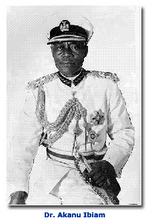
We grew up in the East as the inheritors of fine examples of robust and dynamic leadership that saw Nnamdi Azikiwe straddling the African imagination like a force of nature, or men like Michael Iheonukara Okpara, whose leadership of the East remains without compare. While the Igbo was riding the crest of development and progress from 1957 to 1967, it felt like the rest of Nigeria could not touch its political helms, what with such colorful and eponymous names among its leaders: Akanu Ibiam, educator and missionary doctor, who approached public service with the instincts of a missionary.

Denis Osadebe – poet and brilliant legal mind, whose parliamentary skills were legendary. K.O. Mbadiwe – man of timbre and caterpillar, not only full of rhetoric and bombast, but also full of purpose. A first class political strategist and negotiator who knew his personal interest alright, but never messed with the group interest, for always, the group was the basis of their politics. There was Mbonu Ojike, brilliant economic thinker of his generation, whose early death robbed the Igbo and Nigeria greatly.

There was Nwafor Orizu; there was Jaja Wachukwu, there was Eni Njoku, there was Nwapa, there was Reuben Uzoma; there was Raymond Amanze Njoku, and there were numerous others, any of whom could have, were they born in any other clime, led any nation politically. I have said that perhaps the divine author of things played a terrible joke on the East and the Igbo particularly: he sent them a glut of first class men in one generation, and in a later generation gave them only burnt offering – political lilliputs whose conduct of politics insults the illustrious past of our 20th century political ancestors. Today, there is no memorable Igbo politician.

At the eventual passing of the great Dim Odumegwu-Ojukwu, the last of the relay of great Igbo leaders of the 20th century, the Igbo of Nigeria will not have a single memorable political figure who could rally them to great political purpose. For a people whose leaders were at the fore of the independence movement, this would be a great lesson in irony. The irony was made most poignant in the ring-kissing visit of Ikedi Ohakim, governor of Imo state, last week to Raji Fashola, governor of Lagos state.

The highlights of that visit mark Mr. Ohakim, not only as a second fiddler, but also as a governor without a clear social or economic program, who does not deserve to be re-elected in the forthcoming elections as the governor over a great state like Imo. We must help him return him quickly to his personal business in Lagos, where he says Governor Raji Fashola has made the lives of the Igbo residents worth living and Igbo businesses secure. “I have come to greet a great man, so that I too will be great” said Ikedi Ohakim to Raji Fashola in Lagos.

It sounds cute and gracious. But it also sounds like the servile declaration of a hopeful almajirin to his lordly benefactor. Ohakim was recently paid the left-handed compliment of the Sarduana Award for leadership. It is therefore not surprising from where Ikedi Ohakim draws his inspirations and examples: not from the great Zik or Okpara or Mbakwe. The trouble is that he is on his way to leading Imo state to beggarly ruin.

True, Fashola stays in Lagos and directs its transmutation from a vast slum, while Ohakim gallivants, paying courtesy visits, and spouting strange excuses for his lack of achievement. Once, his excuse was that his opponents had stymied his mandate in court with litigation, and his hands were tied. Now, the Supreme Court has declared him governor, no such excuse is valid any longer.

Now it is revenue: while Lagos has all the revenue, Ohakim says, Imo has all the ideas. This is poppycock of course. Across the fence in Enugu, we see slow but apparent change. Imo is richer in revenue and resources than Enugu. But Enugu has greater purpose. Governor Ohakim needs now to account for the revenue accruing to Imo state in the last three years-plus of his administration. There is no evidence of infrastructural investment. There is, of course, a lot of hot talk about really hot plans to build Oguta and Nworie into tourist utopia.

There is nothing on the ground. There is much talk about rural roads. I went round Imo state last year, I saw only signposts proposing IRROMA. The road from Owerri to Umuahia, much touted as dualized, and commissioned by the late president Yar Adua, is in fact a glorified dirt road, not expanded, but divided with concrete barriers into a narrow two way macadam. Every school and hospital I visited in Imo state was in profound stages of decay. The main city, Owerri, is overcrowded and has lost the serenity of which Owerri was once known because of serious code violations.

There is no evidence of new plans to recreate the city, or build new well developed counties and satellites, or even invest in new urban centers like Orlu, Okigwe, Oguta or the Ahiara-Aboh conurbation. At the office of the Owerri Capital Development Authority, there was nothing left but two old earth-movers, and a huge sign. There was an overwhelming sense of insecurity in Imo State – I had never felt more unsafe in my life.

The greatest development in Owerri is “Keke Napep” and the vast number of posters advertising Governor Ohakim colourfully. There was absolutely no doubt in my mind that Ikedi Ohakim was playing hoochie with Imo state. It has possibly to do with the party – the PPA with which he came to power in Imo state – which was some sort of ersatz arrangement foisted between Olusegun Obasanjo and Orji Uzor-Kalu on the East. It had no ideas.

But it also seems to me that much has to do with Mr. Ohakim’s own limitations: his servility to the golden calf of self-imagery for instance. I take again from Ohakim’s statement to Raji Fashola to highlight my concern: “people came from the Lagos” Ohakim said, and asked the Igbo to invest in the stock market. The crash of the stock market, he claims is the cause of the kidnapping in the South-East because Igbo lost their investment.

Ohakim is wrong on several fronts, but let me quickly say that the crime situation in the South-East is connected to the rapid impoverishment and alienation of a critical segment of the population as a result of the inability of government to provide social programs that would cushion the harsh economic environment, stimulate re-investment, create opportunities for young entrepreneurs and expand the growth of the job market both at the public and private sectors.

What does Imo do with its federal allocations? What is its exact tax base? Perhaps it is time the people themselves – long used to indolence and quiet desperation -get some backbone, and demand for accounting for the use of public funds, through either establishing an independent citizens auditing of the state’s finances or through the auditing oversight of its House of Assembly – which seems consistently complicit with the executive arm.

It is time to stop our governor panhandling from Lagos; time to plug all the leaks through which public funds disappear. In short, it is time to get the priorities right in Imo state. It is time for this governor to stop clapping with one hand and get some serious work done.